Showing posts with label climate change. Show all posts

Tuesday, 28 May 2013

National Geographic photo exhibition on Ecuador’s Yasuni Initiative


Written by Elisa Pelliciari

On Monday 20th May 2013, Grassroot Diplomat was invited to the opening reception of the photo exhibition, “The Eye of the Amazon” by Her Excellency Ms Ana Alban Moran of the Embassy of Ecuador. This exhibition promotes the Yasuni's Amazonian forest, a 982,000 hectare National Park characterised by extreme biodiversity.

During the talk, Ivonne Baki, Secretary of State for the Yasuní-ITT Initiative, and Ambassador Ana Alban Mora explained the initiative and the importance of protecting Yasuni National Park. The focus was specifically placed on the stakes of this territory, which is one of the most biodiverse locations in the world and known to be a UNESCO World Biosphere Reserve since 1989. It is also home to two of the last indigenous community living in voluntary isolation, namely the Tagaeri and Taromenane.

When large reserves of oil were discovered under Yasuní National Park, the Ecuadorian government   promised to leave fossil fuel in the soil, in exchange for international financial support for environmental development projects. To extract oil in large-scale would cause devastating environmental impacts including contamination, deforestation, extinction of cultures and destruction of social structures.

As part of Ecuador’s national commitment, the Yasuní-ITT initiative was born to address the problems of conserving biodiversity and respecting the indigenous community, and it aspires to reduce poverty and inequality in the country. The initiative also includes a stream of funding for social investment.

In addition to being supported by the United Nations Secretary-General and administered by the
United Nations Development Programme, Yasuní is supported by leading environmentalists, scientists,
Nobel Laureates, world leaders, and celebrities from around the world.


Grassroot Diplomat commends the government of Ecuador in recognising the importance of preserving indigenous culture, the environment and its heritage over financial wealth in oil reserves and energy, and supports the Yasuní-ITT initiative to its fullest degree. 

Friday, 20 July 2012

Sir Patrick Stewart at the UNA Forum


If Jean-Luc Picard, the revered Captain of Star Trek had one maxim alone, it was to treat every person, alien (or sentient object) he encountered with equal civility.

On 14th July at the UK United Nations Association Forum, it was announced that Sir Patrick Stewart, who famously played Capt. Picard is to become the first Patron of the UNA-UK.

The Emmy-award winning actor addressed an audience of hundreds from around the world who had one thing in common: a deep-seated appreciation for the valuable work of the United Nations.

Sir Patrick’s impassioned words were described as ‘icing on the cake’ for a day that was filled with stimulating discussions about the role of the UN in the future, the challenges of a world population of 7 billion, and the relevance of universal human rights.

A debate on the Olympic Truce highlighted the value of sport in peace-keeping and conflict resolution. The Olympic ideal – whereby nations can temporarily set aside their differences and live together in harmony – asks that if they can do it for one day, they can do it forever.

Many of us are familiar with the story of the British and German fighters who laid down their guns and emerged from their trenches on Christmas Day to play a football match. There are countless other examples of sport uniting otherwise hostile groups, highlighting the potential value of sport as a peace-keeping tool.  

One of the most well attended sessions during the day was a seminar on ‘How to Work for the UN’ led by Dame Margaret Anstee - the first female Under-Secretary General, among others. Recounting experiences in the field in Philippines and as Head of the Mission to Angola, Dame Margaret presented a career that spanned the world and altered lives, whilst paving the way for women in a male-dominated institution.

The attraction to working for the UN, however, comes from more than just wanting to be part of an international organisation that changes lives. It is about being part of a vision of the world, where people are of equal worth, and humans stand side by side to support each other. It is a utopian vision, but one that comes closer to achieving day by day. For that reason, Sir Patrick couldn’t have put it better in his closing remarks when he said, “the United Nations and UNA-UK must live long and prosper”.

Sunday, 3 June 2012

Parliamentarians and Citizens Unite for Rio+20 Debate


Written by Isabel Whisson

On 21st May 2012 in the magnificent St Martin-in-the-Fields Church, over 500 people from all sectors of society joined the Environmental Audit Committee in a public debate on how to work towards a sustainable, green economy.

The event, which also launched photographer Mark Edwards’s latest project Whole Earth? was led and expertly chaired by Member of Parliament for Stoke on Trent North and Chair of the Commons Environmental Audit Select Committee, Joan Walley.

Kick-started with the presentation of Mark Edwards’s first photographic campaign ‘Hard Rain Project’ the audience were moved by powerful and emotive images illustrating the truly devastating effects of climate change set to the lyrics of Bob Dylan’s prophetic song ‘A Hard Rain’s A-Gonna Fall’.

Members from a select panel of experts addressed the audience and committee on the tough questions urgently needing to be faced.

‘Does democracy help or hinder the green economy?’
‘Is Capitalism the cause and can it be the solution to climate change?’
‘How do we bring the vested interests of powerful groups under control?’

The debate drew several conclusions – amongst them that successive Governments in all countries need to make a sustained effort to prioritise environmental policy; and that there ought to be economic value in protecting our natural resources, not just using them for consumption. Caroline Lucas MP, the first and only Green Member of Parliament underlined the importance of framing the Green Economy as a positive change.

It was made clear that human beings have to change the way we live in order to avoid the existential threat of climate change.  Given the severity of this fact however, members of the audience did not leave dreading the inevitability of a destroyed planet. Instead the event brought hope.

It showed us that all people, from different backgrounds and professions, and in different ways could make a difference. In the words of soon-to-be Deputy Secretary-General to the UN Jan Eliasson, who joined the debate via video, “No one can do everything, but everyone can do something.”

The Rio+20 debate was a beautiful example of the value and constructiveness of political leaders joining forces with members of civil society and ordinary citizens. It also made one thing in particularly very clear – that grassroot diplomacy is at the centre of meeting the challenges of climate change.

For more information about the event please visit:
http://www.hardrainproject.com/public_debate_st_martins

Wednesday, 1 February 2012

The Power of Relationships


InPEC has conducted this interview with Talyn Rahman-Figueroa at Grassroot Diplomat’s office in Central London. Ms Rahman-Figueroa is a young policy leader and enthusiastic entrepreneur with a clear goal: to bridge the existing gap between civil society and leaders. With an impressive academic and practical background in diplomacy, Ms Rahman-Figueroa set up the first Diplomatic Business Consulting firm of its kind. Five months later, Grassroot Diplomat has grown to include a team of six experts in their respective fields as projects proliferate rapidly in all continents. Despite her young age, Ms Rahman-Figueroa is determined to tear down traditional barriers and work towards moving from a culture of national interests to a culture of people interests. ‘Success depends on one thing’, she argues, and that thing is the ‘power of relationships’.

Franco: Good morning Ms Rahman-Figueroa, and welcome to a conversation with InPEC. In a previous interview with The Next Women you stated that what distinguishes your business from other similar agencies is its diplomatic grassroot element. In what sense is Grassroot Diplomat a grassroot agency compared to others?

Rahman-Figueroa: Grassroot Diplomat is the only diplomatic agency in the world that facilitates the work of civil society groups over corporations. Many diplomatic groups tend to favour corporations as clients because it is commercial and their lobbying capacity is greater than that of non-government organisations. We take on board policy-related projects led by retired civil servants, non-government organisations, and foreign institutions that have enough passion to dedicate their life to the cause but lack time, funds and connections that can really make a difference to their work.

We think of civil society projects as a national interest that embassies and governments should pay attention to. Government officials who are at the top of their career tend to be far removed from ordinary citizens which is a problem in today’s social network society. How can diplomats represent their country if citizens back home are not being heard by their own government? That makes little sense to me. The world of diplomacy needs to innovate with the world we live in now. People power has become increasingly effective when compared to government polls. By working with the people and representing policy projects, Grassroot Diplomat hopes to deliver concerns of the people at a national and international level, by connecting grassroots-led projects to civil servants, diplomats and institutions alike.

Franco: Grassroot Diplomat seeks to bridge the existing gap between civil society and political leadership. How can Grassroot Diplomat help promote the voices of civil society in ways that these are incorporated into political debate and policymaking processes?

Rahman-Figueroa: Grassroot Diplomat is the epitome of terms known as “citizen diplomacy” and “public diplomacy”, whereby issues of an international nature are taken upon by members of society who do not necessarily belong to a government. By using diplomatic strategies and connections within diplomatic circles, Grassroot Diplomat aims to connect client projects to prominent political leaders who show an interest to what stakeholders think. We have many programmes that support and promote the voices of civil society. The service that takes up most of our time involves conducting research on policies that national and international governments have or are already working on. We try to find out as much information as possible in relation to our client’s project before providing strategies and recommendations for improvements. We then search for civil servants and diplomats who may be personally interested in our client’s project and build a relationship with them so that the work of our client is being readily supported by someone who can further influence the project.

We also provide media exposure to our client’s work in order to gain support from the public and citizens of other countries, which then helps to strengthen the project and sustain its relevance. The level of support we provide our clients is more than what the clients actually pay us. In the end, it is not about how much money we can make from a project but how successful we are in building and sustaining a relationship between our client and a political decision-maker. Once the project is internally fortified and that relationship is finally established, our client is in a better position to promote a project that makes a stronger impact on debates and policy-making processes.

Franco: Cosmopolitan views that portray civil society as an emerging, global phenomenon often fail to acknowledge particularistic projects. Has Grassroot Diplomat the capacity and resources necessary to address localized claims and political projects?

Rahman-Figueroa: Cross-cultural communication is a huge part of what we do. As an international organisation that tends to the needs of global citizens and missions, Grassroot Diplomat has a team of experts that know the culture, politics and history of several countries in at least one continent. We do not pressure our clients into exclusively using Western schools of thought. Instead, we take into consideration national and international legislations related to our client’s projects and get in touch with relevant embassies to avoid cultural barriers and political implications that may otherwise hinder the project. On top of that, we work with international diplomatic institutions like the European Union and United Nations to cross-examine information reported by their experts, so that we can gain accurate information about policy matters from a neutral point of view. Grassroot Diplomat works with many partners and the number of institutions we are connecting with is growing.

Also, as an independent agency, Grassroot Diplomat shows no allegiance to one particular government and as such, we are careful not to get involved in projects that may be harmful to diplomatic relations. We have a strict policy to reject projects led by political candidates and active members of government so as to remain as apolitical as possible. It would be very difficult to gain the trust of an embassy if we had worked with a controversial political member in the past.

Franco: Based on slogans such as “politicians do not represent us”, emerging movements in Western Europe and the US (for example, Spain’s group “15-M” or US’s “Occupy Wall Street”) are often portrayed by mainstream media as apolitical or anti-system. However, their agendas are very much political. As a self-proclaimed grassroot diplomat, do you see yourself as a valid intermediary between these movements and political leaders?

Rahman-Figueroa: As an individual who has worked for governments and NGOs, I see a great gap between civil society and governments. During an election campaign, political candidates write up a policy ‘wish-list’ which they pitch to the public to gain support. However, once in power, politicians then have to deal with a different set of power struggle by trying to sway peers to support their policy initiatives and form working groups to start work on it. It is a thorny process. Also, policy priorities can easily shift depending on the climate that the politicians find themselves in. Before his election, President Obama promised to reform national healthcare provisions for his people and fought very hard to see his commitments through, but Republican oppositions made it very difficult for him to pass any legislation through that could possibly win him another term. While he was adamant on working on the healthcare issue, President Obama’s popularity was slipping because not enough attention was paid to solving unemployment and the global economic crisis. This leads me to my next point.

Governments in many countries seem to lack inter-departmental communication. When I was training at the United Nations in New York, I was alarmed to hear many heads of offices complaining about how none of the departments are interlinked. Surely the rise in population has links to refugee issues, climate change and global health risks, so why keep those departments separate? There isn’t a lot of streamlining between government departments and this is why there is that gap between the people and the government. People’s concerns are passed onto one department after another and there is no real result at the end of that long bureaucratic journey. I also believe that many NGOs suffer from ‘tunnel-vision syndrome’ whereby a biased passion for change bypasses logic and neutrality. If NGOs were to ignore opinions and publications from leading well respected think tanks or institutions, it is almost certain that their work will not be taken seriously by government officials.

As the grassroot diplomat, I have taken the views of young people and women to many international summits and conferences and reasoned with officials as a voice of neutrality. Of course I was representing issues that I was deeply passionate about, but matters had to be dealt with a diplomatic demeanour so as to not offend or harm the relationship I was trying to create. Mixing grassroots with diplomacy has rarely been done, but I think it is an effective method when used correctly.

Franco: Not only are you a woman in a world of men but you are also very young in a field, diplomacy, where seniority is traditionally seen as an advantage. Can gender and age be an obstacle to your project?

Rahman-Figueroa: Diplomacy requires an injection of innovation and with enough time perhaps Grassroot Diplomat can flex the rigid diplomatic system that has been in place for centuries. Being a young woman involved in diplomacy may seem daunting to many people, but I hope that being the face of Grassroot Diplomat can break the old stereotype of diplomacy belonging to elder gentlemen. There are many more women entering and representing the diplomatic field. Since 1993, the Foreign and Commonwealth Office committed to achieve 15% female representation in senior-level posts. I predict the number of female British Ambassadors will rise in the next 25 years as this would have provided enough time for female diplomats to climb the ladder. But it is very unusual to see a young person such as myself networking with high-level diplomats.

Where I lack in seniority and wisdom, I make up for with my amazing team of consultants who provide expertise on particular issues not known to me. Former diplomats Hayk Berikyan from Armenia and Charles Crawford from Britain provide much insight into the world of diplomacy, as well as connections to other diplomatic practitioners who may enhance the work and mission of Grassroot Diplomat. Ellee Seymour is a gifted PR practitioner who has done much work with the British government. Christina Mitchell has great practical experience working with grassroots organisations based in Africa and has a rich knowledge of alternative dispute methods when dealing with unstable countries. Syed Ejaz Kabir is an anti-corruption lawyer based in Bangladesh who is vital in providing legal information on how to deal with corrupt governments. Finally, Adrian Henriques is an expert in corporate responsibility issues and has worked on issues of sustainability with corporations and NGOs alike. With their help and support, I am sure Grassroot Diplomat will go very far.

Franco: Let’s talk a little more about gender. In the past you have been very active in the field of women’s rights –you were for example nominated onto the executive board of the UN-affiliated NGO Women’s International League for Peace and Freedom. Where do women’s rights fit into your new project? Can you please provide particular examples.

Rahman-Figueroa: The issue of gender and women’s rights is very close to my heart and I am trained to take gender matters into consideration when working on all of my projects. I am very vocal when I notice there is a lack of diversity in an organisation and try to include this analysis into the final outcome. While I was training in diplomacy, I became very aware of Britain’s lack of female Ambassadors. As a young woman aspiring to join the diplomatic service, I felt disheartened by the lack of role models we have in the UK and I made it my mission to learn about the history of women in diplomacy. During that time, I wrote a 15,000 word publication outlining the reasons why women were outcasts in the field and, surprisingly, the Foreign Service enforced very sexist policies that kept women out of this field.

Women first stepped into the diplomatic world as secretaries and typists. Many were wives of diplomats and played important roles in diplomatic banquets and meetings to support the work of their husbands. A policy commonly known as the ‘marriage bar’ instructed single women to resign from the Foreign Service if they were to marry. As a result, no fewer than 25% of newly-wedded women had to leave the service. It wasn’t until the 1970s when the ridiculous marriage bar was lifted and women were able to join the Foreign Service as diplomats, whether they were single, married, or divorced.

My paper highlighted that it took the UK 191 years to finally appoint the first female Head of Mission, and in 2010, only 21.8% of senior management positions from 260 diplomatic missions are filled by women. This figure is quite alarming considering that I see many female diplomats in London-based embassies. My paper was forwarded to the diversity team at the Foreign Office and I will make sure to share my findings with other institutions.

Franco: Last week I listened to a leading disarmament activist at the School of Oriental and African Studies who exposed the view that current gender structures are an impediment to disarmament. Based on your experience, what can disarmament campaigners do to overcome these?

Rahman-Figueroa: I am pretty sure that the activist was referring to gender structures embedded within society. The social dynamics between men and women underpins why inequality between the two sexes exists to this day. The straddle for equality and empowerment has been confronted by the social power structure, known as patriarchy, which provides context and justification for institutionalised gender discrimination against women. When you look at the male to female ratio at the executive team of the UN Secretariat, you will see that only 26% of the team is represented by women. While this is a vast improvement, it isn’t an equal split and the balance of decision-making power is tipped by male leaders who tend to support hard power initiatives to protect their national interest.

The relationship between gender and disarmament isn’t obvious, but from my experiences it is apparent that women’s organisations are better mobilised in supporting peace and disarmament than male-led institutions. Nuclear weapons have strong associations to power and have better approval ratings amongst male peers particularly from countries that thirst for greater stake in global politics. The ‘power’ identity must be disassociated from nuclear weapons and this vision must be embraced by both male and female world leaders. Non-proliferation and disarmament needs to have some ‘sex appeal’ to it in order for decision-makers to seriously consider those avenues as a viable option for nuclear deterrent.

Franco: You have also been involved in climate change summits. Surely policymakers hear the voices and concerns of world citizens and climate change experts, but do they listen?

Rahman-Figueroa: The biggest climate change event that I was involved in was the 2009 COP15 in Copenhagen, which unfortunately was one of the most frustrating moments of my life. World leaders were presented with a valuable opportunity to shape a legally binding treaty that was built upon the Kyoto Protocol agreements. Rather than putting aside national interests in exchange for the well-being of our future generation, the summit simply unveiled the inefficiencies of politics. Diplomats sat at the negotiation table with preconceived plans about their stance on climate change which arrested much progress and actual discussion on the issue.

Frustrations were felt by all parties involved and the lack of progress led to 10,000 demonstrators marching the streets of Copenhagen to make their demand for a legally binding treaty clear to decision-makers. So, did they listen? No! While these people marched the streets grabbing media attention from all over the world, decision-makers were stuck in a conference room reinforcing their own national self-interest. It wasn’t until the arrival of President Obama in the final days of the conference that the negotiations moved forward. No one else was bold enough to make some change happen and I don’t think this will change anytime soon.

Franco: What can you tell us about the prospects for UN reform?

Rahman-Figueroa: Reform of the United Nations is vital if the modern world is to be represented fairly and equally. By default, the victors of war became the principal caretakers of the UN as permanent members of the Security Council.

Primarily, as one of the five main organs of the UN structure, the Security Council plays a powerful role in sustaining international peace. Although non-permanent members of the Security Council are said to have ‘equal footing’ to that of permanent members, the veto sets their level of power apart. The veto can be dangerous because, once again, the national interest of states gets in the way of finding global solutions. Once the veto is raised, no further action can be taken regardless of the level of support shown by member states.

This is problematic. For decades, countries like India, Brazil, Japan, and South Africa have tried to maintain some level of power in the UN but the veto system tips the balance of power in favour of permanent Security Council members, which only serves to protect the interests of China, Russia, USA, UK, and France. This isn’t fair, nor is it fair that all countries – with the exception of China – represent Western values and ideologies. Unfortunately, reform is one of those sticky issues that requires the confidence and support of all member states and full provision for change is unlikely when you take into consideration regional conflicts, history and territorial disputes between countries that would more likely block a new candidacy than support it. Diplomacy shouldn’t always be about national interest but rather the interests of its people. That also means accepting solutions that are likely to benefit all states, but that is quite an idealistic statement that may not happen anytime soon.

Franco: Ms Rahman-Figueroa, thank you for answering our questions.

Sunday, 9 October 2011

Call for Applications: Corporate Social Responsibility Programme specifically designed for underfunded NGOs and corporate partners


The Corporate Social Responsibility (CSR) programme is a new initiative designed by Grassroot Diplomat to engage corporations in building sustainable and meaningful relationship with grassroots organisations. Grassroot Diplomat is calling for applications from underfunded NGOs and youth networks requiring policy research and development of projects. Grassroot Diplomat aims to select clients that are suffering from financial hardship but require independent diplomatic research assistance in their policy-related project. All projects under this programme will be expected to be paid for by corporate partners engaged in CSR.

Clients will receive:
- free assistance with research and development
- access to influential decision-makers
- contacts with reputable and well-known company
- full sponsorship that will cover cost of service required by Grassroot Diplomat
- 25% donation to sustain project

Corporations will:
- pay the full sponsorship fee
- gain significant access to influential members of government
- increase its reputation with consumers
- be provided with human interest PR stories and marketing opportunities to networks
- leverage its market in the diplomatic and government sector

For more information, please visit: www.grassrootdiplomat.org/csrprogramme

This programme is opened to all types of businesses looking to further their CSR portfolio. However, the programme is limited to the number of clients it can take. You may only apply if you meet the eligibility criteria. You may wish to refer to services provided by Grassroot Diplomat: www.grassrootdiplomat.org/services

ELIGIBILITY CRITERIA
This programme is strictly available to clients who are undergoing financial hardship. We are only able to take on clients who require assistance on the growth and development of a project that is relevant to the mission of Grassroot Diplomat. Your project must:

              be based related to policy (e.g. human rights, peace and security, health, migration… etc.)
              aim to make a positive impact to society
              not be led by a government institution or official
              not be served as a financial instrument for personal gain
              be independent of any arms trade, defence proliferation or profiteering motive
              not be political in nature
              not discriminate against age, race, gender, sex or religion
              require research, development or diplomatic engagement provided by Grassroot Diplomat

How to join the programme

If you feel that your project is eligible for this programme, please send your project outline to: info@grassrootdiplomat.org answering the following questions:

              Name and mission of organisation
              Objective and outcome of project
              Who will the project benefit?
              Why do you need assistance of Grassroot Diplomat and which service are you interested in?
              How will you assist your corporate sponsor?
              How will you promote your project after this programme ends?
              Are you engaged with any partners? If not, which organisations would you wish to collaborate with?
              Please provide a financial statement of your organisation

Due to the popularity of this programme, all clients are asked to pay a refundable deposit of £300 ($480 USD) to secure their place.
Please note: It may take up to 12 months to secure a corporate sponsor for your project. In the unlikely event of not finding a corporate match, the deposit will be returned to you in full. Should your project be chosen, Grassroot Diplomat will keep the deposit and donate 25% of the sponsorship fee to your project.

Sunday, 1 May 2011

Understanding the Oil Market


With the Middle East and North Africa uprising, the prices of oil in many developed countries have spiked, with critics urging for countries like Saudi Arabia to turn the taps on its oil reserves in order to keep prices reasonable. Others have argued that the world would be a better place without a commodity that pollutes the Earth and causes wars to erupt over vulnerable and scarce resource with only thoughts of capitalist greed and corruption amongst ruling families and political elites. While I agree with both, I read an interesting commentary from Alan Duncan International Development Minister and adviser on oil supply - in a parliamentarian magazine (The House), which I wanted to share as a means to better educate readers on the complexities of the global oil market.

In his commentary, Alan Duncan addressed how dependent we are on oil in running our daily life, for without the supply of oil, "the world simply would not go round". Amidst the current upheaval in Libya, commentators are looking towards Saudi Arabia to solve the supply problem, but switching from Libyan oil to Saudi oil isn't as simple as possible. Duncan states that there is no such thing as 'the oil market', rather that there are many markets within it, each with their different significance. According to Duncan, there are well over a hundred different qualities of crude oil, each with different characteristics affecting the diet of an oil refinery. Some crudes are heavy and good for making bitumen, others are light and better for making petrol. Some are full of sulphur, whereas others share the runny consistency of washing liquid or hardens like butter. Libyan oil is made up of lighter low-sulphur which cannot easily be substituted for Saudi crude that does not share the same property. Also, many factors - such as shipping costs, insurance rates, demurrage rates (price paid for a ship's delay at port) - affect the prices of crude rather than straightforward supply volumes.

In closing, Duncan warns that we are living in dangerous times and the factors which could influence the price of oil, and hence the unwelcome cost of filling our car at the petrol station, are affected by much more than scarce resource and conflict in the originating countries. And such factors complicate the nature of a simple switch over from one type of oil to another
.

Friday, 18 March 2011

Nuclear Energy: Sweet package, deadly content


The last few days have been spent arguing with friends about the dangers of nuclear energy. The most consistent argument for nuclear energy was that it is a better alternate to global warming caused by fossil fuels. The research and development of nuclear energy is already invested by many developed governments with strong corporate lobbyist calling for further investment towards nuclear alternatives.
Chernobyl was an extreme case of what a nuclear melt-down looks like. 25 years since that disaster, the world is being reminded again of the risks nuclear energy can bring if the safety features fail. 

Friend and the President of Global Security Institute, Jonathan Granoff wrote a convincing argument about the risks of nuclear energy. As with anything with health risks, if the product is packaged well, we are willing to accept it into our lives:

As the health impact of smoking became better known to Americans, the practice eventually diminished. The cigarette industry decided to look beyond US borders. Huge amounts of money is spent convincing teenagers in the so-called "developing" world that this cancer-causing product defines their entry into adulthood...

Not one new nuclear energy plant has opened in the US since the 1979 disaster at Three Mile Island. Yet despite the environmental and security risks posed by nuclear energy facilities, the US continues to support their development elsewhere. For example, in derogation of a core bargain of the Nuclear Nonproliferation Treaty (NPT) that, with the exception of the US, China, Russia, UK, and France, only countries renouncing the development of nuclear weapons should gain the so called benefits of nuclear energy, the US government advances the economic interests of the nuclear industry by supporting nuclear energy deals with India, a country which has developed a robust nuclear arsenal and refuses to join the NPT. Not only is this folly, but it is an arrogant folly.

Nuclear energy plants, like nuclear weapons systems, do not forgive mistakes of judgment, of mechanical error, or simple human negligence. Still, in the face of dire warnings to the dangers of nuclear power, humans continue to build nuclear energy plants and nuclear weapon systems, convinced that no mistakes will be made. How easily we forget a truism when greed and the quest for power intoxicate our reason: systems are only as foolproof as the humans that create them.

The crisis in Japan is just the most recent tragedy to befall the nuclear age. There is perhaps no other country with more sophisticated nuclear facilities, with more safety checks and backup systems in place. Yet mistakes were made. Hearts all over the world reach out in sympathy for the suffering of the people of Japan. The extent of the catastrophe in Japan is not yet known, nor will it be known for quite some time, as radioactive isotopes could linger in the air, water and soil long after the reactors finally cool. However, the cost is already too dear.

Reality demonstrates that it is supreme arrogance to think that we will not make mistakes of judgment, that machines will not err or that human negligence can be avoided. In fact, only God does not make mistakes. Acting as if we were God is nothing short of blasphemy.

The tragedy in Japan is a strong and deplorable wake-up call to stop this arrogant nuclear folly. Should the warnings of nuclear weapons opponents be as crassly ignored as those from nuclear power opponents, the consequences could be unthinkable. There have already been far too many computer and human errors nearly triggering nuclear exchanges for any informed person to rest easy. President Obama has wisely advocated that the US should lead in global efforts to abolish nuclear weapons.

We are not perfect and all that we create reflects our imperfections. We thus must not make imperfect devices that can destroy so much precious life. That is wisdom that we can be proud to export.

(published: Huffington Post, March 16 2011)

Tuesday, 15 March 2011

Japan: Say "NO" to nuclear anything


In response to the nuclear reactor blasts in Fukushima soon after the devastating Japanese earthquake and tsunami, I wanted to share this sentiment sent from the Women’s International League for Peace and Freedom (WILPF) to the dangers of nuclear energy as a failing solution to inhabit our modern lifestyle.

As radiation releases from the Fukushima Daiichi nuclear facility have daily increased, so too has our profound concern for future generations. Radiation is long lasting and has inter-generational effects, as the survivors of Hiroshima and Nagasaki know only too well. It is a terrible tragedy that the very nation that sustained and survived an attack with nuclear weapons is today sustaining radiation exposure and contamination.

Recently a statement was made by a group of Hibakusha – A-Bomb Survivors from Japan who have been appointed by the Japanese Prime Minister as “Special Communicators”. They asserted that radiation, whatever its source, is a major threat to humanity and the environment and called for phasing out all sources of radiation—from uranium mining, nuclear reactors, nuclear accidents, nuclear weapons development and testing, and nuclear waste—and for investment in renewable, clean energy for a sustainable future.

This is the most expensive and most dangerous way to boil water to turn a turbine, and because the potential for catastrophe inherent in nuclear energy has always been apparent, WILPF has always opposed nuclear energy. The devastating situation in Japan should not have been necessary to wake people and governments up to the truth about radiation and the truth about the dangers inherent in nuclear energy. We must also face the economic truth. Nuclear power is not cheap. The nuclear industry has received enormous government subsidies -- paid for by the taxpayer -- for underwriting of construction, liability caps and insurance for clean-up and health costs. By providing massive direct and indirect public funding, the nuclear industry has taken what could have been invested in renewable and clean energy.

The value of uranium stocks has plummeted by more than 1.5 billion USD in response to Fukushima. Anti-nuclear rallies have erupted in Germany and German Chancellor Angela Merkel has promised to inspect the country’s reactors and hold a special nuclear summit with other European leaders. In the United States, senators have called for a moratorium on the construction and licensing of new nuclear power facilities. The EU energy chief Günther Oettinger has said that Europe should consider whether it can meet its energy needs without nuclear power. In fact the whole world must meet its energy needs without nuclear.

ACTION POINT: WILPF urges all governments to cease plans to construct new nuclear power reactors; to stop mining uranium; to phase-out nuclear power in their energy mixes; and to refrain from promoting nuclear power as a means to combat climate change. Governments should accelerate and enlarge their support for the development of renewable and non-carbon emitting sources of energy and for energy conservation. They should join the International Renewable Energy Agency to work towards a rapid transition to the widespread and sustainable use of renewable energy worldwide.

Wednesday, 29 December 2010

New Year Message 2011


Rounding up 2010, I must admit that this has been one of the most productive year for me. I am en route to completing my Master's in Diplomatic Studies, my novel is complete and currently under review for publication, and politically speaking - the UK has seen a great change to having the Conservative and Liberal Democrat Party join forces in a Coalition Government to run the country. The country is in a bit of mess though. Students' are rioting on the streets due to an increase of annual tuition fees risen from £3000 to £9000, many household benefits have been cut to force people back to work - specifically those under 25 who already have a family, and as of 4th January 2011, our VAT (value added tax) is rising to a staggering 20%. London is not going to be an easy place to live next year, especially if looking for a job will cause some difficulty. But looking on the bright side, Britain seems secure with its relationship with other countries and with all these public financial increase, let's hope that the national debt actually decreases as the government has promised us.

What has 2010 taught us? That war benefits no-one. If Tony Blair's Labour Party did not send Britain to war with Iraq, our social benefits and educational system would not have been suffering as much as it is now. The Coalition Government have to deal with a lot of financial slack which makes them quite unpopular, but someone has to clean up the mess and I think it is better that two parties of polar opposite views have put their differences aside to do the job. Diplomatic secrets revealed by WikiLeaks has taught the world that social media is ever more powerful than traditional media, and that the individual has more freedom of speech and transparency than ever. But I would like to stress a hint of warning. Rupert Murdoch plans to buy the rest of BSkyB TV, and if this happens then he will have control of more than half of the UK national newspapers and television, which endangers our media democracy and freedom of speech, and we can't let corporations and certain individuals turn industries into monopolies of power.

On another note, the world is hanging by a thread with its commitment towards reducing the carbon footprint of industrial nations, the effects it has on climate change, and the promise for all nations to reduce the proliferation of nuclear weapons. I would like to acknowledge the wonderful work done by ItsOneHumanity in presenting global youth voices in regards to climate change at COP16 Cancun in Mexico this year, as well as The Art Effect team in Seattle which empowers and mobilises youth leaders to create social through education, artistic expression ad community engagement. I am proud of my many friends who are taking initiatives to lead the next generation in important political issues that are limiting the life of the future.

2011 will be another incredibly busy year but I am positive that leaders of the youth world, alongside with members of embassies and world leaders, will look into the best interest of its citizens over national interest, and will prioritise its funds towards better human security. This statement is extremely idealistic, but without having hope, one will never be motivated enough to do the best they can.

I want to leave you with a video from our Deputy Prime Minister Nick Clegg (leader of the Liberal Democrats), and I want to wish you all a happy and prosperous start of the New Year. (above)

Thursday, 18 November 2010

A thousand messages of hope for Cancun


This story was featured in TckTckTck, as the European Regional Ambassador for ItsOneHumanity.
http://tcktcktck.org/stories/campaign-stories/thousand-messages-hope-climate-deal-cancun#comments 

In September of this year, ItsOneHumanity launched its Global Visual Petition Project for Climate Justice with the goal of giving young people a voice in the United Nations climate talks in Cancun. With the help of like-minded youth from around the world, they built a website with a visual petition system in 54 languages.

“To many of us young people, it made no sense that we were still approaching the issue of climate change as divided nation states, being fully aware of the potential damage it could have on our common planet and on everyone of us” says founder Elliott Verreault, 22, of Canada.
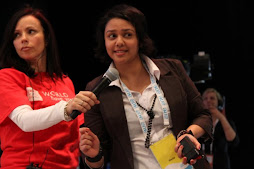
Over the past two months the petition has gathered more than 1,000 messages of support. You can watch a short video summary of their campaign progress so far at right.
Testimonials from ItsOneHumanity’s supporters show the depth and breadth of reasons why they’re calling for a global climate deal.
"Having witnessed firsthand the failure of the Copenhagen COP15 Climate Change Summit in 2009, I felt incredibly frustrated that world leaders were unable to look beyond their own national self-interest rather than to securing a binding treaty that benefitted the entire world” - Talyn Rahman, 25, United Kingdom
“World leaders need to realize that they represent global citizens when they sit in the conference. What we really need to do for climate justice is to have them take off their ego and think about real actions for our future generations. I would blame myself if my future children cannot live like they should.” - Sahid Priambodo, 19, Indonesia
The organization plans to present the signatures to representatives from the UNFCCC at the climate negotiations in Cancun later this month. If you want to add your name and support to the campaign, visit their website: ItsOneHumanity.org

Sunday, 3 October 2010

Make your voice heard for Climate Justice!


Having witnessed firsthand the failure of the Copenhagen COP15 Climate Change Summit in 2009, I felt incredibly frustrated that world leaders were unable to look beyond their own national self-interest rather than to securing a binding treaty that benefitted the entire world. I was very pleased to join 'ItsOneHumanity' as one of the Regional European Ambassador. Training in diplomacy, I felt that the 'ItsOneHumanity' project was incredibly valuable in reaching out to young people from all over the world as a uniting voice to re-instate that we belong to one humanity.

As a team of young people ourselves, this project gives us a platform to remind people that we all serve a purpose to look after our planet - as one unit. Within a short space of time, the team of 'ItsOneHumanity' were able to draft a strong statement of solidarity for all to sign. This petition will then be presented to world leaders at the next global summit in Mexico as a form of lobbying. Whether or not they listen, this is a great opportunity for everyone to show that people across the world are in support for a better, protected world for now and the future. 

To support this project, please spread the word and the sign the petition.
http://www.itsonehumanity.org/GVPP.html

Sunday, 4 July 2010

Trip to the North


This “trip to the North” was an exciting spur-of-the-moment opportunity after our scheduled weekend to Rabat was cancelled. I quickly became excited with the idea of hiking and touring in the deep valleys of the Northern Moroccan borders even if the decision to participate was sudden. The two day tour included hiking and swimming in Cabo Negro beach, Akshour, and Chefchaouen with 52 students including 15 exchange students.
The journey to the North began at 1.30am on Saturday where we drove approximately 7 hours to our first destination. Cabo Negro beach in Tetouan is close to the borders of Spain, therefore the Spanish language (instead of French) was widely spoken in this region. After a short break for breakfast, we arrived at the beach, which was deserted largely due to the cold wet weather. Our so-called ‘beach day’ lasted only 30 minutes before the temperature dropped and the skies opened up to torrential downpour.
Disappointed, we returned to the mini vans to travel to our next destination – Chefchaouen, where our accommodation for the night awaited us. As we left Tetoun, I was amazed to see the city littered with the Moroccan flag. Every few yards, another set of flags waved in the air. We were told that the King Mohammed VI had visited Tetouan a few days ago, and it is a tradition to decorate the town with its national flag and colour for the special visit. It is apparent that the King of Morocco has great executive power in the country more so than the Moroccan Prime Minister. Security forces in uniform are seen everywhere. While police presence indicates the autocracy of the nation, the sheer volume of security actually makes me feel safe in this country, especially when terrorism is a major problem.

In the local Berber language, Chefchaouen means “the horns” - I presume, of the mountains, which was exactly what we saw when driving through the valley. The scenery was spectacular with the additional treats of seeing farmers ploughing the land, people riding donkeys and even some locals waiting by the roadside for a hitch-hike. The town of Chaouen is well-known as the ‘blue city’ – all the buildings are painted sky blue, which brings about an immense sense of calm to the general atmosphere. I was surprised with how touristic the town was and even more surprised with just how windy it was. It felt like a typhoon but we still managed to explore cute little stores that sold very interesting handicrafts and jewellery. I was in awe of our accommodation – Casa Hassan – which looked like a room from an Arabian fairytale. I also met a man who was apparently from the desserts of Morocco. He seemed quite taken by me being ‘dark-skinned’ – I get mistaken as a Moroccan quite often due to my complexion. He dressed me up as a typical Berber woman, which was quite a strange experience.
The next day, we travelled to Akshour, the deep Northen valley of Morocco where we hiked through rocky terrain. Unfortunately I had many technical issues with my footwear. As we were trekking through shallow rivers, my sandals broke twice. I actually ended up hiking for 5 minutes bear-foot until finally deciding to destroy my trainers in the water. The hike must have taken 2 hours until finally reaching ‘the bridge of God’ where we rewarded by cold mountainous streams to swim in. I only soaked my foot in the water, but many students were brave enough to dive straight into it.
The trip to the North was most certainly a memorable experience and on behalf of the Diplomatic Academy of London, I would like to thank the Students Activities Department of AUI for organising this amazing experience for us.

Tuesday, 9 February 2010

OYW: Environment Plenary


"If they don't lead, you should make them follow" - Kofi Annan


As a youth leadership summit with an expressly global focus, six large plenary sessions were covered within two days. On his video message to the delegates, US Senator John Kerry said that “there has never been a time when young people have to be active in politics,” something I strongly believe in. Too many people in power are preventing to take action yet this summit will prove that young people have the motivation and strength to collaboratively create change.

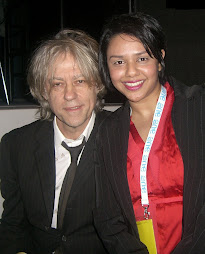
The first session on the environment was supported by a mighty group of counsellors: Sir Bob Geldof, President Alejandro Toledo of Peru, Nick Haysom (UN Director of Politics), and former UN General-Secretary Kofi Annan.

Delegate speaker Lina Imran Abdullahi (Ethiopia) kicked the session off by highlighting the deadly conflicts in Africa over natural resources and the impact it is having on migration and the environment. Gerardo Dasyel (Mexico) examined the concept of ‘back to basics’ in adapting to a more simple lifestyle. COP16 will be held in Mexico, and will be a grave and dire disappointment if the outcome of the negotiation is anything like that of Copenhagen. Caroline Rush (Canada) concluded that out of a 3000 Canadian youth poll, 71% agreed that climate change is the biggest problem, however only 20% are engaged in improving its condition. This led to the discussion of educating youths online through social network services to better inform our peers.

Parker Liautaud (France) is an amazing example of how youths can be an example of change. While some youth may not have the investment and credibility to progress, Parker is planning to ski to the North Pole as one of the youngest Arctic explorer. Kashfia Rahman (Bangladesh) emphasised that displacement of climate change will cause a new politically and unstable world. In the last three years, three cyclones have devastated Bangladesh. If the rate of climate change continues, where will these 35 million people go? Karuna Rana (Mauritius) illustrated that it is possible for even developing countries to mitigate climate change. Mauritius is currently ranked sixth position on its environmental performance index, moving from 20% to 65% energy autonomy using renewables by 2028. “Let’s not forget that every single drop makes an ocean,” she said, reminding the world that individual actions make an impact.

In his speech, Kofi Annan apologised by saying “my generation has failed you,” but as we are all “in the same boat” the issue of climate change must be put higher on the political agenda, pushing for a fair, equitable and binding agreement. Our generation has already proven that our ideas and thinking are alike, therefore if politicians do not do what we want them to, us youths must apply pressure to ensure that they do what we need them to do.

Draft Resolution (to be amended): In the belief that climate change will seriously affect future generations, we call upon governments to take more deliberate, legislative action to help guarantee that appropriate carbon emissions reduction targets are both agreed and met by 2020.

Thursday, 24 December 2009

Copenhagen Accord


The 193-nation Copenhagen Conference on Climate Change (Dec.7-18) failed to come up with what the world had long expected, a legally binding Treaty, or even a Declaration with promise of Kyoto Protocol-II being drawn up in 2010. But its near collapse was averted with a five-nation "Copenhagen Accord" brokered by President Barack Obama - his probable first victory in the international arena - taking along China, the largest polluter, India, Brazil and South Africa. This has been acclaimed as a great breakthrough by these countries which held fast to their rigid positions and struck a last-minute compromise, which will be severely tested in the coming years. Both China and India joined the chorus of welcome.


The Accord, which was not endorsed by the most acrimonious UN Conference of recent times, has been promoted as laying the foundation for a binding agreement in the coming years. It does not refer to the UN proposal for a new Treaty under its Framework Convention in 2010. Overall, though both India and China have welcomed the Accord as significant and positive, the 12-day Copenhagen Conference merely "took note" of the development with a sense of betrayal of the interests of scores of countries under threat and most vulnerable to climate change.

The Obama Administration did come up with some new ideas to facilitate an understanding, other than any binding commitments, such as in the matter of financing and importantly found ways breaking the logjam over China’s objections to international verification as infringement of sovereignty. The Accord did not record any targets beyond the need to keep increase in global temperature below 2 degrees as dictated by science. While calling for cooperation in achieving peaking of global and national emissions "as soon as possible", it recognised that the time-frame for peaking would be longer in developing countries where social and economic development and poverty eradication are over-arching priorities.


The Accord has acknowledged the need for short-term financing of the order of 30 billion over the three years 2010-12 as well as for an international effort to mobilise 100 billion dollars by 2020. The financing with strings attached would be both for mitigation and adaptation and forestry in the context of assess
ments of national actions at both domestic and international levels.

The Accord omitted the earlier demand that all countries should accept 2050 as peaking year as developing countries did not have any firm commitments from the richer countries on their medium and mid-century targets. The big question now is how far the Obama Administration goes on the path laid out by the Kyoto Protocol which expires in 2012 whereas the Accord puts off an assessment of voluntary mitigation actions in 2015.


UN Secretary-General Ban Ki-moon, in a qualified welcome, noted "finally there ia a deal". The ‘Copenhagen Accord’ may not be everything everyone had hoped for, "but this decision...is an important beginning.". He hoped the Accord would pave the way for a binding treaty as had been mooted till now at the next conference in Mexico in 2010. But the Accord does not set any date for a new Treaty and it remains an open question whether the Obama Administration would stand by the Kyoto Protocol, which the Bush regime had rejected. President Obama, who had talked of a "planet in peril" in his campaign for the Presidency, seized a role for American leadership in this 21st century challenge.

Significantly, the Accord talks of assessment of implementation of the Copenhagen Accord to be completed by 2015 including consideration of strengthening the long-term goal taking into matters presented by the science including in relation to temperature rises of 1.5 degrees Celsius. As of now, the targets on emission cuts by 2020 set at the country level are: European Union 20 per cent over 1990 levels, Japan 25 per cent and USA 3 to 4 per cent. (The US legislation pending in the Senate provides for 17 per cent cut over 2005 levels by 2020,42 per cent by 2030and 80 per cent by 2050). China has said it would reduce energy consumption per unit of output by 40-45 per cent by 2020 while India has indicated around 20 per cent by then.

US officials said the Accord which involves other leading economies would help in getting the climate legislation through Congress early in 2010.For President Obama, the Accord was "meaningful and unprecedented" as for the first time all major economies had come together to "accept their responsibility" to take action to confront the threat of climate change. It recognised the necessity of listing national actions and commitments in a "transparent way". USA had stuck to "transparency, mitigation and financing" as the essential elements for any deal and the President felt "the consensus will serve as foundation for global action to combat climate change for years to come".

China says the Accord recognises "common but differentiated responsibilities" set by the UN Framework Convention and the Bali Action Plan, binding cuts by developed countries and "voluntary mitigation actions" by developing countries. It lauds the "constructive" role of its Premier Wen Jiabao, notwithstanding the tensions generated and US insistence on "transparency" on which the other countries had to yield grudgingly.

The Accord omitted the earlier demand that all countries should accept 2050 as peaking year as developing countries did not have any firm commitments from the richer countries on their medium and mid-century targets. The big question now is how far the Obama Administration goes on the path laid out by the Kyoto Protocol which expires in 2012 whereas the Accord puts off an assessment of voluntary mitigation actions in 2015.

Environmentalists are angered by the meagre outcome of the Copenhagen Conference which concluded with what looks like a messy road map of future. It marked a dismal end to years of work so far under the UN Framework Convention with the expectation of Copenhagen providing the foundation for a legally binding Treaty being concluded in 2010. The Conference did not yield a credible action programme with operational targets and brings the curtain down on the historic responsibilities of industrial countries for the global warming. Developing countries are now brought into sharing responsibilities and would be required to go much farther than they are capable of at present in the face of a common danger for humanity.

Tuesday, 15 December 2009

Oxfam International Climate Hearing


Copenhagen, Tuesday 15 December

At COP15, it is very easy to forget that climate change has a human moral aspect, affecting lives and killing people now. To bring light to climate devastation, Oxfam International brought together live testimonies from individuals living in Peru, Uganda, Bangladesh and Tuvalu.

[Top: Talyn Rahman with Archbishop Desmond Tutu]

I had the pleasure of meeting Archbishop Desmond Tutu, who congratulated us all for being
present at COP15. “All of us are seeking to be heard,” he said, “Wherever you turn, wherever you walk, you are going to hear from people from every country on Earth and all have one simple goal - persuading people to listen to their story, listen to what to tell and having listened, act appropriately”. People throughout the world are in the frontline of climate change, and COP15 is a chance for them to amplify their voices in hope that leaders will make the right choice.

Listening to climate witnesses filled the audience with raw emotions. With melting glaciers, water everywhere is being contaminated by too much salt which is dangerous to drink and difficult to cultivate with. Cyclones destroy villages and unpredictable switches of drought and flood make it impossible for local communities to harvest. The indigenous people of Peru “beg industrialised countries to commit or diminish (our) emissions” with at least a 40% reduction starting from now. “COP15, never be afraid”, said Tuvalu, who is looking for leaders that cannot be bought or sold. Bangladesh wants to be compensated for the destruction climate change has caused on people who did very little to cause this.

[Top: Mary Robinson with COP15/UNFCCC Secretary-General Yvo de Boer and climate witnesses]

Climate change is not a numbers game but even developed countries are getting this wrong. Climate change, as viewed by Mary Robinson (Former President of Ireland and UN High Commissioner), is undermining human rights, and failure to act by industrial countries will be catastrophic. As the Archbishop said, “no fair system will ever punish the innocent,” and vulnerable countries look at CO15 with hope which they can bring back with them when returning home.