Monday, 22 April 2013
Global Conference on Human Rights, Democracy and the Fragility of Freedom
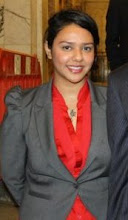
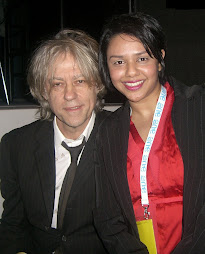
On 17th – 22nd March 2013, the director of Grassroot Diplomat Talyn Rahman-Figueroa was invited to participate at the International Young Leaders Forum and the Third Echenberg Family Conference on Human Rights Global Conference on Human Rights, Democracy and the Fragility of Freedom at McGill University in Montreal, Canada.
Chosen from over 600 applications, Talyn and 23 other Young Leaders from around the world were selected for their leadership in civil society, human rights and democracy, to address the challenges of human rights in today’s world.
The Young Leaders Forum lasted for 3 days where the leaders were to present a one hour workshop to peers on topics including the Maturity, Decay and Rot of Democracies, Youth Disenfranchisement, New Democracies, and Glocal Democracy in the Information Age. During these sessions, it was learned that Australia holds compulsory elections whereby the failure to vote leads to financial penalties to its citizens. The Canadian authorities are failing to compensate the Canadian aborigines for occupying their land. There are still over 70 countries worldwide that have outlawed any discussion and acknowledgement of homosexuality.
The biggest lesson that came out of the forum was a general agreement that democracy doesn’t end with an election vote but is a process that requires active participation of its citizens. As Rab Nawaz, a Young Leader from Pakistan had put it, “the idea of free and open communication between all segments and stakeholders, especially the marginal ones, is not something outside the domain of democracy, rather the essence of democracy.” This is one of the reasons why Grassroot Diplomat is so pivotal in today’s society – democracy can only be ensured if communication between citizens and its leaders are open and mutually beneficial.
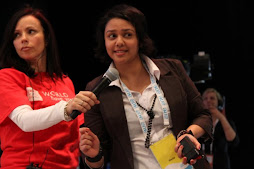
Following her presentation on “Online Hate Speech” at the Young Leaders Forum, Talyn had the privilege to speak at a conference panel alongside Colombian activist Oscar Morales and Executive Director of Advancing Human Rights David Keyes to talk further about negative use of online communication. While Oscar and David highlighted the power of social media and internet surveillance, Talyn was more critical about how the internet has created a powerful anti-tool where hate speech can easily spread and poison the minds of ordinary people in any society. Her presentation illustrated racist and offensive tweets about President Obama from ordinary Twitter-users, and demonstrated the lack of moderation of hate speech by Facebook and similar online institutions. Her presentation ended by asking the audience to stand and in unison repeat the sentence “My name is..., I am from..., and I will not hate” in their mother tongue, as a reminder that we are all human and we feel the same.
While at the forum, the Young Leaders had the privilege of personally engaging with an impressive list of speakers, including Mekdes Mezgebu - Programme Officer with United Nations Development Programme, former Young Leader Dr Alan Huynh from Australia, Professor Abdullahi An-Na’im from Sudan, and Chairman of Quillam, Maajid Nawaz who made a big impact to all of the participants. Maajid retold his story of being detained in Egypt, even as a British citizen, for leading a global Islamist group, Hizb ut-Tahrir. During his time in prison, Maajid noticed that he was turning into a monster whose only wish was to seek vengeance against President Mubarak’s regime. As a prisoner of political conscience, Amnesty International adopted Maajid’s case and helped to free him, but as part of the reconciliation process to heal his wounds, Maajid had to believe in his own humanity and re-humanise before working with others.
Similar cases of rehumanisation was evident in the stories told by other speakers who experienced dire acts of human rights violation by the government. When discussing the Arab Spring, Palestinian journalist Bassam Eid noted that he saw many cases where the “oppressed became the oppressor” and that the “Arab Spring will never bring changes until culture is changed.” Here, Bassam refers to how governance is formed and who the government is supported by. If a dictatorship ends and is replaced by yet another dictator, nothing in the culture of politics and society changes unless drastic measures in ensuring real democracy is in place.
The changing nature of society is evident when a dictator holds top position in governance. Such was the case of author and Iranian activist Marina Nemat, who at the age of sixteen, was arrested and imprisoned by speaking up against her government for making fun illegal. Coming dangerously close to being executed, Marina shared her experiences of being tortured and forced into temporary marriage with guards for sexual intercourse, stating that “torture is designed not to get information...[it] is designed to break the human soul.” Her torturers were once tortured and they sought revenge by torturing others. Like Marina, Flora Terah (Director of Terah Against Terror) shared multiple cases of where she had witnessed her friends get killed in acts of gendered violence. In 2007, Flora was a Parliamentary Candidate for the Kenyan election, during which she was abducted, beaten, tortured and learned that her only son was murdered by those that wanted her to withdraw.
If there is anything to be learned from these stories, it is that freedom is taken for granted by the average person and many individuals are still placed in positions where their freedom must be fought for.
The list of speakers at the conference is a long and impressive one that can be found on http://efchr.mcgill.ca/2013/eng/conference_speakers.php.
On behalf of the Director, Grassroot Diplomat would like to thank organisers at McGill Centre for Human Rights and Legal Pluralism, the McGill Faculty of Law and particularly Penny and Gordon Echenberg of the Echenberg Family Conference on Human Rights for their kind invitation and participation at this highly successful conference.
Thursday, 29 November 2012
Presentation at the Warwick International Development Summit
For a two day conference in Coventry, the Director of Grassroot Diplomat Talyn Rahman-Figueroa had the honour to be invited at the Warwick International Development on 16-17th November 2012. The Warwick International Development is the largest student run development summit in the IS and is a unique platform that allows participants to engage with critical issues facing the field of international development.
On early Saturday morning, Talyn presented her case on the need for grassroot diplomacy in an era where more global grassroots movements are pivotally changing the nature of international diplomacy. In her presentation, the Director noted that the greatest challenge in our social structure is a clear lack of communication between political leaders and the citizens that they represent. She went on to further establish that the problem isn’t that we don’t have tools to communicate, but rather, people and governments have different outlooks on policy issues and governments, for the most part, forget that they are meant to serve a population whose basic needs must be met adequately.
Talyn spoke amongst high-profile speakers including World Bank Managing Director Mahmoud Mohieldin, Burma human rights activist Zoya Phan, and Jeffrey Sachs. Grassroot Diplomat also had the privilege of hosting a seminar in relation to the changing face of foreign policy where more than 50 students had participated on Talyn’s workshop.
We would like to thank the organisers of WIDS for this opportunity to participate and would like to congratulate the students for a wonderful experience. We hope that the students were inspired and we look forward to next year’s conference.
Wednesday, 3 October 2012
Security in an Uncertain World
By Tamara Dias dos Santos
On Friday 28th September, Grassroot Diplomat participated in The Private Military and Security Conference organized by the Royal United Services Institute. RUSI united members from private military and security industries to discuss this complicated and unpredictable issue in the modern international system.
As diversified as it is, the security and defense industry has been facing an increasing presence in privatized services that once used to be monopolized by state-owned agencies. The concept of security has become a lot more sophisticated. The wars of the past decades highlighted an increasing need of a wide range of services that vary from logistical support, operational services, to armed military or security services. Given the number of issues involved, security operations have developed a wide debate within academia, media and civil society groups, thus the conference provided a wonderful opportunity for these actors to engage with private companies in a multidisciplinary discussion about issues currently pertaining to the functioning of security operations.
Since civil society is the most prejudiced in conflicts zones, Grassroot Diplomat provided clarification on current issues faced in conflict areas, as well as insights to how to engage with projects in conflict zones. It was a wonderful opportunity to enhance our business network and to meet potential sponsors, so that we can continue strengthening new and existing projects with the intention of building sustainable relationships with national or international government bodies and the business community.
Friday, 20 July 2012
Sir Patrick Stewart at the UNA Forum
If Jean-Luc Picard, the revered Captain of Star Trek had one maxim alone, it was to treat every person, alien (or sentient object) he encountered with equal civility.
On 14th July at the UK United Nations Association Forum, it was announced that Sir Patrick Stewart, who famously played Capt. Picard is to become the first Patron of the UNA-UK.
The Emmy-award winning actor addressed an audience of hundreds from around the world who had one thing in common: a deep-seated appreciation for the valuable work of the United Nations.
Sir Patrick’s impassioned words were described as ‘icing on the cake’ for a day that was filled with stimulating discussions about the role of the UN in the future, the challenges of a world population of 7 billion, and the relevance of universal human rights.
A debate on the Olympic Truce highlighted the value of sport in peace-keeping and conflict resolution. The Olympic ideal – whereby nations can temporarily set aside their differences and live together in harmony – asks that if they can do it for one day, they can do it forever.
Many of us are familiar with the story of the British and German fighters who laid down their guns and emerged from their trenches on Christmas Day to play a football match. There are countless other examples of sport uniting otherwise hostile groups, highlighting the potential value of sport as a peace-keeping tool.
One of the most well attended sessions during the day was a seminar on ‘How to Work for the UN’ led by Dame Margaret Anstee - the first female Under-Secretary General, among others. Recounting experiences in the field in Philippines and as Head of the Mission to Angola, Dame Margaret presented a career that spanned the world and altered lives, whilst paving the way for women in a male-dominated institution.
The attraction to working for the UN, however, comes from more than just wanting to be part of an international organisation that changes lives. It is about being part of a vision of the world, where people are of equal worth, and humans stand side by side to support each other. It is a utopian vision, but one that comes closer to achieving day by day. For that reason, Sir Patrick couldn’t have put it better in his closing remarks when he said, “the United Nations and UNA-UK must live long and prosper”.
Saturday, 23 June 2012
Arab Spring Opportunities for Women
There is no doubt about the pivotal role played by women in the uprisings in the Arab world in early 2011. However as political transition got underway the message being felt by women has increasingly been to “go home”.
Asserting the fact that opportunities that arise from the Arab Spring should benefit the whole of society, the European Bank for Reconstruction and Development (EBRD) and Women for Women International came together on 20th June to host a conference exploring the creation of economic opportunities for women since the Arab Spring.
Attended by over 150 people, the conference provided a comprehensive overview of the role of women and the many different ways they can both contribute to and benefit from the economy and wider society.
The notable line-up of panellists debated institutional and cultural barriers to female employment; discussed the success rate of micro-finance schemes; testified to the entrepreneurial appetite of women from the Arab world; and explored the key societal factors for gender equality.
Panellists also showcased practical successes including the Cherie Blair Foundation for Women’s mentoring programme; Womanity Foundation’s Nisaa 96 FM radio station for women in Palestine; and breakthroughs made by Women in Informal Employment: Globalising & Organising (WIEGO), a network of activists, researchers and policy-makers raising the profile of women in informal employment.
The event evoked a great deal of optimism evincing that with sustained momentum, the opportunities for women could significantly progress. During her keynote speech Zainab Salbi, the Founding Director of Women for Women International, emphasised that the ‘magnificent event’ that was the Arab uprising represented a crucial opportunity to champion the cause of women.
“We are in that pivotal moment – do we capture it and move forward? Or do we regress?”
http://www.ebrd.com/pages/news/press/2012/120620b.shtml
Thursday, 24 May 2012
Global Diplomatic Forum analyses challenges of modern foreign policymaking
Written by James Johnson
On 17 May 2012 a variety of delegates ranging from embassy representatives to civil servants gathered to examine and discuss the first two years of the British coalition government’s engagement with the world.
One of the key issues brought up at the conference was the need for the United Kingdom to maintain and continue to establish a global economic presence. Alex Ellis, Director of Strategy at the Foreign Office, pointed out that the government had opened 11 new embassies, 8 new consulates and a number of language centres across the world to aid diplomatic and trade links. In regards to the European Union, John Peet of The Economist, Adam Hug from the Foreign Policy Centre and Tomi Huhtnanen of the Centre of European Studies stressed the need for stability in the Eurozone, particularly pertaining to Greece.
In regards to the UK, differences between the coalition partners on the European issue were examined, as were the consequences of David Cameron’s December veto and his move away from the European People’s Party. On reaching out to the BRIC countries, the panel included representatives from Brazil and Russia and a variety of issues were discussed, including the effect of the Falklands on trading with Latin America and Ryzhkov Maxim’s argument for the Europeanization of the Russian polity. The consistent theme of these panels was the need for the UK to reach out to current and new trading partners, in order to open up the road for business to develop and invest in other countries - a key objective for politicians and diplomats alike.
The other dominant focus of the day was the approach the UK should take to assure international security and peace building. The Middle East and North Africa in the wake of the Arab Spring gained general consensus that Britain should be ready to work with Islamic political parties and the Muslim Brotherhood in Egypt. Interventions from the floor were useful, with one delegate pointing to the dangers for women in the region. Potential reform of the United Nations Security Council was posited, as were solutions to the crisis in Syria. The central importance of the Israeli-Palestine conflict was consistently stressed, and Jeffrey Donaldson MP pointed to the lessons learnt from the Northern Ireland peace process in addressing this rift. In the final panel, Bernard Jenkin MP and Quintin Oliver, CEO of Stratagem International offered critiques of the Iraq and Afghanistan invasions, and the Deputy High Commissioner of Pakistan, Nafees Zakaria offered a staunch defence of Pakistan’s role in the fight against the Taliban. All in all, there was a desire for peace to be acquired through diplomacy with a realist analysis of the routes towards this objective.
Grassroot Diplomat found that many of the issues brought up at the event are linked to the merits of grassroot diplomacy. By connecting companies to governments, Grassroot Diplomat can make it easier for businesses to reach goals of international investment. Moreover, by fostering a healthy relationship between charities and governments across the world, those organisations that attempt to spread peace and prosperity in poverty-stricken countries will be stronger. What may seem like an out-of-reach and governmental decision actually relies on the efforts of those on the ground and the concept of grassroot diplomacy strives to achieve this vital participation.
As Younes El Ghazi, CEO of the Global Diplomatic Forum made clear in his opening speech, the conference was a good platform for debate and representation from many different countries and sectors.
The overwhelming view was that power has been decentralised and dispersed, and that the world has become more uncertain and less stable. Nevertheless, government and civil society alike has a role in overcoming these problems, whether economically or security orientated, and the Global Diplomatic Forum’s event was a fine way to explore such solutions.
Tuesday, 21 June 2011
Diplomatic Loyalties
In his article, Charles Crawford highlighted the case of Anwar Choudhury, a senior British diplomat of Bangladeshi origin who joined the Foreign and Commonwealth Office after working for the Ministry of Defence and Cabinet Office. He served as High Commissioner to Bangladesh but was subjected to an attempted assassination in 2004 by local extremists enraged by Mr Choudhury's sense of 'belonging' to the UK.
Crawford then highlighted how "the double agent who did the most damage to British intelligence operations was George Blake, another person with ambiguous private loyalties: his mother was Dutch, his father a naturalised British subject of Turkish/Jewish origin. Blake ruthlessly betrayed dozens of agents who were working for the UK against the Soviet Union, many of whom were believed to have been executed. Sentenced to 42 years imprisonment for his treasonable activities, Blake famously escaped from prison in 1966 and made his way to Moscow where he lived in comfort and honour. He insisted that he had never felt British: 'To betray, you first have to belong. I never belonged,' he said."
"All this suggest that central to the idea of loyalty is self-identity. Few diplomats go through a career without having grave doubts at different points about the morality or wisdom of the instructions coming from HQ." Yet Crawford notes that only a small number of diplomats resign from instructions coming from HQ. I instantly think of former British diplomat Carne Ross, who resigned during UN negotiations for the Iraq War and has since set up his own organisation Independent Diplomat to help territories and groups become formally recognised as states.
Crawford goes on to say that - "Different reasons and rationalisations are found for staying loyal even under extreme circumstances (for example when the leadership of the state the diplomat represents is busy brutalising its own people)." To this, Crawford brings up the fate of Danish diplomat Paul Bang-Jensen who took his own life in 1959. Accordingly, "Bang-Jensen refused to hand over to his superiors at the UN a list of names of Hungarians who in strict confidence had testified against communist atrocities in Hungary. Bang-Jensen feared (not without reason) that top UN processes had been infiltrated by communists who wanted to retaliate against the relatives of those who sought to publicise the truth. His unwavering loyalty to honesty rather than the demands of the UN hierarchy cost him his job and led to his tragic end."
The emergence of Bangladesh as an independent state in 1971/72 gives a striking of what happens when one state splits in two. As Bangladesh's struggle to break from Pakistan intensified, Pakistan's diplomat Abul Fateh faced a painful dilemma in deciding whether to stay on as Pakistan's Ambassador to Iraq, or choose an uncertain future with his native land. Fateh decided to join Bangladesh which caused the Pakistani government to furiously denounce his defection. However, in Fateh's decision, he went on to play a distinguished role in establishing Bangladesh's new diplomatic service and represented his country in Paris, London and Algiers. That said, the current Libya case has given rise to a spectacular number of high profile diplomatic changes of side, with one Libyan ambassador after another denouncing support for the opposition forces struggling to bring down the Gaddafi regime.
Crawford surmised, "...unwelcome problems quickly arise if some diplomats in an embassy switch sides but others don't. Who is running the local Libyan embassy for the purpose of carrying on routine diplomatic business? Who gets invited to which functions? Does a Libyan diplomat who has announced a switch of loyalty still get diplomatic immunity? What about the official embassy care? What if the uprising fails and Gaddafi wins - must we throw these people out of the Libyan embassy? How these questions and many others are answered will depend upon local circumstances and, perhaps, the personalities concerned."
Crawford notes that the worst outcome would be if the violence has no obvious end in sight, which makes us question the outcomes of the Arab Spring. Until now, the Middle East has yet to have its own revelation so there are bound to be political resistance. The Gaddafi elite are clinging on to power despite NATO forces blowing up significant quantities of military equipment. The Libya drama exemplifies the greatest challenge to any diplomat's loyalty to his/her country: what to do if the country slumps into civil war or even disappears altogether?
So, what would you do in such position? What would British diplomats do if Scotland holds a referendum and opts for independence? How do diplomats cope with the instructions of HQ if every nerve in their body rebels against it? Would you rather trust the government you work for, or the family that have always been by your side? It's not an easy question to answer, but it is one that all diplomats must one day be prepared for.
Full article: http://tinyurl.com/6hs6vjm
Wednesday, 6 April 2011
"Women in Diplomacy" published
I have the pleasure to announce my postgraduate dissertation has been published by American Diplomacy. The paper entitled, "Women in Diplomacy, 1990-2010" examines the role of British female diplomats on overcoming gender hierarchy.
As summarised by American Diplomacy, this assessment of the role of women in the British diplomatic service and the difficulties they have faced and can still face in breaking through the "glass ceiling" may be echoed in most of the world' diplomatic corps.
I focused the research on identifying entry points, approaches, methodologies and tools to support gender mainstreaming at the local, national, and regional levels of the diplomatic structure. Through gender analysis, I identified potentials, good practice and remaining challenges in increasing the participation of women in high-level politics and diplomacy in national and local development.
Here is the link: Women in Diplomacy, 1990-2010
Friday, 7 May 2010
Broken British System
The election in Britain is over. The results are in, and the people have spoken… but the problem is, no-one still knows what the results are. We have no parliament, and Gordon Brown is still Prime Minister… without being voted in for the second time! Furthermore, thousands of voters were turned away at the polling station. There was a 65% rise in voter turnout and there was not enough polling stations and staff to handle the pressure. Is this really democracy when people were told that they would not vote because there simply wasn’t the space? This could have made the difference in the votes today, but instead, we have something that is known as a “hung parliament”. This situation has opened our eyes to just how broken the British electoral system is and the British people are furious.
In order to secure a Prime Minister, a party will need to secure a majority of 326 seats. These seats depend on the voters voting for which party a certain borough wants to be presented by. The problem with this is that the UK is dominated by two parties: Labour and the Conservatives…which means that they will always have more members in the party, and always have a higher number seats than candidates from independent parties, fringe parties or even parties like the Liberal Democrats. Confusing? Carry on reading!
Currently, the Conservative party have secured approximately 302 seats, Labour with 232, and Liberal Democrats with 55 – which was incredibly disappointing. The balance of power now depends on the Liberal Democrats. If they pass over their seats to the Conservatives, they will gain the majority votes and David Cameron will become Prime Minister.
In the next few days, Gordon Brown and David Cameron will have to negotiate with Nick Clegg and other independent parties to negotiate on passing their seats onto either Labour or Conservative, but this means a lot of game playing and political ‘bribery’… “Give me your seats and I will work with you on the child tax”.
You can keep reading about what the outcome of this election is but we are confused too! We have no government, many prominent MPs have lost the vote, and Gordon Brown is still our Prime Minister. I shake my head at this poor system. This is not democracy and it is indeed a very poor, unsatisfying and disappointing result.
Tuesday, 16 March 2010
The Hague
With the example of Japan, Maaike Okano-HeijmansFrans-Paul van der Putten illustrated how economic diplomacy is the ‘Asian way of doing things’. The involvement of government in commercial activity is common and it is through investment and trade that Japan communicates with neighbouring countries. spoke broadly on international security in Asia from discussing Chinese sales of weapons to the threat of a nuclear weapon war posed by Western nations.Tuesday, 22 September 2009
The Citizen and the Law of Armed Conflict
1-2 September, 2009
In this two day conference, the Institute for Law Accountability and Peace (INLAP) and World Court Project UK have joined to form a steering group in concerns with accountability and the law. The first day constituted of talks from a wide range of experts while the second day enabled participants to discuss techniques on how to empower citizens.
Day One
The conference began with a review of international and domestic Law, which was examined by Nick Grief (Professor of International Law) and Robbie Manson (Co-founder of INLAP). As concerned citizens, we have the right to know how our country is run and what decisions are being made. However there is confusion as to when a country must adhere to domestic or international law in regards to militarism and defence. For example, US forces based in the UK adhere to US law, even though their operations are conducted on British soil. Therefore when is it appropriate to apply international law, and is the government, parliament, ministerial or individuals held accountable when laws are broken? Robbie Manson answered ‘no’, especially if definitions across international law are not concrete, as is the case for the term “crime of aggression”. Without terminologies in international law fully defined in all countries, accountability is less likely to happen.
While it is challenging to apply law to armed conflict, citizens are experiencing difficulties in relating to the government. Ann Feltham (Campaigns against Arms Trade) highlighted the lack of transparency shown by the government. The government’s annual report in the UN and EU bears little information on research conducted and is extremely vague due to commercial confidentiality. Liberal Democrat MP, Norman Baker urged that citizens make use of the ‘Freedom of Information Act’ (2006) to our advantage. However, while the act has enabled organisations like CAAT to retrieve commercial information on the arms trade, how to publicly present this information poses another question.
Dr. Paul Dorfman (University of Warwick) questioned whether the use of nuclear arms is justified and if the same information is known to the government as it is to the public. At present, there is demand for a public inquiry to be made on the Iraq war, as the reason to attack was not only illegal but publically favoured against. Dr. Andrew Blick (Senior Research Fellow) stated that the British parliament is weak with its conduct with the government. The Prime Minister can still declare war without the consent of the parliament, which undermines the system completely. It is not enough for politicians and officials to listen to citizens when parliamentarians cannot enforce the law on its own government.
The decisions that the government make may be linked historically, ignoring domestic and international law altogether. Dr. Nick Ritchie (University of Bradford) revealed that the justification of nuclear arms may be a matter of national identity rather than for national security. In a political point of view, keeping nuclear arms means maintaining a role as the “pivotal power” of the world. There are political fears that the liberation of nuclear arms may damage special foreign relationships. Labour Party MP, Clare Short agreed that the renewal of the British nuclear system is just an excuse for power, thus encouraging citizens to raise the debate on what Britain’s role should be. If “our political system is broken” then it falls on citizens to urge ministers for legal change.
A key approach to engaging with the government is through opinion polls and campaigning, however each method has its strong and weak points. Milan Rai (Justice Not Vengeance) illustrated that the attack on Iraq still went ahead despite large public demonstrations against the war. Yet, London Mayor, Boris Johnson continued as “Mayors of Peace” after public outcry when he left the position. With accurate and regular information, an action or decision can proceed or be stopped. According to Jenny Jones (Green Group), working with a group/organisation is a useful lobbying tool. By preparing pre-written letters and targeting specific counsellors, a message is likely to be accepted. Furthermore, it is easier to target the media through an organisation as the message behind the campaign is supported by a larger audience.
To round off the first day, case studies on the Trident renewal, War on Terror, and successful interactions between citizens and the government were presented by Angie Zelter (Trident Ploughshares), Gareth Peirce (Solicitor), and Jackie Chase (Brighton activist).
DAY TWO
For citizens to make a real impact to transform the British political system, it is essential to make use of resources already available like the Freedom of Information Act, as well as approaching local media and engaging with MPs.
In Day Two of the conference, 4 workshops were conducted to empower participants in discussions on how to engage in dialogue, petitions, face-to-face meetings, holding events, writing to the press and using IT successfully. These networking approaches were presented by David Bohm (MEDACT), Jenny Maxwell (Chair of West Midland CND), Ashley Woods (Media Consultant), and George Farebrother (World Court Project).
A comprehensive guide to empowering citizens will be developed by the World Court Project, however a short guide to ‘Writing to MPs’ and ‘How to Network’ will be available in this blog shortly.
Wednesday, 4 March 2009
International Dispute Settlement: Developments and Challenges
“International Dispute Settlement: Developments and Challenges”
7th Ruth Steinkraus-Cohen International Law Lecture
4th March 2009
I was astonished to learn that the topic was on International Law and was co-hosted by the Bar Association. Therefore, over half the audience was made up of lawyers and I knew at that moment I would not understand the lecture.
Before the main speaker began, I was greeted by a man sitting in front of me. He was very welcoming and eager to know who I was. Little did I know, I was speaking to a Prince – Prince Mohsin Khan Ali of Hyberdad, and had given me his number asking me to call him early morning if given the opportunity. Also, I found two people within the crowd whom I recognised and knew me, which was great.
The lecture was given by Professor Maurice Mendelson QC, who specialises in public international law including international litigation, arbitration and negotiations with the government. He covered some historical context of the International Court of Justice with how inactive it was during the 60-70s compared to now. He spoke of the law side of the United Nations and how most states break or bend the rules if they feel they can get away with it. If that is the case, laws that have been implemented are not stringent enough to punish those that break the law at will, highlighting the problems and challenges of inconsistency. He stated that “International law is a fragmented system” as governments cannot force states to agree to treaties for universal participation, which is one of the problems. For example, no mechanism for law exists in Gaza, which caused great hardship for its people.
From what I gathered from this incredibly specialised lecture was that the development of international law requires evolution with United Nations aid. The UN is universal governmental body thereby international law should be strengthened and implemented accordingly within member states.