Tuesday, 1 March 2011

Libya: To kill, or to be killed – that is the question?

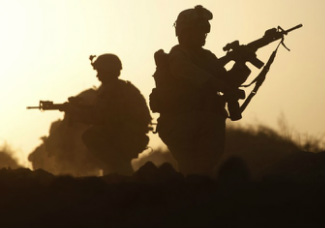
Since the grassroots revolution to overthrow dictators in North Africa, it seems that Colonel Muammar Gaddafi of Libya is less willing to be toppled by his people like Zine El Abidine Ben Ali or Hosni Mubarak. Referring to Wikileaks and Twitter as the ‘Kleenex Revolution’ that holds no force, Gaddafi is determined to maintain territory via the use of military strength alone. While the world speculates on how long Gaddafi can carry on shooting his people down, my concern is mainly focused on the weapons that the Libyan army is carrying as the Western demise.

Arms trade
is a source of deep-rooted capitalism and security, and unfortunately, Western countries like the United Kingdom rely heavily on the arms industry as a form of national income. Sourced from an article in the Guardian newspapers, the United Kingdom was responsible for gaining an armed export license worth €58.9m from Libya, soon after the Libyan arms embargo was lifted in October 2004. While our government is urging Gaddafi to leave quietly, I shake my head at Western countries that preach justice and democracy whilst hungrily exchanging arms contract with autocratic regimes. Italy is noted as Libya’s top arms exporter, having secured an income of €276.7m over the last five years with France and the UK following second and third.

One of the major global issues that have become part and parcel of everyday diplomatic discourse is the concern over human rights. The pressure of international opinion reinforces the pressures within individual countries for safeguarding human rights and the respect for the individual. As emphasised by United Nations doctrines, the respect, promotion and endorsement for human rights is the hallmark of a democratic society, placing special responsibility on democratic nations to uphold human rights domestically and abroad. Yet the willingness to trade arms forfeits the responsibility to protect, and avoiding the commitment to guarantee that British weapons will not be used against repressing local civilians is not a legitimate excuse to act 'innocent' against the atrocities that is befalling the Libyan people today. 

Monday, 21 February 2011

The Meaning of Patriarchy


At the Women’s International League for Peace and Freedom seminar in March 2010, Cynthia Cockburn presented a talk on the links between war and masculinity, which prompted greatly in writing my dissertation on “Women in Diplomacy”. I found that too often, peace organisations react to women’s experiences as victims and survivors of war but very little on the revelation on how women act as active peace-makers especially from positions of political power. 

The seminar entitled “Militarism, Masculinity, and Men” prompted conversation on how gender is relevant in analysing the theory of war, violence and aggression. While causes of war include capitalism, neoliberal capitalism, corporate power, and nationalism, the seminar identified patriarchy as a defining factor to the make-up of war. Cockburn described patriarchy as “the gender order in which we live, the system through which men gain massively by subordinating women”. Considering that women have gained the right to break their silence only 100 years ago, it is not farfetched to blame patriarchy for creating discriminatory social systems that favours of masculinised ideals. Patriarchy has shaped predisposed ideas of society, the need to sustain the military, and justifying causes to go to war. 
Think about what is happening in the Democratic Republic of Congo (DRC). Just a few days ago, Britain showed a TV documentary on Channel 4 about how the DRC is the most dangerous place for women, because women become tools of sexual violence as a means to intimidate the opposing party. Patriarchy survives and functions because women on the whole accept its values and play into men’s power. Think about the West’s obsessions about plastic surgery and body image as women’s ability to aesthetically please men. In the UK, the House of Lords was named in reflection to power belonging to men – the Lords, not the Ladies. In Japan, the geisha women dedicate their life to entertaining men. In Uganda, a portly woman is seen as a status symbol for men. In Morocco, women are forced to take lowly jobs that men refuse to do whilst also expected to look after family members. Why don’t we speak out more clearly that patriarchal gender power relations, especially men and masculine cultures, are implicated in militarism, militarisation, and war? Because it is a tricky subject! Patriarchy is embedded so deeply within societies that it is difficult to unravel, unless we visualise gender as set of forces, values and, expectations that we have to negotiate with.   
To be a female soldier is not the same as being a male soldier, though men do pay a heavy price serving their country in times of war. Female soldiers have difficulty getting promotion, and are frequently harassed and raped by male colleagues and senior officers. Women are rarely in positions of power and are constantly operating in a male-dominant infrastructure. The overall gender order of the world we live in is made up of organisations and institutions each of which has its gender regime. Given the concentration of weapons and the practices of violence among men, gender patterns appear to be strategic. Masculinities are the forms in which many dynamics of violence take shape, and this must be identified as a strategy towards peace and security. Therefore, we must not take for granted the position gender has in revealing the ingredients and make-up of society, but use it as a force to understand and analyse how men and women together can create a more equal and peaceful world.

Tuesday, 1 February 2011

The launch is coming...

We at, ItsOneHumanity, are re-launching the website as the Humanitarian Social Network: where humanitarians meet to educate each other, share their work, connect and act upon pressing issues for the better of humanity as a whole. Join us to spread the word and be involved in sharing the world and taking responsibility for our planet and people.

It all begins Feb.5th!
Your Cause. Your Work. You.
Be there. www.itsonehumanity.org


Wednesday, 29 December 2010

New Year Message 2011


Rounding up 2010, I must admit that this has been one of the most productive year for me. I am en route to completing my Master's in Diplomatic Studies, my novel is complete and currently under review for publication, and politically speaking - the UK has seen a great change to having the Conservative and Liberal Democrat Party join forces in a Coalition Government to run the country. The country is in a bit of mess though. Students' are rioting on the streets due to an increase of annual tuition fees risen from £3000 to £9000, many household benefits have been cut to force people back to work - specifically those under 25 who already have a family, and as of 4th January 2011, our VAT (value added tax) is rising to a staggering 20%. London is not going to be an easy place to live next year, especially if looking for a job will cause some difficulty. But looking on the bright side, Britain seems secure with its relationship with other countries and with all these public financial increase, let's hope that the national debt actually decreases as the government has promised us.

What has 2010 taught us? That war benefits no-one. If Tony Blair's Labour Party did not send Britain to war with Iraq, our social benefits and educational system would not have been suffering as much as it is now. The Coalition Government have to deal with a lot of financial slack which makes them quite unpopular, but someone has to clean up the mess and I think it is better that two parties of polar opposite views have put their differences aside to do the job. Diplomatic secrets revealed by WikiLeaks has taught the world that social media is ever more powerful than traditional media, and that the individual has more freedom of speech and transparency than ever. But I would like to stress a hint of warning. Rupert Murdoch plans to buy the rest of BSkyB TV, and if this happens then he will have control of more than half of the UK national newspapers and television, which endangers our media democracy and freedom of speech, and we can't let corporations and certain individuals turn industries into monopolies of power.

On another note, the world is hanging by a thread with its commitment towards reducing the carbon footprint of industrial nations, the effects it has on climate change, and the promise for all nations to reduce the proliferation of nuclear weapons. I would like to acknowledge the wonderful work done by ItsOneHumanity in presenting global youth voices in regards to climate change at COP16 Cancun in Mexico this year, as well as The Art Effect team in Seattle which empowers and mobilises youth leaders to create social through education, artistic expression ad community engagement. I am proud of my many friends who are taking initiatives to lead the next generation in important political issues that are limiting the life of the future.

2011 will be another incredibly busy year but I am positive that leaders of the youth world, alongside with members of embassies and world leaders, will look into the best interest of its citizens over national interest, and will prioritise its funds towards better human security. This statement is extremely idealistic, but without having hope, one will never be motivated enough to do the best they can.

I want to leave you with a video from our Deputy Prime Minister Nick Clegg (leader of the Liberal Democrats), and I want to wish you all a happy and prosperous start of the New Year. (above)

Thursday, 18 November 2010

A thousand messages of hope for Cancun


This story was featured in TckTckTck, as the European Regional Ambassador for ItsOneHumanity.
http://tcktcktck.org/stories/campaign-stories/thousand-messages-hope-climate-deal-cancun#comments 

In September of this year, ItsOneHumanity launched its Global Visual Petition Project for Climate Justice with the goal of giving young people a voice in the United Nations climate talks in Cancun. With the help of like-minded youth from around the world, they built a website with a visual petition system in 54 languages.

“To many of us young people, it made no sense that we were still approaching the issue of climate change as divided nation states, being fully aware of the potential damage it could have on our common planet and on everyone of us” says founder Elliott Verreault, 22, of Canada.
Over the past two months the petition has gathered more than 1,000 messages of support. You can watch a short video summary of their campaign progress so far at right.
Testimonials from ItsOneHumanity’s supporters show the depth and breadth of reasons why they’re calling for a global climate deal.
"Having witnessed firsthand the failure of the Copenhagen COP15 Climate Change Summit in 2009, I felt incredibly frustrated that world leaders were unable to look beyond their own national self-interest rather than to securing a binding treaty that benefitted the entire world” - Talyn Rahman, 25, United Kingdom
“World leaders need to realize that they represent global citizens when they sit in the conference. What we really need to do for climate justice is to have them take off their ego and think about real actions for our future generations. I would blame myself if my future children cannot live like they should.” - Sahid Priambodo, 19, Indonesia
The organization plans to present the signatures to representatives from the UNFCCC at the climate negotiations in Cancun later this month. If you want to add your name and support to the campaign, visit their website: ItsOneHumanity.org

Sunday, 3 October 2010

Make your voice heard for Climate Justice!


Having witnessed firsthand the failure of the Copenhagen COP15 Climate Change Summit in 2009, I felt incredibly frustrated that world leaders were unable to look beyond their own national self-interest rather than to securing a binding treaty that benefitted the entire world. I was very pleased to join 'ItsOneHumanity' as one of the Regional European Ambassador. Training in diplomacy, I felt that the 'ItsOneHumanity' project was incredibly valuable in reaching out to young people from all over the world as a uniting voice to re-instate that we belong to one humanity.

As a team of young people ourselves, this project gives us a platform to remind people that we all serve a purpose to look after our planet - as one unit. Within a short space of time, the team of 'ItsOneHumanity' were able to draft a strong statement of solidarity for all to sign. This petition will then be presented to world leaders at the next global summit in Mexico as a form of lobbying. Whether or not they listen, this is a great opportunity for everyone to show that people across the world are in support for a better, protected world for now and the future. 

To support this project, please spread the word and the sign the petition.
http://www.itsonehumanity.org/GVPP.html

Tuesday, 3 August 2010

UN Intensive Training


In July 2010, I was accepted by the John C. Whitehead School of Diplomacy and International Relations at Seton Hall University to participate in an intensive training course at the United Nations Headquarters in New York. This unique opportunity enabled me to learn about the workings and political dynamics of the UN from a combination of 19 top-tiered UN officials and practitioners.
Since its creation in 1945, the UN is till the only organisation that brings together 192 nations as tact for political intervention and preventive diplomacy. Unique for its peacekeeping capabilities and humanitarian assistance, members rely on the UN when no other options are available to them. This is true of Africa as 70% of UN time is spent on African matters. As a member unit, 150 countries participate in peacekeeping by sending troops or contributing financially. Developing countries like Bangladesh and Ghana are leading in troop contribution, whereas members of the Security Council and member donors like Japan concentrate their efforts in financial aid. Even then the UN is in a fragile state as a result of reduced political support and shrinking funds. In recent years, UN bases and blue-helmet troops have been attacked by terrorists as they no longer accept the UN as impartial party. Now, UN bases look more like armed camps which ultimately sends the wrong signal to rogue actors.

The biggest scepticism shown towards the UN is surprisingly by the United States. Before Barack Obama’s presidency, the tone of US statements was confrontational and self-serving. US public opinion of UN work was superficially shallow and widespread. In an effort to shift public attitude of the US-UN relationship, President Obama has opened up engagement with the UN by resuming financial support to particular UN missions, and accepting to host the 64th General Assembly this September. Nevertheless it is clear that the UN is doing a poor job in relaying positive news of its missions to the public. The most current media spectacle is generated around Secretary-General Ban Ki Moon’s public perception. A week before this training, a highly controversial document known as the Alhenius Memo had described Moon as being a spineless, deplorable leader compared to Kofi Anan. Depicted as the “invisible man”, UN members are pondering whether Moon was the “wrong” Asian candidate for the job. This week, officials have confirmed that Moon is likely to secure a second term in office, unless China and Russia change their mind.

On a positive note, the UN is leading on “global goods” issues such as emissions of greenhouse gases, global health, and cross-bordering diseases. One of the biggest focuses for many UN offices is the Millennium Development Goal (MDG). While the main MDG targets will not be met in 2015, the general poverty level has been halved since its initiation. In collaboration with corporations, the UN Office for Partnership is working to leverage investment in developing countries so that local governments can establish social security for its people through infrastructure, governance, and education. The three pillars of the UN development, peace and security, and human rights – is central for rebuilding a failed nation. However, many practitioners have argued that these pillars exclude underlying problems that inevitably lead to insecurity. Like a vicious cycle, human security cannot be sustained without tackling poverty, corruption, human and drug trafficking, preventable diseases, deforestation, climate vulnerability, arms trade, and gender discrimination. Much of the poor rely on these methods to survive. Development cannot happen without combating weaknesses that can potentially break the political infrastructure. The UN must integrate these issues into the three pillar system, or else root problems will continue to hinder any achievements.
Stigma and discrimination is the biggest killer for change, specifically for issues linked to HIV/AIDS, women’s rights, trafficking and global health. According to the UN Secretariat office, about 33.4 million people are living with HIV of whom more than 30 million live in low and middle-income countries. There has been a decline in AIDs due to prevention education to help change attitude of sexual behaviour in African youths, yet the problem is being crossed over border through human-drug trafficking and the sex trade. This is certainly true of Eastern Europe. Currently, Russia is giving no money to HIV prevention owing to stigma and discrimination barriers. Even the US still suffers from HIV stigma dating back from 1981, when the disease was called the “gay cancer”. In relation to the MDG, mothers are most stubborn in allowing their children to be vaccinated in fear that the needles will make their child sicker. Nigeria has the biggest number of polio as mothers are unwilling to immunise their children due to cultural and religious beliefs.


Involving women in the political and educational development is becoming ever more important. Although Security Council Resolution 1325 (SCR1325) was initiated to involve women in all aspects of decision-making, it seems that even the UN is slow to adopt. Currently, there are 21 female ambassadors to the UN, and 5-6 women are leading peacekeeping operations. This is an improvement but taking into account that 192 countries are UN members, such a number is far and short off target. When considering applicants for a senior position, 1 out of the 3 recommended candidates must be a woman. The author of the Ahlenius Memo was shortlisted for top appointment but she refused as felt discriminated to be shortlisted because of her gender. The question begs whether female appointment is an issue of equality or a struggle over principle or power. Ban Ki Moon supports SCR1325 but without NGO pressure, implementation will continue to be side-stepped by member states.

During training, the biggest surprise for me was to learn about the UN Democracy Fund. This office was set up in 2005upon Kofi Anan stating that democracy is a human right. This is all well and good but as a Western concept, I doubt that democracy will be accepted as a norm for every society. China is a clear example. Chinese foreign policy revolves around compromise and this is evident in their peacekeeping contribution. Anan had defined the basis of sovereignty as ruled by the people and if the sovereign violates their rights, the UN has the right to intervene. China may not agree with this definition, but as a compromise to support conflict prevention, China is willing to contribute troops. Democratisation is an internal matter. The agency cannot do its work without the aid and support of local governments and civil society. At present, 4200 NGOs are accredited to the UN. UN staff is too few and resources are limited, therefore the UN rely on NGO relationship to drive and support the organisation. It is clear that the best way to work with the UN is to join a UN-accredited NGO.

For more information on how to work for the UN and the speakers I have met, please email.

Thursday, 15 July 2010

Moroccan Executive Summary


As part of our diplomatic training, professors of Al-Akhawayn University had opened our eyes to domestic and foreign issues related to Morocco and the Middle East. Together with classroom training and visits to the Moroccan Parliament, and Ministry of Foreign Affairs in Rabat, I have compiled a short summary of what we have learnt on Moroccan and Middle Eastern Politics.
The Middle East is made up of 21 countries, 16 of which are ruled under the single party ‘populist authority’, or the family-ruled monarchical regime. Morocco falls under the monarchical political system, whereby the King is constituently the overriding political decision-maker. As the direct descendent of Prophet Muhammed (pbuh), Morocco’s current sovereign HM King Mohammed VI is also recognised as the Head of Religion. Educated with a law degree, the King has the expertise to modify Islamic law to modern circumstances, which is unlike many Islamist state.
Domestically, the King is favourable for the improvement of women’s rights. After decades of protests by feminist organisations, the King has supported the reformation of the ‘Family Code’ which ensures that women become men’s partner in rights and obligation. Reforming the Moudawana has enabled women the right to divorce, retain property, pass national rights to her children, and increase the minimum age of marriage to 15. However, even with these changes, women’s freedom of movement remains restrictive especially in rural areas. Morocco has one of the highest illiteracy rates (80-90% of all ages) and is still 47% rural. The law says that everyone must attend school, however the mixture of French, Arabic, Spanish and local Berber dialect makes educating the nation a difficult process. Universities remain available for the elite, which leaves the rest of the nation behind. Furthermore, the implementation of laws is quite a big problem. For example, the law states that alcohol is forbidden, yet the purchase of alcohol is readily available.


On an international level, Morocco prioritises its foreign agenda around counterterrorism, the unification of the Maghreb, and the Western Sahara. It is quoted that 17% of Al-Qaeda organisation is from Morocco, however Moroccan officials were in denial that terrorism could ever affect them. Such thinking changed when a bomb exploded on May 16, 2003 in Casablanca. Since then, Morocco has been cooperating in counterterrorism strategies in North Africa, and has even issued special permission for the US to keep military bases on its soil. 
Our visit to the Ministry of Foreign Affairs in Rabat confirmed that the issue of Western Sahara and the Maghreb Union is much complex. Western Sahara is seen as a geo-political issue between Algeria and Morocco, however Morocco had withdrawn from the African Union as they did not support Moroccan claim over the Western Sahara enclaves. People of the Sahara would prefer to be independent yet the right for self-determination is clearly not acknowledged by either party. Similarly, the issue of the Maghreb Union is unlikely to be resolved. The unification of the Northern African region (between Tunisia, Morocco, Algeria, Libya and Mauritania) became homogeneous after French colonisation, however each nation have conflicting interest that fail to keep the alliance together. A diplomat at MOFA told us that such issues will be resolved once the problem between Palestine and Israel subsides, hinting that these security matters will continue for some time.

Monday, 12 July 2010

Straight-shooting Marrakech

As one of the most popular tourist destination, I was excited to experience a weekend in Marrakech. At first, I didn’t understand what was so fascinating about this city until we were bombarded by countless palm trees and camels, the scorching 50°C heat, and the vibrant and populated ‘suk’ (marketplace) that seemed to amplify the Morocco’s exoticness.

Unlike Rabat, the trip to Marrakech was purely for pleasure, despite the unbearable heat and 2-day bus ride from Ifrane. As part of the tour, we visited the Bahia Palace designed by the architect Muhammad al-Mekki of Marrakech, the Royal Tomb, the olive garden, and the Medersa Ben Youseff. The architecture of the Medersa Ben Youseff mosque was incredibly beautiful. The traditional Islamic art sculpting of the walls and ceilings truly added an ornate feeling to the already serene and beautiful monument.

Apart from the traditional sightseeing offered by Marrakech, I felt intrigued to explore the famous suk – the Jamaa-El Fna Square, where you can watch snake charmers, storytellers, henna artists and musicians. We came here twice, once in the dead heat of the afternoon and then in the more comfortable evening, which was when the marketplace came to life. A quick walk through the square would take 20 minutes on average with the constant distraction of local traders desperately seeking attention away from their competing neighbours. As a country that is extremely reliant on the tourist trade, the suk is the perfect tourist trap. We were warned by our tutors that Marrakech would be filled with imitators who pretend to be the Blue Men of the Desert, like the man I met in Chefchaoen, and to not buy items blindly without haggling down the price.

Considering that I live in a London borough scattered with Indian fashion stores, negotiating prices for goods wasn’t a new concept for me. However I recognised that my British upbringing in being polite to avoid confrontation made me an ineffective haggler. Although the prices of many items were jacked up for tourist, I felt guilty in persuading traders to knock off £2-5 off my purchase when I knew I could afford it. My colleague, Anca Sol from Romania, had a very different approach in to negotiating, which I have dubbed the ‘straight-shooter negotiation technique’.

The ‘straight shooter’ technique is a very direct approach – you name a price without any room for negotiation, full stop! If the trader disagrees with the price, you walk away and look elsewhere. The advantage of this technique is that it is 100% effective if the right pressure is applied. However, such a technique can quickly lead to an ill-feeling of anger by the other party to the point where they will never want to do business with you again. The ‘straight shooter’ technique isn’t for everyone – and it most certainly wasn’t for me.

Sunday, 4 July 2010

Trip to the North


This “trip to the North” was an exciting spur-of-the-moment opportunity after our scheduled weekend to Rabat was cancelled. I quickly became excited with the idea of hiking and touring in the deep valleys of the Northern Moroccan borders even if the decision to participate was sudden. The two day tour included hiking and swimming in Cabo Negro beach, Akshour, and Chefchaouen with 52 students including 15 exchange students.
The journey to the North began at 1.30am on Saturday where we drove approximately 7 hours to our first destination. Cabo Negro beach in Tetouan is close to the borders of Spain, therefore the Spanish language (instead of French) was widely spoken in this region. After a short break for breakfast, we arrived at the beach, which was deserted largely due to the cold wet weather. Our so-called ‘beach day’ lasted only 30 minutes before the temperature dropped and the skies opened up to torrential downpour.
Disappointed, we returned to the mini vans to travel to our next destination – Chefchaouen, where our accommodation for the night awaited us. As we left Tetoun, I was amazed to see the city littered with the Moroccan flag. Every few yards, another set of flags waved in the air. We were told that the King Mohammed VI had visited Tetouan a few days ago, and it is a tradition to decorate the town with its national flag and colour for the special visit. It is apparent that the King of Morocco has great executive power in the country more so than the Moroccan Prime Minister. Security forces in uniform are seen everywhere. While police presence indicates the autocracy of the nation, the sheer volume of security actually makes me feel safe in this country, especially when terrorism is a major problem.

In the local Berber language, Chefchaouen means “the horns” - I presume, of the mountains, which was exactly what we saw when driving through the valley. The scenery was spectacular with the additional treats of seeing farmers ploughing the land, people riding donkeys and even some locals waiting by the roadside for a hitch-hike. The town of Chaouen is well-known as the ‘blue city’ – all the buildings are painted sky blue, which brings about an immense sense of calm to the general atmosphere. I was surprised with how touristic the town was and even more surprised with just how windy it was. It felt like a typhoon but we still managed to explore cute little stores that sold very interesting handicrafts and jewellery. I was in awe of our accommodation – Casa Hassan – which looked like a room from an Arabian fairytale. I also met a man who was apparently from the desserts of Morocco. He seemed quite taken by me being ‘dark-skinned’ – I get mistaken as a Moroccan quite often due to my complexion. He dressed me up as a typical Berber woman, which was quite a strange experience.
The next day, we travelled to Akshour, the deep Northen valley of Morocco where we hiked through rocky terrain. Unfortunately I had many technical issues with my footwear. As we were trekking through shallow rivers, my sandals broke twice. I actually ended up hiking for 5 minutes bear-foot until finally deciding to destroy my trainers in the water. The hike must have taken 2 hours until finally reaching ‘the bridge of God’ where we rewarded by cold mountainous streams to swim in. I only soaked my foot in the water, but many students were brave enough to dive straight into it.
The trip to the North was most certainly a memorable experience and on behalf of the Diplomatic Academy of London, I would like to thank the Students Activities Department of AUI for organising this amazing experience for us.