Friday, 15 March 2013

Improving Ecuador: A Talk by Secretary of State, Dr Fander Falconi


Written by Nana Adjekum

On Tuesday 12th March 2013, Grassroot Diplomat was invited to the University College London for a meeting with the Ecuadorian Secretary of State, Dr Fander Falconi. Dr Falconi is responsible for the country's economic and social development plan. The main aim of the talk was to discuss the new direction that Ecuador is embarking on and how this new change relates to their relations with their Latin American neighbors.

Ecuador in the past has been labeled one of the poorest countries in Latin America. According to World Vision, eight percent of workers are unemployed and about thirty five percent live below the poverty line. The schools in Ecuador are free but by operating on low income, the sustainability of children's education falls on the parents. UNICEF claims that indigenous and Afro Ecuadorian families are more likely to grow up in poverty and lack access to education. Baring these challenges in mind and with a newly elected president Rafael Correa, Dr Falconi has faced these problems head on and positive outcomes are emerging.

During the talk, Dr Falconi explained that in the years of 2007-2012, Ecuador's growth rate was higher than the average Latin American country. Their economy is growing on average five percent each year. Additionally, external debt has been managed effectively which has encouraged European countries such as Greece to take heed. Ecuador has done the opposite to World Bank and the IMF suggestions and has put more emphasis on public investment which in return has worked to their economic advantage. One of Ecuador's main visions is to eradicate poverty through socialist good living. This idea has resulted in free healthcare for the people of Ecuador. They have decreased child work labour and have increased the number of children in school. Although Ecuador's economy relies heavily on exporting their natural resources, they are working on using their natural resources internally and more effectively. They are also looking on moving away from finite resources and seeking other options in the next few years.

Friday, 1 February 2013

Grassroot Diplomat Honours Six Politicians and Diplomats for Selfless Acts


LONDON, January 31, 2013 – The winners of the inaugural Grassroot Diplomat Initiative Awards were announced last night at a ceremony in London. Over 120 distinguished guests from embassies, political offices, universities and non-government organisations gathered to celebrate the achievements of outstanding diplomats and politicians representing the people’s interest at the highest level.

Host and director of Grassroot Diplomat Talyn Rahman-Figueroa described the nominees as “worthy examples for all others... committed to listening and respecting the needs of the people”. The competition was stiff with over 30 government officials shortlisted for this honour but there could only be six winners. Winners were judged on the quality and outreach of their campaign, level of support within the community and results of their direct actions.

The full list of winners:

• Robert Buckland, MP for South Swindon 
        Policy Driver Winner for Special Educational Needs
• HE Mauricio Rodriguez Munera, Embassy of Colombia 
        Policy Driver Winner for Evaluating International Drug Trade
• Baroness May Blood MBE, House of Lords
        Social Driver Winner for Integrated Education in Northern Ireland
• HE Ivan Romero-Martinez, Embassy of Honduras 
        Social Driver Winner for Supporting Street Children
• Debbie Abrahams, MP for Oldham East and Saddleworth 
        Business Driver Winner for Pay on Time Campaign
• HE Dr Suresh Chandra Chalise, Embassy of Nepal 
        Business Driver Winner for Business Integration of the Gurkhas

Honourees

• Tom Watson, MP for West Bromwich East
• HE Ruth Elizabeth Rouse, High Commission of Grenada
• Embassy of the Republic of Bulgaria, London
• Jeremy Corbyn, MP for North Islington
• Councillor Chris Maines, Blackheath Ward
• HE Daniel Taub, Embassy of Israel

The Initiative Award was supported by Chateau de la Ligne, Kenya Airways, St James Theatre, Gastronomica, World Vision Photography, All Health Studio, Denbies Wine Estate and the Grange Hotel. Guests were treated to live cello wine reception, 3-course meal, raffle fundraising, and performance by Eurovision artist Imaani.

Thursday, 29 November 2012

Presentation at the Warwick International Development Summit


For a two day conference in Coventry, the Director of Grassroot Diplomat Talyn Rahman-Figueroa had the honour to be invited at the Warwick International Development on 16-17th November 2012. The Warwick International Development is the largest student run development summit in the IS and is a unique platform that allows participants to engage with critical issues facing the field of international development.

On early Saturday morning, Talyn presented her case on the need for grassroot diplomacy in an era where more global grassroots movements are pivotally changing the nature of international diplomacy. In her presentation, the Director noted that the greatest challenge in our social structure is a clear lack of communication between political leaders and the citizens that they represent. She went on to further establish that the problem isn’t that we don’t have tools to communicate, but rather, people and governments have different outlooks on policy issues and governments, for the most part, forget that they are meant to serve a population whose basic needs must be met adequately.

Talyn spoke amongst high-profile speakers including World Bank Managing Director Mahmoud Mohieldin, Burma human rights activist Zoya Phan, and Jeffrey Sachs. Grassroot Diplomat also had the privilege of hosting a seminar in relation to the changing face of foreign policy where more than 50 students had participated on Talyn’s workshop.

We would like to thank the organisers of WIDS for this opportunity to participate and would like to congratulate the students for a wonderful experience. We hope that the students were inspired and we look forward to next year’s conference.

Tuesday, 20 November 2012

Director at Envision UK "We Are London" event

By Giulia Amparo Bruni Roccia

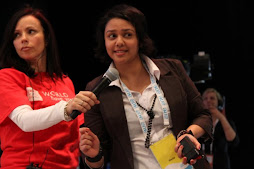
On Tuesday the 12th of November, the Director of Grassroot Diplomat Talyn Rahman-Figueroa had the honour and pleasure to be invited by Envision UK to speak at the "We Are London" event in Westminster.

She addressed students who had come from over 40 schools of London, to participate in activities, workshops and discussions, to share their knowledge about what they can accomplish in their societies with their skills. Very bright young people with a lot of potential attended the event, people who are hoping to start up their own businesses in the future.

Talyn shared her story about how she came to found Grassroot Diplomat, gave tips about the route one should take towards founding one’s own business, and urged the students to build connections, believe in their cause, and believe in themselves. “Dream big; aim high” as she emphasised.

To see her speech in full, click here.


Wednesday, 3 October 2012

Security in an Uncertain World


By Tamara Dias dos Santos

On Friday 28th September, Grassroot Diplomat participated in The Private Military and Security Conference organized by the Royal United Services Institute. RUSI united members from private military and security industries to discuss this complicated and unpredictable issue in the modern international system.

As diversified as it is, the security and defense industry has been facing an increasing presence in privatized services that once used to be monopolized by state-owned agencies. The concept of security has become a lot more sophisticated. The wars of the past decades highlighted an increasing need of a wide range of services that vary from logistical support, operational services, to armed military or security services. Given the number of issues involved, security operations have developed a wide debate within academia, media and civil society groups, thus the conference provided a wonderful opportunity for these actors to engage with private companies in a multidisciplinary discussion about issues currently pertaining to the functioning of security operations.

Since civil society is the most prejudiced in conflicts zones, Grassroot Diplomat provided clarification on current issues faced in conflict areas, as well as insights to how to engage with projects in conflict zones. It was a wonderful opportunity to enhance our business network and to meet potential sponsors, so that we can continue strengthening new and existing projects with the intention of building sustainable relationships with national or international government bodies and the business community.

Monday, 1 October 2012

Recent progress on reconciliation and development in Sri Lanka


On 20th September 2012, the Sri Lankan High Commission invited Grassroot Diplomat to visit a special one-day photo exhibition to highlight the renaissance of Sri Lanka after a long history of terrorism and war.

The photographic exhibition was divided in two parts examining the violence of the Liberation Tigers of Tamil Eelam (LTTE, or more commonly known as the Tamil Tigers) and the reawakening after defeating 30 years of terrorism.

During the reign of the Tamil Tigers, many policy-makers and academics died during the civil war but the main victims of such atrocity were local people who were unable to escape. Methods of terrorism included public transport attacks, suicide bombers and the enrolment of child soldiers – all of such violence were depicted in this illustrative exhibition. The second part of the exhibition led to the hope that arisen from violence. The end of violence and commitment of the government to reconcile the communities are highlighted in particular.

The Sri Lankan Government has initiated several social economic and cultural programmes to uproot communal differences. The other challenge for the government is to wipe out misunderstanding cultivated by the LTTE among the international community and certain sections of the Tamil Diaspora. Nowadays, massive development projects are being carried out in the Northern and Eastern Provinces. These regions are the paths of physical and social development. Moreover, the country as a whole is becoming a single tourist destination with focus on urban and rural development and the reconstruction of infrastructure to facilitate this.

There are still many things to do and the communities are still in need of help to overcome their past. Legal practitioners at the exhibition expressed their concerns to this issue with Mr. Fritz Kodagoda, Barrister Mediator, talking about how local law centres are in urgent need of funding for development. In its goal to bridge the gap, Grassroot Diplomat is interested in focusing its connections in building better relationships between the people and government of Sri Lanka and will continue to pay close attention to developments made in this region.

Thursday, 20 September 2012

An Evening with Liberia's Vice President, Joseph Boakai


Written by Natasha Dyer

On Saturday 15th September 2012, Grassroot Diplomat was invited by the Royal African Society and Fasken Martineau LLP to a talk by the Vice President of Liberia - Mr Joseph Boakai. During his talk, the Vice-President made it clear that agriculture is the key driver of GDP growth in Liberia, accounting for over 40% of GDP since 2008.  Rice and cassava are the staple food crops, while rubber, oil, palm and cocoa are the dominant export tree crops. Liberia also hosts some of the biggest rainforests in the West African region.

The Vice President linked agriculture production to the stability of the country, stipulating that economic growth is the best catalyst to achieving a stable and peaceful post-conflict society, after decades of civil war that left the economy tattered.

Mr Boakai talked of plans the government had put together to stimulate the growth of economy and said they had “achieved what they had set out to do” at the start of their term, with Liberia now being the fastest growing post-conflict economy in Africa. Now the minister is in London to attract investors to the country’s burgeoning agricultural sector.

His Excellency did admit, however, that true development in Africa was easier said than done, and stated that they had a long way to go, emphasising the need for a multi-faceted economy with a diverse range of coordinated activities.

Outlining Liberia’s 2030 vision for the agricultural sector, Vice President Boakai did not hesitate to mention the role of women. With 80% of Africa, and 50% of the world’s food produced by women, African economies are increasingly relying on women’s skills, hard work and efficiency levels. However, women in Africa own less than 5% of the land they farm, which the government has assured will work on laws to reverse the system and put an end to discriminatory practices included also in tribal laws.

With no resolution in sight, the conversation quickly turned to the importance of protecting natural resources and eco-systems in Liberia, to avoid the bio-diversity crises seen in much of Africa. These crises not only affect the economy and landscape of Africa, the Vice President stated, but hit the rural poor the hardest, and he emphasised their need to protect the most vulnerable people in the country and continent from the widespread challenges of rising food prices, water scarcity and lack of resources. This, he said, is where the investors come in. But why is Liberia seeking investment from the west instead of from African investors when logging companies have granted more than 60% of the country's rainforests since Nobel Prize winner Ellen Johnson Sirleaf became president in the six years?

The Vice President stated that the majority of the country’s investors were African with Liberia owning 45% share of forests and 43% of the land in the region. The government had earmarked protective areas and was not selling land to investors, only opportunities to invest in bio-diversity, meaning better livelihoods for the Liberian people.

Questions arose over the lack of diverse representation in the Liberian Parliament, with Matthew Plaut claiming that only 11 of the 447 MPs were not from the ruling party, plus claims of lack of transparency in oil contracts and extraction methods. The debate also mentioned diamonds and the ongoing appeal of convicted former Liberian President Charles Taylor on his crimes in Sierra Leone from 1996 to 2002. Mr Plaut suggested there had been a limited commitment from Liberia to comply with the Kimberley process with regards to the extraction of diamonds, but the Vice-President was adamant about the government’s commitment to the process after the damage caused by the diamond conflict to the Liberian people. 

The discussion was concluded with final questions over the future of Cote d’Ivoire, downscaling of UN presence in Africa, IMF and World Bank reforms, the clearing of national debt, the importance of education and job creation for young Africans.  The Vice-President’s overall message was that there needed to be “a clear break from the past” with better approaches to business partnerships and governance and emphasised the need for greater international collaboration. 

The discussion was lively and robust, and Grassroot Diplomat thanks the organisers for this insight into Liberia’s governance.   

Friday, 20 July 2012

Sir Patrick Stewart at the UNA Forum


If Jean-Luc Picard, the revered Captain of Star Trek had one maxim alone, it was to treat every person, alien (or sentient object) he encountered with equal civility.

On 14th July at the UK United Nations Association Forum, it was announced that Sir Patrick Stewart, who famously played Capt. Picard is to become the first Patron of the UNA-UK.

The Emmy-award winning actor addressed an audience of hundreds from around the world who had one thing in common: a deep-seated appreciation for the valuable work of the United Nations.

Sir Patrick’s impassioned words were described as ‘icing on the cake’ for a day that was filled with stimulating discussions about the role of the UN in the future, the challenges of a world population of 7 billion, and the relevance of universal human rights.

A debate on the Olympic Truce highlighted the value of sport in peace-keeping and conflict resolution. The Olympic ideal – whereby nations can temporarily set aside their differences and live together in harmony – asks that if they can do it for one day, they can do it forever.

Many of us are familiar with the story of the British and German fighters who laid down their guns and emerged from their trenches on Christmas Day to play a football match. There are countless other examples of sport uniting otherwise hostile groups, highlighting the potential value of sport as a peace-keeping tool.  

One of the most well attended sessions during the day was a seminar on ‘How to Work for the UN’ led by Dame Margaret Anstee - the first female Under-Secretary General, among others. Recounting experiences in the field in Philippines and as Head of the Mission to Angola, Dame Margaret presented a career that spanned the world and altered lives, whilst paving the way for women in a male-dominated institution.

The attraction to working for the UN, however, comes from more than just wanting to be part of an international organisation that changes lives. It is about being part of a vision of the world, where people are of equal worth, and humans stand side by side to support each other. It is a utopian vision, but one that comes closer to achieving day by day. For that reason, Sir Patrick couldn’t have put it better in his closing remarks when he said, “the United Nations and UNA-UK must live long and prosper”.

Saturday, 23 June 2012

Arab Spring Opportunities for Women

Written by Isabel Whisson

There is no doubt about the pivotal role played by women in the uprisings in the Arab world in early 2011. However as political transition got underway the message being felt by women has increasingly been to “go home”.

Asserting the fact that opportunities that arise from the Arab Spring should benefit the whole of society, the European Bank for Reconstruction and Development (EBRD) and Women for Women International came together on 20th June to host a conference exploring the creation of economic opportunities for women since the Arab Spring.

Attended by over 150 people, the conference provided a comprehensive overview of the role of women and the many different ways they can both contribute to and benefit from the economy and wider society.

The notable line-up of panellists debated institutional and cultural barriers to female employment; discussed the success rate of micro-finance schemes; testified to the entrepreneurial appetite of women from the Arab world; and explored the key societal factors for gender equality.

Panellists also showcased practical successes including the Cherie Blair Foundation for Women’s mentoring programme; Womanity Foundation’s Nisaa 96 FM radio station for women in Palestine; and breakthroughs made by Women in Informal Employment: Globalising & Organising (WIEGO), a network of activists, researchers and policy-makers raising the profile of women in informal employment.

The event evoked a great deal of optimism evincing that with sustained momentum, the opportunities for women could significantly progress. During her keynote speech Zainab Salbi, the Founding Director of Women for Women International, emphasised that the ‘magnificent event’ that was the Arab uprising represented a crucial opportunity to champion the cause of women.

 “We are in that pivotal moment – do we capture it and move forward? Or do we regress?”

http://www.ebrd.com/pages/news/press/2012/120620b.shtml

Sunday, 3 June 2012

Parliamentarians and Citizens Unite for Rio+20 Debate


Written by Isabel Whisson

On 21st May 2012 in the magnificent St Martin-in-the-Fields Church, over 500 people from all sectors of society joined the Environmental Audit Committee in a public debate on how to work towards a sustainable, green economy.

The event, which also launched photographer Mark Edwards’s latest project Whole Earth? was led and expertly chaired by Member of Parliament for Stoke on Trent North and Chair of the Commons Environmental Audit Select Committee, Joan Walley.

Kick-started with the presentation of Mark Edwards’s first photographic campaign ‘Hard Rain Project’ the audience were moved by powerful and emotive images illustrating the truly devastating effects of climate change set to the lyrics of Bob Dylan’s prophetic song ‘A Hard Rain’s A-Gonna Fall’.

Members from a select panel of experts addressed the audience and committee on the tough questions urgently needing to be faced.

‘Does democracy help or hinder the green economy?’
‘Is Capitalism the cause and can it be the solution to climate change?’
‘How do we bring the vested interests of powerful groups under control?’

The debate drew several conclusions – amongst them that successive Governments in all countries need to make a sustained effort to prioritise environmental policy; and that there ought to be economic value in protecting our natural resources, not just using them for consumption. Caroline Lucas MP, the first and only Green Member of Parliament underlined the importance of framing the Green Economy as a positive change.

It was made clear that human beings have to change the way we live in order to avoid the existential threat of climate change.  Given the severity of this fact however, members of the audience did not leave dreading the inevitability of a destroyed planet. Instead the event brought hope.

It showed us that all people, from different backgrounds and professions, and in different ways could make a difference. In the words of soon-to-be Deputy Secretary-General to the UN Jan Eliasson, who joined the debate via video, “No one can do everything, but everyone can do something.”

The Rio+20 debate was a beautiful example of the value and constructiveness of political leaders joining forces with members of civil society and ordinary citizens. It also made one thing in particularly very clear – that grassroot diplomacy is at the centre of meeting the challenges of climate change.

For more information about the event please visit:
http://www.hardrainproject.com/public_debate_st_martins