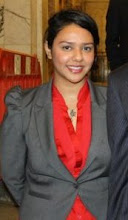
Tuesday, 9 February 2010

OYW: Global Business Plenary


"There is nothing wrong with the poor...poverty is created by institutions” - Muhammad Yunus

Youth polls suggested that global business should play a key role in the alleviation of poverty yet many of us agree that certain aspects of multinational corporation behaviour is to our dissatisfaction. Nobel Laureate Professor Muhammad Yunus presented how he created Grameen Bank, lending out $27 to 42 women as a solution to Bangladesh’s poverty. Therefore he created a bank that helps poor women living in villages who have no income. Women play a big part in social business as key communicators within their villages, and in present day Grameen Bank has over 80 million borrowers whereby 90% are women. Entrepreneur Bill Liao also gave a testament to how business is shaping indigenous societies. He is currently involved in reforestation projects as a way to take responsibility for the rectifying damage caused by his generation.

In following, a plenary session based on global business was led by OYW Counsellors, Elio Leoni-Sceti (CEO of EMI Music), Graeme Sweeney (Chairman of Zero Emissions Platform), Ken Costa (Chairman of Lazard International), Osvald Bjelland (Chairman of Xyntéo), Benita Matofska (Head of Global Entrepreneurship week), and Dr. Santanu Das (Founder of TranSwitch Corp).

Son of Mongolian Prime Minister, Battushig Batbold stressed a positive that technical staff should be given opportunities to work abroad as part of a global placement to share skills. Swapping staff across borders will not only enhance intercultural diversity but create fuller global synergy. Diptesh Bose (India) also agreed that sharing information in all areas can be better disseminated through the use of internet. At the height of the digital age, this tool must be used to its greatest potential. Coming from a country where crime and theft is high, Christina Lopez Guevara from El Salvador suggested the best way to reduce poverty is to not start small businesses within the country but through the integration of global businesses. Governments are responsible in creating a healthy environment for investment thereby corporations should make ‘the eradication of poverty’ part of their business mission.

16-year-old, Adrian Lo (China) turned business on its head, urging businesses to change solely from being for profit to sustainability. He suggested to up the national minimum wage to improve productivity of workers and incorporating the “re-think” role of society, “re-design” business model, “re-build” new world without poverty into the business mainstream. Niece of former US President, Lauren Bush stated that ignorance in a globalised world is no longer a viable excuse. Every six seconds a child dies of hunger yet even with the assistance of global aid, the number of malnutrition children is growing. As the founder of FEED, Lauren has created a business enabling one designer bag purchased by a consumer to feed one child for a year, which opened up the issue of how profit is directed. Deniz Çıkış (Turkey) coined the term ‘corporate social responsibility’ (CSR) as “window dressing”, highlighting its ineffectiveness towards the Millennium Development Goals.

Burt’s Bees are a great example of how embedding CSR framework in the business model is a positive step forward in all aspects. Acting as the only ‘zero waste’ US company, Burt’s Bees mission takes into account materials used in its products, its people, humanitarian and environmental operations. Delegates speaking on the floor panel were incredibly insightful sharing views on fair trade, ethical leadership, corporations adapting CSR within a political framework and philanthropic investments. Inspired by the level of agreement from delegates, I will be drafting letters to global coffee and chocolate companies urging them to support fair trade. This will be completed in due course but we, the consumers, should demand free trade.

Draft Resolution (to be amended): In the belief that multinational corporations have a fundamental responsibility to behave ethically, we call upon global businesses to define and act on their role in the fight against poverty.

OYW: Environment Plenary


"If they don't lead, you should make them follow" - Kofi Annan


As a youth leadership summit with an expressly global focus, six large plenary sessions were covered within two days. On his video message to the delegates, US Senator John Kerry said that “there has never been a time when young people have to be active in politics,” something I strongly believe in. Too many people in power are preventing to take action yet this summit will prove that young people have the motivation and strength to collaboratively create change.

The first session on the environment was supported by a mighty group of counsellors: Sir Bob Geldof, President Alejandro Toledo of Peru, Nick Haysom (UN Director of Politics), and former UN General-Secretary Kofi Annan.

Delegate speaker Lina Imran Abdullahi (Ethiopia) kicked the session off by highlighting the deadly conflicts in Africa over natural resources and the impact it is having on migration and the environment. Gerardo Dasyel (Mexico) examined the concept of ‘back to basics’ in adapting to a more simple lifestyle. COP16 will be held in Mexico, and will be a grave and dire disappointment if the outcome of the negotiation is anything like that of Copenhagen. Caroline Rush (Canada) concluded that out of a 3000 Canadian youth poll, 71% agreed that climate change is the biggest problem, however only 20% are engaged in improving its condition. This led to the discussion of educating youths online through social network services to better inform our peers.

Parker Liautaud (France) is an amazing example of how youths can be an example of change. While some youth may not have the investment and credibility to progress, Parker is planning to ski to the North Pole as one of the youngest Arctic explorer. Kashfia Rahman (Bangladesh) emphasised that displacement of climate change will cause a new politically and unstable world. In the last three years, three cyclones have devastated Bangladesh. If the rate of climate change continues, where will these 35 million people go? Karuna Rana (Mauritius) illustrated that it is possible for even developing countries to mitigate climate change. Mauritius is currently ranked sixth position on its environmental performance index, moving from 20% to 65% energy autonomy using renewables by 2028. “Let’s not forget that every single drop makes an ocean,” she said, reminding the world that individual actions make an impact.

In his speech, Kofi Annan apologised by saying “my generation has failed you,” but as we are all “in the same boat” the issue of climate change must be put higher on the political agenda, pushing for a fair, equitable and binding agreement. Our generation has already proven that our ideas and thinking are alike, therefore if politicians do not do what we want them to, us youths must apply pressure to ensure that they do what we need them to do.

Draft Resolution (to be amended): In the belief that climate change will seriously affect future generations, we call upon governments to take more deliberate, legislative action to help guarantee that appropriate carbon emissions reduction targets are both agreed and met by 2020.

Monday, 8 February 2010

One Young World Ceremony


The hotly anticipated One Young World Inaugural Summit has finally arrived. More than 500 young people aged below 25 from 192 countries have gathered in London to discuss the world's most pressing issues that has a global effect. Joining esteemed counsellors, One Young World (OYW) serves as a platform to represent young leaders in uniting in a fight against climate change, poverty, injustice, health and corruption.


To kick start the summit, delegates were welcomed by OYW founders Kate Robertson (Euro RSCG Worldwide) and David Jones (Havas Worldwide Global)
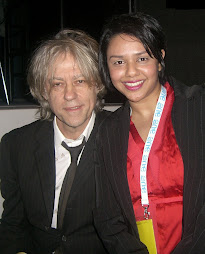
after an energetic performance by the London school choir, celebrating London's diverse ethnicity and culture. In his typical humour, Mayor of London Boris Johnson tickled the crowd with his glad-filled welcome especially to delegates who are visiting London for the first time with mini trivia of the city. For the majority of Mr Johnson's speech, I was lucky to literally be standing between Nobel Peace Laureate Professor Muhammad Yunus to my left and the legendary Sir Bob Geldof to my right, taking the opportunity to ask why they became OYW Counsellors. Professor Yunus is an incredible influencer to many young leaders and it was an amazing privilege to hear how much he believed in us. Similarly, while ignoring Desmond Tutu's comment on wanting to cut his hair, Sir Geldof said that young people are the driving force in uniting thoughts and ideas - his speech incited excitement in us all wanting to be leaders of change in whatever career choice. A welcoming introduction was also made by Archbishop Desmond Tutu, and I feel honoured to be meeting him for the third time at another global conference. Before the real job begins over the next two days, EMI singer Corinne Bailey Rae performed two of her hits in celebration of our gathering.
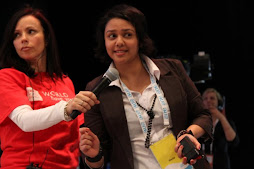
OYW is a successful example of social networking services operating at its finest. A large majority of delegates were chosen through Facebook, and prior to the conference, I had already ‘met’ and engaged with fellow delegates who recognised me at the conference itself. While globalisation has shrunken border lines of states, the internet has and will continue to provide as a working tool for young people to share and develop like-minded strategies for change within our own countries. Under the guidance of today's religious, political, business and social leaders, I and 500 delegates will join as one in finding solutions to global issues.

Monday, 1 February 2010

What makes a good diplomat?

Before one can even begin to study the art of diplomacy, one must understood why diplomats are still relevant in a shrinking and borderless world. The Diplomatic Academy of London not only offers courses taught by former diplomats but trains its students practical skills required to work in an international society. “Diplomacy,” Sir Harold Nicholson insists, “is not the art of amicable conversation but the technique of exchanging documents in ratifiable form…an agreement which is committed to writing is likely to prove more dependable in future than any agreement which rests upon the variable interpretation of spoken assent.”
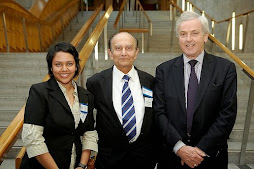
Breaking down its definition, a diplomat represents the state while harmonising relations with other nations through effective, clear and persuasive communication. However the ability to communicate effectively must be married with diplomats acute sense of analysis and observation, which can make a difference between success and failure or even life and death in hostile environments. Diplomacy is a process therefore those who negotiate cannot expect to control every element of the process. Flexibility is crucial and when Plan A fails, the diplomat must have already prepared Plan B, C and D in the nature of failure within a given framework. A diplomat is successful when plans are moving forward, thus will need to be able to make decisions in between mediations.

Negotiation processes can be timely and without strategic analysis of the party you are dealing with, there is small likelihood that change can happen. Before starting the negotiating process, mutual recognition of each party is a necessity, accepting that your rival or enemy exists and is an equal interlocutor. After acceptance, all prejudices must be demolished, putting aside differences that can hinder ones opinion. Finally both parties must agree what the issue is and define terms for effective communication. While all this may seem basic, very often negotiations break down in communication by ignoring one of these aspects. Leaders are unable to put aside their differences and stick by their religious, social, cultural etc reference points, which in itself may lead to war.

Qualities of an ideal diplomat include the ability to tell the truth while representing the nation’s best interest, presenting accurate information, accept others and devoid prejudices, be flexible in terms of its strategy, remain calm, be patient in any given circumstance, and finally be courageous.

The challenge will be to gain and develop these skills before the end of term, while exercising these qualities under pressure in a coherent manner without offending groups or individuals. The best diplomats are able to achieve this like second nature and it is my intention to grow into an effective diplomat.

Friday, 29 January 2010

Countdown to One Young World


The launch of the first One Young World (OYW) conference, to be held in London, is ferociously close, and over 500 delegates from all over the world have successfully become delegates through corporate sponsorship or fundraising efforts.

While my candidacy as a delegate was not as successful, I have been asked by the OYW team to attend the conference as the OYW press, thanks to this blog and many of those who support my work and writing.
I admit, I am extremely grateful for this opportunity and look forward to covering the three day conference, as well as meeting young people who think the way I do. This will be my first big press coverage therefore I aim to rapport with counsellors, VIPs and fellow journalists, in hope that my work and ideas disseminate, and attract more young people to become active in the political field.

I will be bringing news of the event right here on this blog, however do feel free to pass this website to peers, colleagues and friends.

Thursday, 7 January 2010

Art of Diplomacy

2010 will sure be an exciting year for me. As of 18th January 2010, I will begin my Masters in Diplomatic Studies at University of Westminster. This course, offered by the Diplomatic Academy of London (DAL), develops conceptual understanding of the practices and procedures of modern diplomacy, and enhances the ability to work effectively within the diplomatic community. I will be studying amongst diplomats and officials of various overseas ministerial departments, members of international and regional organisations, and staff of non-governmental organisations and multinational corporations. Therefore I will most certainly use this as a networking advantage.

Furhermore, as a home student, I have been incredibly lucky to be awarded the DAL full scholarship, which pays for my Masters. I was incredibly shocked to find that this scholarship is awarded to two students per year; one for September starters and one for January starters, which means I am the only one from my year with this award.

My 2010 post will probably be featuring how this degree is going for, however I will also be attending international conferences in cultural diplomacy and hopefully be accepted in the United Nations as an intern at the New York office this Summer.

Thursday, 24 December 2009

Copenhagen Accord


The 193-nation Copenhagen Conference on Climate Change (Dec.7-18) failed to come up with what the world had long expected, a legally binding Treaty, or even a Declaration with promise of Kyoto Protocol-II being drawn up in 2010. But its near collapse was averted with a five-nation "Copenhagen Accord" brokered by President Barack Obama - his probable first victory in the international arena - taking along China, the largest polluter, India, Brazil and South Africa. This has been acclaimed as a great breakthrough by these countries which held fast to their rigid positions and struck a last-minute compromise, which will be severely tested in the coming years. Both China and India joined the chorus of welcome.


The Accord, which was not endorsed by the most acrimonious UN Conference of recent times, has been promoted as laying the foundation for a binding agreement in the coming years. It does not refer to the UN proposal for a new Treaty under its Framework Convention in 2010. Overall, though both India and China have welcomed the Accord as significant and positive, the 12-day Copenhagen Conference merely "took note" of the development with a sense of betrayal of the interests of scores of countries under threat and most vulnerable to climate change.

The Obama Administration did come up with some new ideas to facilitate an understanding, other than any binding commitments, such as in the matter of financing and importantly found ways breaking the logjam over China’s objections to international verification as infringement of sovereignty. The Accord did not record any targets beyond the need to keep increase in global temperature below 2 degrees as dictated by science. While calling for cooperation in achieving peaking of global and national emissions "as soon as possible", it recognised that the time-frame for peaking would be longer in developing countries where social and economic development and poverty eradication are over-arching priorities.


The Accord has acknowledged the need for short-term financing of the order of 30 billion over the three years 2010-12 as well as for an international effort to mobilise 100 billion dollars by 2020. The financing with strings attached would be both for mitigation and adaptation and forestry in the context of assess
ments of national actions at both domestic and international levels.

The Accord omitted the earlier demand that all countries should accept 2050 as peaking year as developing countries did not have any firm commitments from the richer countries on their medium and mid-century targets. The big question now is how far the Obama Administration goes on the path laid out by the Kyoto Protocol which expires in 2012 whereas the Accord puts off an assessment of voluntary mitigation actions in 2015.


UN Secretary-General Ban Ki-moon, in a qualified welcome, noted "finally there ia a deal". The ‘Copenhagen Accord’ may not be everything everyone had hoped for, "but this decision...is an important beginning.". He hoped the Accord would pave the way for a binding treaty as had been mooted till now at the next conference in Mexico in 2010. But the Accord does not set any date for a new Treaty and it remains an open question whether the Obama Administration would stand by the Kyoto Protocol, which the Bush regime had rejected. President Obama, who had talked of a "planet in peril" in his campaign for the Presidency, seized a role for American leadership in this 21st century challenge.

Significantly, the Accord talks of assessment of implementation of the Copenhagen Accord to be completed by 2015 including consideration of strengthening the long-term goal taking into matters presented by the science including in relation to temperature rises of 1.5 degrees Celsius. As of now, the targets on emission cuts by 2020 set at the country level are: European Union 20 per cent over 1990 levels, Japan 25 per cent and USA 3 to 4 per cent. (The US legislation pending in the Senate provides for 17 per cent cut over 2005 levels by 2020,42 per cent by 2030and 80 per cent by 2050). China has said it would reduce energy consumption per unit of output by 40-45 per cent by 2020 while India has indicated around 20 per cent by then.

US officials said the Accord which involves other leading economies would help in getting the climate legislation through Congress early in 2010.For President Obama, the Accord was "meaningful and unprecedented" as for the first time all major economies had come together to "accept their responsibility" to take action to confront the threat of climate change. It recognised the necessity of listing national actions and commitments in a "transparent way". USA had stuck to "transparency, mitigation and financing" as the essential elements for any deal and the President felt "the consensus will serve as foundation for global action to combat climate change for years to come".

China says the Accord recognises "common but differentiated responsibilities" set by the UN Framework Convention and the Bali Action Plan, binding cuts by developed countries and "voluntary mitigation actions" by developing countries. It lauds the "constructive" role of its Premier Wen Jiabao, notwithstanding the tensions generated and US insistence on "transparency" on which the other countries had to yield grudgingly.

The Accord omitted the earlier demand that all countries should accept 2050 as peaking year as developing countries did not have any firm commitments from the richer countries on their medium and mid-century targets. The big question now is how far the Obama Administration goes on the path laid out by the Kyoto Protocol which expires in 2012 whereas the Accord puts off an assessment of voluntary mitigation actions in 2015.

Environmentalists are angered by the meagre outcome of the Copenhagen Conference which concluded with what looks like a messy road map of future. It marked a dismal end to years of work so far under the UN Framework Convention with the expectation of Copenhagen providing the foundation for a legally binding Treaty being concluded in 2010. The Conference did not yield a credible action programme with operational targets and brings the curtain down on the historic responsibilities of industrial countries for the global warming. Developing countries are now brought into sharing responsibilities and would be required to go much farther than they are capable of at present in the face of a common danger for humanity.

Sunday, 20 December 2009

Brokenhagen?


I must admit, COP15 was a grave disappointment. I left Copenhagen mid-way in the negotiations feeling frustrated and incredibly angry with the lack of progress made with so many hitches and delays. I agree that an agreement will be difficult to make under pressure in 2 weeks by all the nation of the world, but why is it easier to send soldiers to their death at war then to save millions of lives now and in the future?

Even
President Barack Obama did not sound convinced and satisfied when he delivered his speech at his arrival in Denmark. In fact, it was one of his poorest attempts compared to all his other pledges. While it is not fair to expect President Obama to make or break the deal, it is disappointing how other world leaders think just that. When the US President officially announced that he would be attending the COP on the final day, other leaders such as Russian President Medvedev jumped on board.

I have been following my Climate Change Secretary of State,
Ed Miliband, and he admitted that the process was incredibly frustrating, albeit long. Of course, we must be hopeful that all nations are responsible for formulating their own nation climate change plan, however an international accord must be implemented by 2011. The need for a climate change policy has been lobbied for over 15 years and we are running out of time to save small island states like the Maldives without it diminishing forever. Copenhagen is now deemed "Brokenhagen" instead of "Hopenhagen" which is such a shame.

Here is a summary video from UK Channel 4 News with the outcomes of COP15.
http://link.brightcove.com/services/player/bcpid1529573111?bclid=57829472001&bctid=58184749001

Thursday, 17 December 2009

Meeting Mayors and Governors


While I was reluctant that COP15 will be closed with a substantial agreement even before my arrival in Copenhagen, I at least hoped to meet a few established people in the world of politics. With a keen eye and acute hearing, I managed to meet ministers, governors, members of press and a small handful of Heads of States, including
Danish Prime Ministers Lars Lokke Rasmussen and Swedish Prime Minister Jens Stoltenberg.

However, it was a great surprise to catch just before he fled to give his first speech at COP15. I also met with the
Governor of California Arnold SchwarzeneggerMayor of London Boris Johnson at the main centre, asking him what his role in the negotiation is. His answer was something I expected, simply saying he was the Mayor of London and that was it, but he had high regards for his colleague Martin Powell, who I met in my very first side event at the Bella Centre.

It seems to me that the people I met all had distinct expectations from COP15,
however even they themselves felt powerless in driving the negotiations forward. Whether you are an MP, Mayor or Governor, there was only so much they could do, other than rue the media for a pres conference about where the negotiations stand. It was surprising that they were almost in the same position as I was at COP15, which is not comforting.

[Top: Talyn Rahman with Boris Johnson]

A Copenhagen Accord has been instituted but members in developing countries are angered that nothing more concrete had been formulated during the conference. Nonetheless, I hope that all that participated in COP15 were able to take back valuable contacts and information to their home countries and build on Accord from a national level.

Tuesday, 15 December 2009

Oxfam International Climate Hearing


Copenhagen, Tuesday 15 December

At COP15, it is very easy to forget that climate change has a human moral aspect, affecting lives and killing people now. To bring light to climate devastation, Oxfam International brought together live testimonies from individuals living in Peru, Uganda, Bangladesh and Tuvalu.

[Top: Talyn Rahman with Archbishop Desmond Tutu]

I had the pleasure of meeting Archbishop Desmond Tutu, who congratulated us all for being
present at COP15. “All of us are seeking to be heard,” he said, “Wherever you turn, wherever you walk, you are going to hear from people from every country on Earth and all have one simple goal - persuading people to listen to their story, listen to what to tell and having listened, act appropriately”. People throughout the world are in the frontline of climate change, and COP15 is a chance for them to amplify their voices in hope that leaders will make the right choice.

Listening to climate witnesses filled the audience with raw emotions. With melting glaciers, water everywhere is being contaminated by too much salt which is dangerous to drink and difficult to cultivate with. Cyclones destroy villages and unpredictable switches of drought and flood make it impossible for local communities to harvest. The indigenous people of Peru “beg industrialised countries to commit or diminish (our) emissions” with at least a 40% reduction starting from now. “COP15, never be afraid”, said Tuvalu, who is looking for leaders that cannot be bought or sold. Bangladesh wants to be compensated for the destruction climate change has caused on people who did very little to cause this.

[Top: Mary Robinson with COP15/UNFCCC Secretary-General Yvo de Boer and climate witnesses]

Climate change is not a numbers game but even developed countries are getting this wrong. Climate change, as viewed by Mary Robinson (Former President of Ireland and UN High Commissioner), is undermining human rights, and failure to act by industrial countries will be catastrophic. As the Archbishop said, “no fair system will ever punish the innocent,” and vulnerable countries look at CO15 with hope which they can bring back with them when returning home.