Through my diplomatic training, I have noticed that I am beginning to position myself more strongly on issues I care about. Recently, I have taken great interest in militarism and armed conflict - not that I support it, but on how to eliminate war and the violence women face by male combatants. In researching my dissertation of the topic of 'Women versus Militarism', I came across an interesting book that supported very strongly the ideas I would like to bring forth in international diplomacy when I finally reach that point in my career. Here are a few thoughts I would like to share with you which I would like to strengthen in diplomacy and international relations - and I fully welcome any comments in support or argument of these points.
1.Holding no official position does not relieve one of responsibility. Being a non-combatant does not make one innocent, nor does ignorance, especially not deliberate ignorance. “Conscious avoidance” or “deliberate ignorance” is a legal term which diminishes or negates a claim of innocence. Ignorance about one’s military does not make a citizen innocent.
2.Governmental secrecy does not absolve a citizen. Citizens who accept the necessity for government secrecy are complicit. In time of war, operational secrets are permissible. However, citizens should insist that every member of Congress have access to every government file, and that no file be kept secret longer than ten years. Withholding information from citizens subverts democracy. Lying to them is criminal.
3.If we can participate in choosing our government, we are accountable for the nature of our military and where and how it is deployed.
4.Military personnel kill on behalf of citizens. Citizens should be ashamed that the military is killing in their name.
5.In many developed countries military technology has created such impunity for its users that the moral question, “What is worth dying for?” has been replaced with “What is worth killing for”?
6.A military that “outsources” is a military which makes war profitable. Contracts let without standard procedures because of an “emergency” are not only enriching but a likely source of corruption.
7.In democracies, the military is sent to war by civilian officials who are charged with protecting the citizenry. The role of “protector” leads officials to authorise actions they might not take even in self-defence. The problem is that those charged with protection know that they cannot guarantee it.
8.Security means safety and well-being. It attaches to people not necessarily to the states, or to corporations, or religious or other institutions. Importantly, even “opponents” need to be and feel secure.
9.A crucial tool in diplomacy and warfare is to be able to think as the person one is dealing with thinks.
10.“Terrorism” has been used to justify pre-emption but terrorism is not special. It is experienced everywhere, including in democracies like England, India, Sri Lanka, the Philippines and Spain. “Terrorism” is not necessarily more heinous than the random killing of non-combatants as “collateral damage”. Both involve the killing of non-participating civilians.
11.Instead of focusing on war’s cost and its horror, attention should be given to whether or not the outcome of a conflict fulfils its stated purpose.
12. The stationing of any country’s troops abroad should be prohibited unless they are part of a United Nations sanctioned force.
13.Article VI of the 1968 Nuclear Non-proliferation Treaty calls for nuclear disarmament. Even, if the US were to destroy 9000 of its existing nuclear weapons, it would still have enough left to destroy civilization. The goal of non-proliferation should be expanded to include the goal of eliminating all nuclear weapons just as they treaty says.
14.“Gender” does not just mean the biological sex. In practice, a policy of “gender mainstreaming” involves bringing females into an institution.
15.The government is said to have a monopoly on the legitimate use of force. If men have a near monopoly on force, what can we learn from how women manage in a culture where they are, essentially, unilaterally disarmed?
16.When women focus on issues like rape in war, a military tactic, their energy and thoughts are diverted from the larger issues, which replacing strategies which select force as a legitimate means to achieving a goal. The goal should not be to make war more humane but to eliminate it.
17. Enforcement of UN Security Council Resolution 1325 which requires women's presence at all peace negotiations would serve as a useful reminder that women are participants in every conflict and have a stake in every conflict's resolution.
*Stiehem, Judith Hicks. "These on the military, security, war and women", in Sjoberg, Laura, ed., Gender and International Security: Feminist Perspectives. London, New York: Routledge, 2010. pp 17-23
The election in Britain is over. The results are in, and the people have spoken… but the problem is, no-one still knows what the results are. We have no parliament, and Gordon Brown is still Prime Minister… without being voted in for the second time! Furthermore, thousands of voters were turned away at the polling station. There was a 65% rise in voter turnout and there was not enough polling stations and staff to handle the pressure. Is this really democracy when people were told that they would not vote because there simply wasn’t the space? This could have made the difference in the votes today, but instead, we have something that is known as a “hung parliament”. This situation has opened our eyes to just how broken the British electoral system is and the British people are furious.
In order to secure a Prime Minister, a party will need to secure a majority of 326 seats. These seats depend on the voters voting for which party a certain borough wants to be presented by. The problem with this is that the UK is dominated by two parties: Labour and the Conservatives…which means that they will always have more members in the party, and always have a higher number seats than candidates from independent parties, fringe parties or even parties like the Liberal Democrats. Confusing? Carry on reading!
Currently, the Conservative party have secured approximately 302 seats, Labour with 232, and Liberal Democrats with 55 – which was incredibly disappointing. The balance of power now depends on the Liberal Democrats. If they pass over their seats to the Conservatives, they will gain the majority votes and David Cameron will become Prime Minister.
In the next few days, Gordon Brown and David Cameron will have to negotiate with Nick Clegg and other independent parties to negotiate on passing their seats onto either Labour or Conservative, but this means a lot of game playing and political ‘bribery’… “Give me your seats and I will work with you on the child tax”.
You can keep reading about what the outcome of this election is but we are confused too! We have no government, many prominent MPs have lost the vote, and Gordon Brown is still our Prime Minister. I shake my head at this poor system. This is not democracy and it is indeed a very poor, unsatisfying and disappointing result.
I am half way through my diplomatic training at the Diplomatic Academy of London with a huge 4 months gap before beginning semester II. The plans for summer are in fact quite busy with projects and activities in the pipeline. However, in order to represent my country and continue with my diplomacy training, I am seeking for funds to support my work. By the end of June, I aim to raise a total of £5000. Here is a short outline to where the money will go and how you will be supporting me. Please help me reach my target, and support this work. Every project will be covered by this website.
GRASSROOT DIPLOMAT
OUTLINE:Grassroot Diplomat acts as a broadcast media platform to bridge the gap between politicians and people under the age of 30. This age group is heavily underrepresented by the media, and very often, their views are ignored by politicians. The project seeks to highlight positive aspects of every nation through the eyes of young people. Grassroot Diplomat is cost effective, relying on people across the world to send footage about their local community. Documentaries will be edited in the London HQ, then uploaded online and sent to local TV stations for wider coverage.
FUNDS: £1000 to set-up a comprehensive website where documentaries can be accessed in areas with low bandwidth internet.
MOROCCO EXCHANGE
OUTLINE: As part of my Masters programme, the Diplomatic Academy of London has organised an exchange programme with the Al Akhawayn Universityin Morocco. This exchange will further my studies as an opportunity to learn Arabic, international relations from the perspective of an African nation, engage in global discussions, and train us as diplomats to protect and serve the interest of our own nation.
FUNDS: £1000towards flights and meals.
UNITED NATIONS SUMMER PROGAMME
OUTLINE: Students studying diplomacy or international relations are confirmed places based on merit. This course will allow students to attend official sessions at the United Nations headquarters in New York, and participate at workshops from distinguished practitioners in the field of multilateral diplomacy. The program is structured around a series of seminars led by U.N. officials and representatives of governments and civil society on a wide range of global issues currently on the U.N. agenda.
FUNDING: £2000 towards course fee, return flights, and course materials.
SINGAPORE CONFERENCE
OUTLINE: I have been invited to represent my university and country at the Global Scholars and Leaders Conference in Singapore. Admissions to the conference are merit based, and upon completion of the conference, delegates will be recognised for past accomplishment and participation at the GSLC with the Global Young Leaders Award, an award that will distinguish me as a high-achiever.
FUNDING: £1000towards accommodation and admission fee
For the first time in British history, the three main political leaders: Gordon Brown (Labour Party), David Cameron (Conservative Party), and Nick Clegg (Liberal Democrat)debated on live television against one another’s policies. Three weeks before the general national election on 6th May, this debate was important in laying out the domestic priorities of each of the main parties, and to help sway the national vote. Questions were asked by selected studio audience on issues related to healthcare, the MP expenses scandal, neighbourhood crime, the army, immigration, and education.
The Labour Party has been in power since 1997, first led by Tony Blair, but then succeeded by Gordon Brown in 2007, who was the former Chancellor of the Exchequer. In his opening speech, Brown stated that, “we are moving from recession to recovery… every promise depends on a strong economy and this is the defining year”. However, as revealed by the Conservative Party posters, Labour had doubled the national debt, and judging by this debate, Gordon Brown’s priorities remain stagnant and unchanged. Conservative leader David Cameron, hopes to “restore some of the faith and some of the politics” from the expense scandals by changing the current political party to “build a bigger society”. Stepping away from the two party fistfight, Liberal Democrat leader Nick Clegg clearly defined that “the way things are, are not the way things have to be,” and opinion polls after the debate suggests the LibDems as favourites to winning the election.
Unfortunately for Labour, the issue of the national debt was a reoccurring theme in the debate. Brown clearly stated that the national debt will remain the same, which means he intends on NOT cutting any sector budgets. “Pull out money,” Brown said, “and you will have less growth, less jobs and less business,” but this statement is quite unrealistic given that Britain is still very slowly recovering from the financial crash. Cameron pointed fingers at Brown by giving an example of Labour increased managerial pay to 7% and allowed civil servants to spend tax payer money by issuing them with credit cards. Cameron stressed that the deficit needs to be removed now so that £6billion can be later be saved to stop job tax. Clegg was the only leader bold enough to argue that the renewal of the Cold War nuclear Trident missile is a “waste” of money, and such financial resource could be diverted into education, healthcare and policing. “We all know that we have a great black hole in our recovery,” Clegg said, “the question is, who is being straight with you on these cuts?” Unfortunately, it was neither Cameron nor Brown.
Gordon Brown seems insistent in continuing the ‘business as usual’ model. He stressed the urgency of maintaining current police surveillance, to the point where he wants 80% of police time being spent harbouring the streets, and giving dissatisfied citizens an injunction in case the job is not done right. Surely investment in the police should be maintained if they are fulfilling their job to the highest standard? Furthermore, on the issue of immigration, Brown still wants to issue ID cards and enhance the points system as a means to decrease the rising number of immigrants living and working in the country. The already difficult point system greatly ignores professionals who have intangible skills like linguistics or researchers, and only takes into account the quota of immigrants coming into the country. David Cameron argued for the ‘caps system’ which keeps a count on successful immigration and supported the points system to limit number of immigrants coming into Britain for economic reasons. Nick Clegg contested the matter by allocating immigrant workers to regions where the need for special skilled workers is required. If there is a job and the applicant has a sponsor, migration will be entitled. Clegg too agreed that police patrol is necessary but the “conveyor belt” in turning yobs into citizens is underdeveloped. Prisons are “overcrowded colleges of crime,” where 9 out of 10 prisoners re-offend. Therefore to combat this, young offenders need to be engaged in behavioural activities. Cameron was adamant in lengthening the sentence of criminals and sending drug addicts to boot camp, however he also said that if money is not spent on the right things, i.e. purchasing police cars instead of training more people, funding towards healthcare will most certainly be cut.
In the case of education, Brown promises to maintain investment in “education per pupil” which seems far-fetched considering that his arguments in making budget cuts were vague and to a point non-existent. The only plausible suggestion he made was for local federations and academies to takeover underperforming schools. But Cameron argued that the issue of the national debt means Labour cutting the education budget, something which is already put into practice as experienced by my own university. He stated that the education system has become “terribly bureaucratic” and discipline should be exercised by Head Teachers without appealing against students who were excluded for bad behaviour. In agreement, Clegg added that the national curriculum should be made smaller. The paperwork is currently 600 pages long, which stems from Cameron’s talk about bureaucracy. Classes should be made smaller so that teachers can use the resources and teach effectively. Furthermore, LibDem’s “Education Freedom Act” proposes weekend and evening classes, and promises to freeze the government from dominating education, which should promote creativity in schools.
The general debate about healthcare was fairly divided. While Brown urged that the number of NHS staff has risen, Cameron and Clegg argued that money is spent on the wrong resources. Using the example of his late son, Cameron highly praised the NHS on their job, thus supported the need for NHS budget to grow against inflation, as well as giving patients more control over their treatment. In his recall, Cameron said the number of managers is going up 5 times faster than nurses, which ironically stalls the NHS from performing. Brown said that Labour “will support the front line services,” and has already done so as there are now 30,000 doctors, however there is a shortage of nurses and specialists. Brown gives his “personal guarantee” that GPs and specialists will be made available in evening and weekends, however this does not close the gap for the shortage of staff suffered in maternity wards and A&E departments. Clegg reminded that money should not be spent on upgrading computer systems and hiring managers, but providing services to help people who require it.
The argument was similar to the treatment of the elderly, and each party leader proposed fair solutions. Cameron was blunt in saying that not all care can be made free due to the current national debt, however, under Conservative leadership, those turning 65 will be guaranteed free residential care which is a “good start, a fair start.” The question is how this care will be paid for full-time if it is not covered by the residents themselves. Clegg suggested to using the money in paying full-time carers of elderly or disabled people a respite period. By providing carers with a week paid rest, this will encourage citizens to continuing caring for loved ones, rather than sending them to residential homes. Brown suggested an alternate solution which will be put into effect in April 2011 under Labour power. If the elderly are in care for more than two years, their personal and medical care will be free thereafter. This will help ease the cost of care.
In regards to the MP expense, Clegg said that he doesn’t think “politicians deserve any credibility”. There are still MPs, who have yet to take responsibility for the abuse, and parties and constituents should have the right to sack corrupt members of parliaments. This idea was formally blocked by Labour and Conservative, but Brown and Cameron now agree with Clegg on this matter. Clegg also supported Cameron’s policy on cleaning up the House of Lords. The Conservative wants salary and MP cuts of 10% in the House of Commons, just like any other sector. Brown went further by suggesting an MP can only be selected in the House with more than 50% of the votes instead of the original 30%, and should cut the number of members in the House of Lords by more than 10%.
With less than 3 weeks to the election, this debate was a taste of how each of the main leaders will perform under pressure on pressing matters. I have always been a firm supporter of the Liberal Democrats, and after Nick Clegg’s outstanding performance against Cameron and Brown, I urge my fellow voters to cast your vote for this ‘alternate’ party.
Transatlantic Intelligence and Security Cooperation
The final leg of the EU tour took the DAL students to The Hague in Holland. Straight after NATO, we drove 2 hours outside Belgium for a meeting at the diplomatic training academy known as the Clingendael Institute. The concluding day consisted of visiting theInternational Criminal Court, and the International Court of Justice.
Talks at this institution differed from others we have heard as these presentations were given by academics of diplomacy rather than government officials. Presentations offered views on ‘East Asia in the 21st Century’, a topic of great interest to me. An introduction was made by Director of the Institute, Jan Melissen, who is well known in public diplomacy.
Ingrid d’Hooghe discussed expectations of China, predicting that China will become a superpower by 2025 in par with the United States. China’s new assertiveness in international relations is causing difficulties for international policy-makers. She suggested also that by 2020 China may collapse as a response to nationalistic regime, irresponsible stakeholders, or corruption. However the question on when to sacrifice ideology for power was raised during the session. Our lecturer Abdel-ilah Bennis made a great point that it was due to the arrogance of Western political and economical ideology that led to China’s rise.
With the example of Japan, Maaike Okano-HeijmansFrans-Paul van der Putten illustrated how economic diplomacy is the ‘Asian way of doing things’. The involvement of government in commercial activity is common and it is through investment and trade that Japan communicates with neighbouring countries. spoke broadly on international security in Asia from discussing Chinese sales of weapons to the threat of a nuclear weapon war posed by Western nations.
The International Criminal Court (ICC) was particularly stimulating as we had the chance to observe a hearing presented by a secret witness on the Katanga Case. Unlike the International Court of Justice(also known as the ‘Peace Palace’), the ICC is an independent judicial court that has no association to the United Nations. The ICC acts as the last resort in investigating cases and only deals with grave crimes like genocide which may be referred by the UN Security Council. The objective of the court is to establish the truth by investigating incriminating evidence in exonerating circumstances. If there are reasonable grounds to believe a person has committed a crime after the investigation, a national arrest can be warranted.
After these visits, a few of us took the chance to travel to Amsterdamto enjoy the vibrancy offered by the capital city.
Visiting the headquarters of the North Atlantic Treaty Organisation (NATO) in Brussels was the highlight for many DAL students, although I walked in hesitantly. We were welcomed by the Deputy Head, Michael Rühle, who gave us an overview of NATO’s work and operations.
In general, NATO is a military organisation that has a membership of 28 sovereign states from Europe and North America. The organisation was set up to protect Europe’s “democratic half” and deter threats, but change in policy is expected in light of changing circumstances. There was fear that NATO would be deemed useless after the Cold War but the need for border security was required to protect countries from hostile invasion. It wasn’t until the Balkan War when NATO had to use force for the first time, and it must be stressed that NATO does not have its own army. As told by our host, NATO serves as a crisis manager, building a political and military network that tries not to burden the economy. Yet since the 9/11 crisis in 2001, NATO’s services have been heightened by its members, moving NATO from securing borders to “managing challenges of a global nature”.
First Secretary, Leo Tomlin shared information on UK Operations and Intelligence in NATO, which gave students a great insight to how intelligence is used in the military. While addressing NATO’s efforts in carrying out UN mandates, diplomats try to deliver UK policies to what NATO should be doing and how the military should interact with the civilian world – this applies to all member states. Maintaining an effective alliance is a political debate and issues are tackled with early consensus. The aim is not to make war an instrument to resolve issues, but it is apparent that coordinating military and civilian organisations is a great challenge. The gender issue was brought up, and were foretold that gender mainstreaming is part of NATO’s training and operation yet this is not completely transparent from my point of view.
Colonel Andrew Budd from the UK briefed us on NATO’s military strategies. In 2001, NATO declared Article 5 of the UN Charter to be embedded in their strategy - an armed attack against one or more of them in Europe or North America shall be considered an attack against them all, which has shaped NATO’s operations since. Before the collapse of the Warsaw Pact, war was an act of survival. The strategy to deter the enemy was to match capabilities. Today, the military acts as “peace enforcers”, just as the UN peacekeepers engage in hostile environments for humanitarian assistance.
Inevitably, the subject of Afghanistan surfaced, with Colonel Budd explaining that NATO expanded ISAF (International Security Assistance Force)around the Afghanistan mission. Troops were spread thin when first entering the terrain which caused problems in aiding any humanitarian efforts. The UN wants to lead and dictate a plan on the political side with NATO leading from a military angle. We were told that police force in Afghanistan will increase in the next 2-5 years as part of a civilian reconstruction effort, which makes me wonder what they are doing now. The Colonel had shown support in wanting money spent to train local police than to NATO, which is a small relief, nonetheless, with NGOs in the area reluctant to work with NATO, their work in Afghanistan seems far from over.
As part of an educational networking opportunity, students of the Diplomatic Academy of London were invited to visit several government offices around Europe. Our first stop was at the capital of Belgium, Brussels, where we joined civil servants working at the European Parliamentand the European Commission in February 2010.
At the European Parliament(EP), speaker Alexandros Karidesgave an insightful overview about what work is carried out in this institution. The EP remains to be the only multinational parliament in the world which has at least 23 official working languages. Before the Treaty of Maastrichtwas implemented, the parliament had no power which is why former UK Prime Minister Margaret Thatcher described the EP as the “Mickey Mouse Parliament”. With 736 members and roughly 9000 people working at the EP, its parliamentary power is more than verified. Furthermore, signing theTreaty of Lisbon in 2007 increased the EP’s involvement in legislative process through extended co-decision with the Council of Ministers. Presidents are elected every 5 years and 20 parliamentary committees and sub-committees exist to tackle the issues of security and defence, human rights, trade and the like. The EP is the place to work if one wanted to become a translator or interpreter, yet with 23 working languages the challenge is to familiarise oneself with at least 5 Europeans languages and have the ability to cross-feed interpret at live meetings.
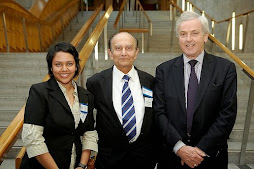
Jo Vandervappellen at the European Commission (EC) added detail on the Treaty of Lisbon as this defines what the EU can and cannot do, and what means it can use. The treaty reinforces democracy in the EU and its capacity to promote the interests of its citizens on a day-to-day basis. Mr Vandervappellen described the EU as “supranational” as the sovereignty of each member states are handed over to favour the international institution. Keeping ones sovereignty means keeping ones independence, however when joining an integrated structure shared by other countries, all members must amalgamate economically and politically. EU members have exclusive rights to finance and trade sectors and help support, coordinate and supplement actions on education and culture. France has some basic position in the EU, leading the institution to develop its structure by sharing competencies.
In regards to EUs external relations, Jean François Cautain said the EU must remain a global economic player in order to influence external dimensions of internal policies. This includes policies on the environment, trade, agriculture, energy, justice and home affairs. The EU acts as a single legal personality therefore whatever law is passed must be implemented by member states. The strength of the law depends on the country’s position on the matter such as the ban on public smoking. The High Representative of the EU, currently Catherin Ashtonfrom the UK, presides over the Foreign Affairs Council and supervises political dialogue on behalf of others. This is important in placing the EU in the same importance as other international institutions like the UN. The EU has sustained peace within the continent as all members must resolve any humanitarian issues with other states before it becomes an official member. Turkey is currently having problems joining the EU as it does not recognise Cyprus as a state. Without respecting this condition, candidates will fail to join the EU.
Most modern states entrust the conduct of their diplomatic business from the rank of ambassador to a professional diplomatic service, who begin their careers at junior level and gradually rise to higher ranks.In the UK, the Foreign Secretary has total power over the most important appointments without the consultation of the Prime Minister. Whereas in the US, the Constitution (Section 2.2) declares that “the President shall nominate and, by and with the advice and consent of the Senate, shall appoint ambassadors, other public ministers and consuls.”
In most countries, it is an essential requirement that candidates entering the diplomatic service be a subject or citizen of the country. A further requirement is generally a university honours degree, and satisfactory performance in an examination. Candidates are tested for their aptitude in dealing with administrative problems posed by a given dossier; in the handling of discussion in small groups and in committee drafting sessions. Their character and personality are assessed after searching observation and the application of psychological tests. Even after all this, a diplomatic appointment can be rejected by host countries depending on the appointees past to conflicting nationalism, controversial nature in the past or otherwise. A representative should have a good all round knowledge of her own country, rooted in familiarity with its history and culture and have a good grasp of the forces at work in its social, political and economic life.
Appointments of diplomats vary. Mid-management status ambassadors are fast-tracked from PhD level, whereas political appointees are made to those who have been loyal to the service through a degree of time. Ambassadorsare competent to carry on negotiations with the sovereign herself, and can demand access to the Head of State at any time but this is limited by the etiquette of the court or government to which she is accredited to. Legatesand nunciosare religious figureheads such as the Pope, who can act as a diplomat in certain missions. The title of envoyis ordinarily a custom given to an agent of second class. Chargé d’affaires are accredited to the minister for foreign affairs and appointed as a temporary deputy when the Head of Mission is absent or pending the appointment of a successor.
In the UK, appointments are celebrated by visiting the Queenin national dress. Only after this visit, the appointee can adhere to the title of ‘diplomat’ and may begin their mission by meeting ministers and Head of Intelligence. A courtesy call is made to the doyen (dean of diplomatic core who is the longest serving ambassador) prior to a mission.
When a diplomat is not on mission, they are simply civil servants in their appointed country. The road to becoming a diplomat is strictly selective by the Heads of State, however there are several routes to climbing the diplomatic ladder.
JAPAN AND THE UNITED NATIONS The Struggle for a Permanent Seat with the Security Council
Boutros Boutros-Ghali once quoted that "Japan [had] better qualifications for permanent membership than other countries", opening the question to why Japan has been struggling to gain a permanent seat within the Security Council of the United Nations. My paper examines the internal and external forces that is making Japan's application impossible to progress. This includes attitude of former Security Council members, Japan's historical atrocities caused upon neighbouring countries, democratic versus socialist ideals and Japan's constitution, each obstructing Japan's desire for permanent membership.
In the 21st century, the political world continually assert that they push for peace and security. To have 'peace' on the agenda, it seems unjust that the Security Council have been pushing Japan to militarise just so Japan can have a fighting chance to become a possible permanent member. If the United Nations is indeed progressing for reform to reflect today's world, surely Japan is the perfect example of a nation who have succeeded in looking after one's interest, while maintaining to grow as a big economic nation without construing to military means with nuclear weapons. The philosophy of Article 9 is the logical extension of the UN Charter's goal to save future generations from scourge of war. As a mighty economic power, Japan deserves a permanent place within the Security Council.
“Sport teaches us to be better, overcoming politics and opinion” – Clarence Seedorf
Inter cultural and inter faith dialogue go hand-in-hand to conditioning diplomatic dialogue over the resort of war. The discussion of inter-faith dialogue and dignity is to promote and encourage global respect. As presented by HRH Prince Haakon of Norway, Professor Pekka Himanen and John Hope Bryant (CEO of Operation Hope), the power of dignity must be recognised in leading a change of attitude horizontally and vertically in the cross-sector of society. As an example, fellow delegate, Azraspoke of her fight to protect Baha’is in her country, which stimulated other delegates to speak out of their struggles of religion versus social norms. It was also amazing to hear personal stories from a man from Israel and a woman from Palestine, urging in solidarity for peace in their country, which is proof that barriers of misunderstanding can be broken.
Plenary based on inter-faith dialogue was supported by OYW counsellors, Archbishop Desmond Tutu, KenCosta (Lazard International), Yasmin Alibhai-Brown (journalist), Caspar Melville (New Humanist magazine), Iman Umer Ahmed Ilyasi, andClarence Seedorf (AC Milan footballer).
Elliott Verrault (Canada) shared his insights to living in Japan, where foreign form, substance and custom soon became second nature. When placed in a foreign existence, it is easier to pick up similarities – this perspective can be applied to religion. The core principles of religion is the same and the difference between form and substance disappear. Shobana Nair Saseedharan (Malaysia) stressed on the importance of respecting of each other to prevent inter-faith war. Wars justified by religious beliefs are fused by concentrating on what makes us different and do not make an effort in learning about other teachings of faith without the fear of threat.
Yama Meerzada (Afghanistan) yearns for peace for his generation in a country that has been torn by secular war. Religion is not the problem but the perception of religious beliefs led by human beings, stressing that wars are “man-made not god-made.” Daniel Nüesch (Switzerland) noticed that fear is a great division to the freedom of speech and fear of other religion leads to intolerance. These barriers must be torn by education.Veronica Esquivel Patiño (Mexico) used the bicycle wheel analogy, exemplifying that we are all equal and heading in the same direction.Bogdan Gogulan (Russia) shared his personal story of marrying a Muslim woman and the challenges of raising a child in a multi-faith relationship in suburban Europe.
Surprisingly, the practice of sport is a tool used by many professionals to overcome intolerance, prejudices and indignity. In a conversation led by footballer Clarence Seedorf, paralympic athlete Tanni Grey Thompson, William Goullard (UEFA), andAndy Anson (CEO of England 2018), panlists exemplified how sports is used as a form of diplomacy. In Rwanda, sports created a form of reconciliation, and here in England, football bridges the gap for migrate children new into the country, employing sports as a form of integration and communication with other children.
Religious leaders have an influential role in encouraging respect and tolerance of all faiths and teachings. Everyone has the right to practice their religion peacefully and see similarity in these values, and this must be married with any source of education available, be it through schooling or sports.
Draft Resolution (to be amended): In the belief that war must never be carried out in the name of religion, we call upon leaders and followers of faiths to unequivocally commit to deliver peace among nations, races and creeds.
Diplomatic consultant with a special focus on corporate social responsibility, climate change, UN reform, gender justice and nuclear disarmament. My vision is to one day close the gap between civil society and key decision makers for a common cause. I am also in the process of publishing my fiction novel, based on the popular video-game, Street Fighter. With any luck, Capcom will take this on next year.
"Smile and let the world smile with you"!