Showing posts with label human rights. Show all posts

Monday, 22 April 2013

Global Conference on Human Rights, Democracy and the Fragility of Freedom


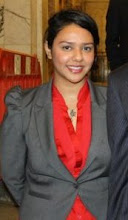
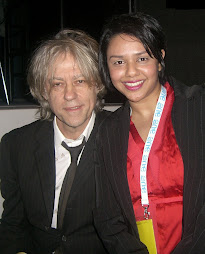
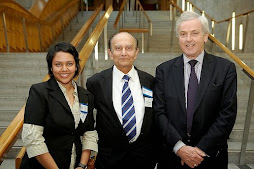
On 17th – 22nd March 2013, the director of Grassroot Diplomat Talyn Rahman-Figueroa was invited to participate at the International Young Leaders Forum and the Third Echenberg Family Conference on Human Rights Global Conference on Human Rights, Democracy and the Fragility of Freedom at McGill University in Montreal, Canada.

Chosen from over 600 applications, Talyn and 23 other Young Leaders from around the world were selected for their leadership in civil society, human rights and democracy, to address the challenges of human rights in today’s world.

The Young Leaders Forum lasted for 3 days where the leaders were to present a one hour workshop to peers on topics including the Maturity, Decay and Rot of Democracies, Youth Disenfranchisement, New Democracies, and Glocal Democracy in the Information Age. During these sessions, it was learned that Australia holds compulsory elections whereby the failure to vote leads to financial penalties to its citizens. The Canadian authorities are failing to compensate the Canadian aborigines for occupying their land. There are still over 70 countries worldwide that have outlawed any discussion and acknowledgement of homosexuality.

The biggest lesson that came out of the forum was a general agreement that democracy doesn’t end with an election vote but is a process that requires active participation of its citizens. As Rab Nawaz, a Young Leader from Pakistan had put it, “the idea of free and open communication between all segments and stakeholders, especially the marginal ones, is not something outside the domain of democracy, rather the essence of democracy.” This is one of the reasons why Grassroot Diplomat is so pivotal in today’s society – democracy can only be ensured if communication between citizens and its leaders are open and mutually beneficial.

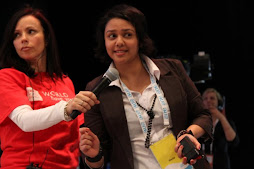
Following her presentation on “Online Hate Speech” at the Young Leaders Forum, Talyn had the privilege to speak at a conference panel alongside Colombian activist Oscar Morales and Executive Director of Advancing Human Rights David Keyes to talk further about negative use of online communication. While Oscar and David highlighted the power of social media and internet surveillance, Talyn was more critical about how the internet has created a powerful anti-tool where hate speech can easily spread and poison the minds of ordinary people in any society. Her presentation illustrated racist and offensive tweets about President Obama from ordinary Twitter-users, and demonstrated the lack of moderation of hate speech by Facebook and similar online institutions. Her presentation ended by asking the audience to stand and in unison repeat the sentence “My name is..., I am from..., and I will not hate” in their mother tongue, as a reminder that we are all human and we feel the same.

While at the forum, the Young Leaders had the privilege of personally engaging with an impressive list of speakers, including Mekdes Mezgebu - Programme Officer with United Nations Development Programme, former Young Leader Dr Alan Huynh from Australia, Professor Abdullahi An-Na’im from Sudan, and Chairman of Quillam, Maajid Nawaz who made a big impact to all of the participants. Maajid retold his story of being detained in Egypt, even as a British citizen, for leading a global Islamist group, Hizb ut-Tahrir. During his time in prison, Maajid noticed that he was turning into a monster whose only wish was to seek vengeance against President Mubarak’s regime. As a prisoner of political conscience, Amnesty International adopted Maajid’s case and helped to free him, but as part of the reconciliation process to heal his wounds, Maajid had to believe in his own humanity and re-humanise before working with others.

Similar cases of rehumanisation was evident in the stories told by other speakers who experienced dire acts of human rights violation by the government. When discussing the Arab Spring, Palestinian journalist Bassam Eid noted that he saw many cases where the “oppressed became the oppressor” and that the “Arab Spring will never bring changes until culture is changed.” Here, Bassam refers to how governance is formed and who the government is supported by. If a dictatorship ends and is replaced by yet another dictator, nothing in the culture of politics and society changes unless drastic measures in ensuring real democracy is in place.

The changing nature of society is evident when a dictator holds top position in governance. Such was the case of author and Iranian activist Marina Nemat, who at the age of sixteen, was arrested and imprisoned by speaking up against her government for making fun illegal. Coming dangerously close to being executed, Marina shared her experiences of being tortured and forced into temporary marriage with guards for sexual intercourse, stating that “torture is designed not to get information...[it] is designed to break the human soul.” Her torturers were once tortured and they sought revenge by torturing others. Like Marina, Flora Terah (Director of Terah Against Terror) shared multiple cases of where she had witnessed her friends get killed in acts of gendered violence. In 2007, Flora was a Parliamentary Candidate for the Kenyan election, during which she was abducted, beaten, tortured and learned that her only son was murdered by those that wanted her to withdraw.

If there is anything to be learned from these stories, it is that freedom is taken for granted by the average person and many individuals are still placed in positions where their freedom must be fought for.

The list of speakers at the conference is a long and impressive one that can be found on http://efchr.mcgill.ca/2013/eng/conference_speakers.php.

On behalf of the Director, Grassroot Diplomat would like to thank organisers at McGill Centre for Human Rights and Legal Pluralism, the McGill Faculty of Law and particularly Penny and Gordon Echenberg of the Echenberg Family Conference on Human Rights for their kind invitation and participation at this highly successful conference.

Thursday, 29 November 2012

Presentation at the Warwick International Development Summit


For a two day conference in Coventry, the Director of Grassroot Diplomat Talyn Rahman-Figueroa had the honour to be invited at the Warwick International Development on 16-17th November 2012. The Warwick International Development is the largest student run development summit in the IS and is a unique platform that allows participants to engage with critical issues facing the field of international development.

On early Saturday morning, Talyn presented her case on the need for grassroot diplomacy in an era where more global grassroots movements are pivotally changing the nature of international diplomacy. In her presentation, the Director noted that the greatest challenge in our social structure is a clear lack of communication between political leaders and the citizens that they represent. She went on to further establish that the problem isn’t that we don’t have tools to communicate, but rather, people and governments have different outlooks on policy issues and governments, for the most part, forget that they are meant to serve a population whose basic needs must be met adequately.

Talyn spoke amongst high-profile speakers including World Bank Managing Director Mahmoud Mohieldin, Burma human rights activist Zoya Phan, and Jeffrey Sachs. Grassroot Diplomat also had the privilege of hosting a seminar in relation to the changing face of foreign policy where more than 50 students had participated on Talyn’s workshop.

We would like to thank the organisers of WIDS for this opportunity to participate and would like to congratulate the students for a wonderful experience. We hope that the students were inspired and we look forward to next year’s conference.

Friday, 20 July 2012

Sir Patrick Stewart at the UNA Forum


If Jean-Luc Picard, the revered Captain of Star Trek had one maxim alone, it was to treat every person, alien (or sentient object) he encountered with equal civility.

On 14th July at the UK United Nations Association Forum, it was announced that Sir Patrick Stewart, who famously played Capt. Picard is to become the first Patron of the UNA-UK.

The Emmy-award winning actor addressed an audience of hundreds from around the world who had one thing in common: a deep-seated appreciation for the valuable work of the United Nations.

Sir Patrick’s impassioned words were described as ‘icing on the cake’ for a day that was filled with stimulating discussions about the role of the UN in the future, the challenges of a world population of 7 billion, and the relevance of universal human rights.

A debate on the Olympic Truce highlighted the value of sport in peace-keeping and conflict resolution. The Olympic ideal – whereby nations can temporarily set aside their differences and live together in harmony – asks that if they can do it for one day, they can do it forever.

Many of us are familiar with the story of the British and German fighters who laid down their guns and emerged from their trenches on Christmas Day to play a football match. There are countless other examples of sport uniting otherwise hostile groups, highlighting the potential value of sport as a peace-keeping tool.  

One of the most well attended sessions during the day was a seminar on ‘How to Work for the UN’ led by Dame Margaret Anstee - the first female Under-Secretary General, among others. Recounting experiences in the field in Philippines and as Head of the Mission to Angola, Dame Margaret presented a career that spanned the world and altered lives, whilst paving the way for women in a male-dominated institution.

The attraction to working for the UN, however, comes from more than just wanting to be part of an international organisation that changes lives. It is about being part of a vision of the world, where people are of equal worth, and humans stand side by side to support each other. It is a utopian vision, but one that comes closer to achieving day by day. For that reason, Sir Patrick couldn’t have put it better in his closing remarks when he said, “the United Nations and UNA-UK must live long and prosper”.

Saturday, 23 June 2012

Arab Spring Opportunities for Women

Written by Isabel Whisson

There is no doubt about the pivotal role played by women in the uprisings in the Arab world in early 2011. However as political transition got underway the message being felt by women has increasingly been to “go home”.

Asserting the fact that opportunities that arise from the Arab Spring should benefit the whole of society, the European Bank for Reconstruction and Development (EBRD) and Women for Women International came together on 20th June to host a conference exploring the creation of economic opportunities for women since the Arab Spring.

Attended by over 150 people, the conference provided a comprehensive overview of the role of women and the many different ways they can both contribute to and benefit from the economy and wider society.

The notable line-up of panellists debated institutional and cultural barriers to female employment; discussed the success rate of micro-finance schemes; testified to the entrepreneurial appetite of women from the Arab world; and explored the key societal factors for gender equality.

Panellists also showcased practical successes including the Cherie Blair Foundation for Women’s mentoring programme; Womanity Foundation’s Nisaa 96 FM radio station for women in Palestine; and breakthroughs made by Women in Informal Employment: Globalising & Organising (WIEGO), a network of activists, researchers and policy-makers raising the profile of women in informal employment.

The event evoked a great deal of optimism evincing that with sustained momentum, the opportunities for women could significantly progress. During her keynote speech Zainab Salbi, the Founding Director of Women for Women International, emphasised that the ‘magnificent event’ that was the Arab uprising represented a crucial opportunity to champion the cause of women.

 “We are in that pivotal moment – do we capture it and move forward? Or do we regress?”

http://www.ebrd.com/pages/news/press/2012/120620b.shtml

Sunday, 3 June 2012

Parliamentarians and Citizens Unite for Rio+20 Debate


Written by Isabel Whisson

On 21st May 2012 in the magnificent St Martin-in-the-Fields Church, over 500 people from all sectors of society joined the Environmental Audit Committee in a public debate on how to work towards a sustainable, green economy.

The event, which also launched photographer Mark Edwards’s latest project Whole Earth? was led and expertly chaired by Member of Parliament for Stoke on Trent North and Chair of the Commons Environmental Audit Select Committee, Joan Walley.

Kick-started with the presentation of Mark Edwards’s first photographic campaign ‘Hard Rain Project’ the audience were moved by powerful and emotive images illustrating the truly devastating effects of climate change set to the lyrics of Bob Dylan’s prophetic song ‘A Hard Rain’s A-Gonna Fall’.

Members from a select panel of experts addressed the audience and committee on the tough questions urgently needing to be faced.

‘Does democracy help or hinder the green economy?’
‘Is Capitalism the cause and can it be the solution to climate change?’
‘How do we bring the vested interests of powerful groups under control?’

The debate drew several conclusions – amongst them that successive Governments in all countries need to make a sustained effort to prioritise environmental policy; and that there ought to be economic value in protecting our natural resources, not just using them for consumption. Caroline Lucas MP, the first and only Green Member of Parliament underlined the importance of framing the Green Economy as a positive change.

It was made clear that human beings have to change the way we live in order to avoid the existential threat of climate change.  Given the severity of this fact however, members of the audience did not leave dreading the inevitability of a destroyed planet. Instead the event brought hope.

It showed us that all people, from different backgrounds and professions, and in different ways could make a difference. In the words of soon-to-be Deputy Secretary-General to the UN Jan Eliasson, who joined the debate via video, “No one can do everything, but everyone can do something.”

The Rio+20 debate was a beautiful example of the value and constructiveness of political leaders joining forces with members of civil society and ordinary citizens. It also made one thing in particularly very clear – that grassroot diplomacy is at the centre of meeting the challenges of climate change.

For more information about the event please visit:
http://www.hardrainproject.com/public_debate_st_martins

Tuesday, 3 August 2010

UN Intensive Training


In July 2010, I was accepted by the John C. Whitehead School of Diplomacy and International Relations at Seton Hall University to participate in an intensive training course at the United Nations Headquarters in New York. This unique opportunity enabled me to learn about the workings and political dynamics of the UN from a combination of 19 top-tiered UN officials and practitioners.
Since its creation in 1945, the UN is till the only organisation that brings together 192 nations as tact for political intervention and preventive diplomacy. Unique for its peacekeeping capabilities and humanitarian assistance, members rely on the UN when no other options are available to them. This is true of Africa as 70% of UN time is spent on African matters. As a member unit, 150 countries participate in peacekeeping by sending troops or contributing financially. Developing countries like Bangladesh and Ghana are leading in troop contribution, whereas members of the Security Council and member donors like Japan concentrate their efforts in financial aid. Even then the UN is in a fragile state as a result of reduced political support and shrinking funds. In recent years, UN bases and blue-helmet troops have been attacked by terrorists as they no longer accept the UN as impartial party. Now, UN bases look more like armed camps which ultimately sends the wrong signal to rogue actors.

The biggest scepticism shown towards the UN is surprisingly by the United States. Before Barack Obama’s presidency, the tone of US statements was confrontational and self-serving. US public opinion of UN work was superficially shallow and widespread. In an effort to shift public attitude of the US-UN relationship, President Obama has opened up engagement with the UN by resuming financial support to particular UN missions, and accepting to host the 64th General Assembly this September. Nevertheless it is clear that the UN is doing a poor job in relaying positive news of its missions to the public. The most current media spectacle is generated around Secretary-General Ban Ki Moon’s public perception. A week before this training, a highly controversial document known as the Alhenius Memo had described Moon as being a spineless, deplorable leader compared to Kofi Anan. Depicted as the “invisible man”, UN members are pondering whether Moon was the “wrong” Asian candidate for the job. This week, officials have confirmed that Moon is likely to secure a second term in office, unless China and Russia change their mind.

On a positive note, the UN is leading on “global goods” issues such as emissions of greenhouse gases, global health, and cross-bordering diseases. One of the biggest focuses for many UN offices is the Millennium Development Goal (MDG). While the main MDG targets will not be met in 2015, the general poverty level has been halved since its initiation. In collaboration with corporations, the UN Office for Partnership is working to leverage investment in developing countries so that local governments can establish social security for its people through infrastructure, governance, and education. The three pillars of the UN development, peace and security, and human rights – is central for rebuilding a failed nation. However, many practitioners have argued that these pillars exclude underlying problems that inevitably lead to insecurity. Like a vicious cycle, human security cannot be sustained without tackling poverty, corruption, human and drug trafficking, preventable diseases, deforestation, climate vulnerability, arms trade, and gender discrimination. Much of the poor rely on these methods to survive. Development cannot happen without combating weaknesses that can potentially break the political infrastructure. The UN must integrate these issues into the three pillar system, or else root problems will continue to hinder any achievements.
Stigma and discrimination is the biggest killer for change, specifically for issues linked to HIV/AIDS, women’s rights, trafficking and global health. According to the UN Secretariat office, about 33.4 million people are living with HIV of whom more than 30 million live in low and middle-income countries. There has been a decline in AIDs due to prevention education to help change attitude of sexual behaviour in African youths, yet the problem is being crossed over border through human-drug trafficking and the sex trade. This is certainly true of Eastern Europe. Currently, Russia is giving no money to HIV prevention owing to stigma and discrimination barriers. Even the US still suffers from HIV stigma dating back from 1981, when the disease was called the “gay cancer”. In relation to the MDG, mothers are most stubborn in allowing their children to be vaccinated in fear that the needles will make their child sicker. Nigeria has the biggest number of polio as mothers are unwilling to immunise their children due to cultural and religious beliefs.


Involving women in the political and educational development is becoming ever more important. Although Security Council Resolution 1325 (SCR1325) was initiated to involve women in all aspects of decision-making, it seems that even the UN is slow to adopt. Currently, there are 21 female ambassadors to the UN, and 5-6 women are leading peacekeeping operations. This is an improvement but taking into account that 192 countries are UN members, such a number is far and short off target. When considering applicants for a senior position, 1 out of the 3 recommended candidates must be a woman. The author of the Ahlenius Memo was shortlisted for top appointment but she refused as felt discriminated to be shortlisted because of her gender. The question begs whether female appointment is an issue of equality or a struggle over principle or power. Ban Ki Moon supports SCR1325 but without NGO pressure, implementation will continue to be side-stepped by member states.

During training, the biggest surprise for me was to learn about the UN Democracy Fund. This office was set up in 2005upon Kofi Anan stating that democracy is a human right. This is all well and good but as a Western concept, I doubt that democracy will be accepted as a norm for every society. China is a clear example. Chinese foreign policy revolves around compromise and this is evident in their peacekeeping contribution. Anan had defined the basis of sovereignty as ruled by the people and if the sovereign violates their rights, the UN has the right to intervene. China may not agree with this definition, but as a compromise to support conflict prevention, China is willing to contribute troops. Democratisation is an internal matter. The agency cannot do its work without the aid and support of local governments and civil society. At present, 4200 NGOs are accredited to the UN. UN staff is too few and resources are limited, therefore the UN rely on NGO relationship to drive and support the organisation. It is clear that the best way to work with the UN is to join a UN-accredited NGO.

For more information on how to work for the UN and the speakers I have met, please email.

Friday, 12 February 2010

OYW: Global Dignity


“Sport teaches us to be better, overcoming politics and opinion” – Clarence Seedorf

Inter cultural and inter faith dialogue go hand-in-hand to conditioning diplomatic dialogue over the resort of war. The discussion of inter-faith dialogue and dignity is to promote and encourage global respect. As presented by HRH Prince Haakon of Norway, Professor Pekka Himanen and John Hope Bryant (CEO of Operation Hope), the power of dignity must be recognised in leading a change of attitude horizontally and vertically in the cross-sector of society. As an example, fellow delegate, Azra spoke of her fight to protect Baha’is in her country, which stimulated other delegates to speak out of their struggles of religion versus social norms. It was also amazing to hear personal stories from a man from Israel and a woman from Palestine, urging in solidarity for peace in their country, which is proof that barriers of misunderstanding can be broken.

Plenary based on inter-faith dialogue was supported by OYW counsellors, Archbishop Desmond Tutu, Ken Costa (Lazard International), Yasmin Alibhai-Brown (journalist), Caspar Melville (New Humanist magazine), Iman Umer Ahmed Ilyasi, and Clarence Seedorf (AC Milan footballer).

Elliott Verrault (Canada) shared his insights to living in Japan, where foreign form, substance and custom soon became second nature. When placed in a foreign existence, it is easier to pick up similarities – this perspective can be applied to religion. The core principles of religion is the same and the difference between form and substance disappear. Shobana Nair Saseedharan (Malaysia) stressed on the importance of respecting of each other to prevent inter-faith war. Wars justified by religious beliefs are fused by concentrating on what makes us different and do not make an effort in learning about other teachings of faith without the fear of threat.

Yama Meerzada (Afghanistan) yearns for peace for his generation in a country that has been torn by secular war. Religion is not the problem but the perception of religious beliefs led by human beings, stressing that wars are “man-made not god-made.” Daniel Nüesch (Switzerland) noticed that fear is a great division to the freedom of speech and fear of other religion leads to intolerance. These barriers must be torn by education. Veronica Esquivel Patiño (Mexico) used the bicycle wheel analogy, exemplifying that we are all equal and heading in the same direction. Bogdan Gogulan (Russia) shared his personal story of marrying a Muslim woman and the challenges of raising a child in a multi-faith relationship in suburban Europe.

Surprisingly, the practice of sport is a tool used by many professionals to overcome intolerance, prejudices and indignity. In a conversation led by footballer Clarence Seedorf, paralympic athlete Tanni Grey Thompson, William Goullard (UEFA), and Andy Anson (CEO of England 2018), panlists exemplified how sports is used as a form of diplomacy. In Rwanda, sports created a form of reconciliation, and here in England, football bridges the gap for migrate children new into the country, employing sports as a form of integration and communication with other children.

Religious leaders have an influential role in encouraging respect and tolerance of all faiths and teachings. Everyone has the right to practice their religion peacefully and see similarity in these values, and this must be married with any source of education available, be it through schooling or sports.

Draft Resolution (to be amended): In the belief that war must never be carried out in the name of religion, we call upon leaders and followers of faiths to unequivocally commit to deliver peace among nations, races and creeds.


Wednesday, 10 February 2010

OYW: Global Health


Global health is an issue that has been pushed in and out of the main political agenda in the last decade. With the catastrophic rise of climate change disasters, turning tide of the digital age, and conflicts over resources, global health is still being ignored – which is why this plenary was so heavily debated by delegates on the floor panel. There was great consensus that the impact of education on global health goes hand in hand ad will be reflected in the final resolution.

Plenary session on global health was led by OYW Counsellors, Professor Anne Johnson (Head of the UCL Division of Population Health), Flavia Pansieri (United Nations Volunteer), Sharon Bamford (UK India Business Council), and Zoya Phan (author of “Little Daughter”).

Pierre Roca (Denmark) reminded us that the right to healthcare is a recognised human right, just as half the Millennium Development Goals are related to health. Prioritising issues on the health agenda is an urgent case for reducing treatable diseases. Ajarat Bada (Nigeria) made an impressive speech focusing on where we are on fulfilling the MDGs. While there has been some improvement in the productivity of food, training local people on nutrition, and replicating Muhammad Yunus’ micro-finance model, the MDGs still fall short on its promise. Pharmaceutical companies must be lobbied to enable the transfer of patents and medical know-how to countries that cannot afford prescriptions, and reach remote villages that still have no access to basic healthcare. Training to be a school teacher, Karl Benson Molina (Philippines) addressed that extreme poverty equates to hunger and malnutrition. The Philippines is endowed with rich natural resources but due to high commodity prices, people are unjustly suffering from chronic poverty, surviving on scavenging through garbage tips which are then being sold to restaurants at a price. “Hunger is more than having an empty stomach,” it is about keeping one’s dignity.

Lucian Tarnowski (UK) stressed that “everything ends and starts with education” as a means to prevent illnesses and encouraging better nutrition. Prevention is foremost and breaking myths and misconceptions of diseases by any means will promote better standard of living for all. With HIV and AIDS on the forefront of Uganda’s national agenda, Alexa Mabonga consents that sharing information is key in spreading awareness. 50% of individuals living with HIV/AIDS are between 15-25 years - our generation. In the height of the digital age, it is easier to disseminate health information, either through text, video, sound or visual form. Charlie Maddock (USA) agreed on the education factor, however pointed out that practitioners must be better trained. He shared his story of suffering from brain trauma and more on his incredible survival can be found on: http://www.charlesmaddockfoundation.org/.

As part of the Global Poverty Project, founder Hugh Evans from Australia presented a film premiere educating delegates on the devastation of extreme poverty across the world. 1.4 billion people live in extreme poverty and the project aims to invigorate a global movement to take effective concerted action through presenting stories about those living in this condition. To join the Global Poverty Project, visit: http://www.globalpovertyproject.com.

Draft resolution (to be amended): In the belief that all humans have the right to healthcare and nutrition, we call upon businesses, governments and civil societies to work together more effectively to prioritise spreading information about and providing access to good healthcare and nutrition.