Monday, 29 June 2009

Global Humanitarian Youth Forum

Geneva, 17-19 June 2009


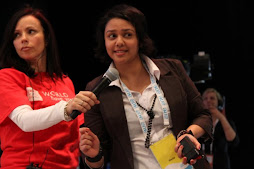
As part of the Young Adults 4 New Results competition, 100 young delegates from all over the world were chosen to participate in this stimulating youth forum on climate change. Leading up to the COP 15 UN Climate Change summit in December 2009, this was our opportunity to address concerns related to climate change policies and human security. Under the leadership of Kofi Annan’s Global Humanitarian Forum (GHF), this 3 day conference was an innovative and inspiring platform in creating new ideas and solutions.

Before starting the GHF, I planned a visit to meet WILPF interns and friends Ilse Wermink and Josephine Tsui, who work in the UN Geneva office. At my first trip to Switzerland, it was enjoyable and useful meeting with WILPF women, which helped settle me in and find my way around the city.

The understanding of the United Nations Framework Convention for Climate Change (UNFCCC) was vital in understanding the underlying difficulties in effective decision-making within the UN. On the first day, delegates participated in a Model UN formulation discussing projects for the Adaptation Fund.

Throughout the conference, we were inspired by guest speakers, followed by a brainstorming session which helped to map our final ideas by day three. Ideas were inputted on a laptop usually shared by three people, whereby the software enabled us to type in our thoughts, allowing others to rate ideas for approval. This system was a truly innovative way to allow everyone to participate without it being time consuming – this system of collecting ideas, I believe, was what made the conference such a success.

Guest speakers, who were the same age as us, played a key role in instigating ideas from the audience. Their apparent success in their field was not only a motivational tool but allowed us to fully explore our own potential and ideas. Presentations ranged from an all-rounded scientific, fictional, business, religious, marketing and grassroot point of view. It was interesting to have a religious panellist speaking about climate change using examples from different Holy Scriptures of human responsibility for the environment - a vivid reminder that we must act now to protect our world. Other speakers elaborated on how their initiative and products are eco-friendly and sustainable for both North and South continents.

Former UN Secretary-General Kofi Annan had also graced us with his presence, with a stimulating talk motivating us to become future leaders and encouraging us to continue developing ideas at the forum so that these projects can be adapted internationally.

At last year’s Global Humanitarian Forum, the project “Weather for All” was chosen and developed. Presented by Moyenda Chaponda, the project has now been implemented on a large-scale basis in Africa, whereby weather stations and radio-wave transition towers have been set up to notify farmers with updated weather reports. Seeing this project brought to life has given us stimulus to push our ideas into working projects.

The Projects

Through brainstorming sessions, five initiatives have been developed:

*Alternative Green Algae Based Energy Initiative

The idea is to produce biofuel extracted from algae instead of using current food products for oil. The whole process from cultivation, extraction, transportation and use in engines of the biofuel is a carbon neutral process. The algae based system targets a production system that utilizes a desert like environment, salt water and carbon dioxide from the atmosphere. This will enable the empowerment of poor communities by giving them a chance to participate in the supply chain of the biofuel.

*Radio Information for Women and Children Initiative
The initiative proposes story-based programmes by and for women and children to educate about the human impact of climate change in West Africa. Radio in West Africa is very prominent. In villages across West Africa, people will gather around the radio to listen to their favourite programmes. TV is too expensive for the average family. Therefore, radio is an effective communication and education tool, especially because of its oral tradition.

*Seeds of Change Initiative
Green energy is a growing product, however, in many countries it is still very inconvenient to change an electricity plan as it involves vast research, paperwork and phone calls. This project aims to invite people to announce if they want to switch and give the “Seeds of Change” team the minimal personal and contact details required to liaise with the electricity retailer and change their plan to 100% green energy. A consumer would submit their minimal contact details to a website and the “Seeds of Change” team would arrange everything else until the signing of the contract.

*Raising Climate Change Awareness in Primary Schools Initiative
The initiative foresees the
implementation of workshops, run by volunteers, in primary schools in the developing world. The initiative further encourages schools to found climate change clubs, launch art projects and create incentives for sustainable behaviour of the students.

The Speakers

Margot Hill, a PHD student on environmental studies, presented how climate change is having a negative impact of human security, illustrating her point with current examples of China’s water scarcity, the potential threat cities are faced with and the link between science and public communication on climate change need to be made clearer.

Daniel Sheridan, founder of PlayMade Energy Ltd, demonstrated how connecting business and development can be turned into a new global business opportunity. Daniel has created a seesaw that can generate and store electrical energy to run a small school. Powered by human energy, this renewable energy is providing children in the developing world with entertainment as well as electricity, encouraging the idea of “power through play.”

Presentation shared by Diana Vogtel from 350.org was very familiar to me. Working for a campaigning organisation, Diana exhibited examples of how everyday people have the power to get their voices heard by key decision-makers through media stunts, demonstrations, petitions and social youth networks across the world.

Novelist twins, Suresh and Jyoti Guptara were truly inspirational with how they are able to talk about climate change through fictional narration. People need to be inspired to change habits, to form a “green society” however, we have a tendency to wait on each other for actions. The twins asked us to think of climate change as aliens. The government will need to fight this alien invasion to keep its people safe. This simple example demonstrates how easy it is to turn a serious message into a more understandable format without sounding pessimistic, terrifying or too difficult to solve.

Katarzyna Okinczyc, founder of 60 Bag, has produced a bio-degradable bag made out of flax-viscose non-woven fabric. The lifespan of the product is between 1-6 months after use, raising awareness of materials used than thrown out into a landfill. Katarzyna also discussed ‘social sustainability’, passing on high quality products from one generation to another, a habit which is easily being lost with our consumerist society. More information can be found on www.dogenrol.com

Jake Goodman, from Euro RSCG Worldwide, stressed how word of mouth communication is the key power. Advertisers often do not follow corporate social responsibility policies however have creative solutions and opportunities for empowerment which can be replicated to climate change campaigns. Please visit www.timeforclimatejustice.org to record a “tck tck tck” message, which will be played at the COP15 summit.

Architectures Andre Schmid and Jonathan Nestler showed a terrifying exposé of the end damages caused by climate change. Although highly far-fetched, the picture demonstrates a future scenario of a floatable city complex with renewable energy as a life source. These trawling cities are innovated from ‘fish trawlers’ which already exist today however have been scaled up to create a brand new society. Examples of current government project to fish for oil was also shown, heightening our awareness on the need to act on climate change now.

Monday, 22 June 2009

Vote for me


I am standing as a candidate for One Young World, a platform where I can represent my generation and my country on some of the greatest challenges ahead. My full biography, as well as the other candidates are on the website below. We need women in politics. Help me become a delegate by voting for me now!

http://apps.facebook.com/oywcandidates/entry/284/?ref=nf

http://www.oneyoungworld.com

Monday, 8 June 2009

UNA-UK Conference

64th UNA-UK Annual Conference
Scottish Parliament and Edinburgh University, 5-7 June 2009


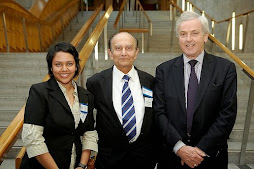
[Left: Talyn Rahman with Lord Hannay of Chiswick]

The United Nations Association hosted a three day conference, set in the heart of Edinburgh, which consisted of the themes of humanitarian affairs, climate change and UN policy-reforms. Chairman
Vijay Mehta, and I attended as Action for UN Renewal’s (ACTUN) representative, where we had the opportunity to contribute to the structure of the United Nations Association (UNA) policy-making. Given the opportunity, I also acted to promote WILPF's youth wing, Y-WILPF to potential members and the youth group of UNA. During the trip, I met with new WILPF member Haley St.Dennis and former WILPF secretary Helen Kay, where we discussed the future of Y-WILPF and networking solutions cross-country.

DAY ONE

The UNA AGM was kept brief, with Lord Hannay’s report of the UN’s shortcomings and achievements over the last year. The campaign to ban cluster munitions has had a positive effect on the UK and international government, the outlook of climate change is being reflect and adopted by Gordon Brown and Barack Obama, and the UN’s main priorities for this year were discussed.

Sir John Holmes, UN Under-Secretary-General on Humanitarian Affairs, delivered the keynote speech for the conference, hosted by Alex Fergusson, the Presiding Officer of the Scottish Parliament. Sir John spoke about the challenges facing the UN in its role as the world's humanitarian coordinator. In particular, reconciling the tensions between national sovereignty and international responsibilities were addressed, stating that the access for humanitarian assistance should be full and unimpeded. The world face a series of interconnected global trends which could transform the context of humanitarian work beyond recognition and which go beyond the ability of any state to deal with. Humanitarian agencies face criticism of acting at the behest of Western or Northern governments. In practice they cannot help representing and reflecting Western/Northern mindsets, and cultural, social and intellectual value, which is a problem. To reduce perception, agencies must try hard to achieve diversity in international ranks, have visibility on local NGOs, seek professional and strong NGO partners; respect by state and non-state alike.

[Right: Talyn Rahman with Vijay Mehta and Sir John Holmes]


Humanitarian is also threatened by the sensation of climate change. Sir John gave examples of natural and man-made disasters, and drew attention to the humanitarian consequences of climate change. So called mega trends are likely to drive up humanitarian needs by creating more poverty and vulnerability. This includes greater levels of inequality, higher unemployment, increased frequency and intensity of disasters, new kinds of conflicts, and major weather driven migrations. Combined, they threaten to create chronic vulnerability on a scale we cannot readily imagine now. Sir John also highlighted the food crisis and the current economic/financial crisis as a global crisis.


DAY TWO


The majority of Day Two consisted of reforming UNA’s policy commission. Such commissions included topics of: the Millennium Development Goals (MDG) & Sustainable Development, Human Rights and Humanitarian Action, UN reform, Peace & Security, and the promotion of multilateralism. The session was very fruitful, with engaging discussions of amendments and new applications of each policy. ACT-UN had the chance to speak about a few topics addressed, especially in concern with the MDGs and in WILPF's case, gender architect and women as peace-keepers of the UN. The plenary session was most useful in learning more about what UNA concentrates on in reflection to ACTUN’s work.

The plenary session was followed by a major climate change workshop, led by
Trewin Restorick. Trewin, CEO of Global Action Plan, was one of Al Gore's UK climate change ambassadors. Climate change was a major theme at the conference. Delegates debated effective follow-up to the Kyoto Protocol at Copenhagen, the UK's climate change policy, refugee flows resulting from climate change impacts, conflict over resources and new technologies such as a solar power supergrid. Trewin highlighted many of Global Action Plan’s initiative in creating individual awareness on the effects of climate change, pulling further on what we can do. More information of initiatives can be found on: www.globalactionplan.org.uk.

Climate change awareness video,
“The Age of Stupid” was screened as a following.

DAY THREE

The final day was brief, dealing with the business of UNA. A tribute to UNA members and UN staff were made. In a video message, UN Secretary-General Ban Ki-moon thanked UNA-UK for its series of conferences on climate change, and called for ‘smart solutions’ to tie in the challenges of poverty and climate change.

I had the chance to speak on behalf of ACTUN to thank UNA for the invitation, and feed backing on the overall running of the conference.

Wednesday, 3 June 2009

Global Monitoring Checklist


GAPS (Gender Action for Peace and Security)
launched an innovative Global Monitoring Checklist, a report on women, peace and security at the House of Parliament. The Global Monitoring Checklist monitors the implementation of UN Security Council Resolution 1325 in Afghanistan, Democratic Republic Congo (DRC), Northern Ireland, Nepal and Sri Lanka, and makes recommendation on a more inclusive peace. WILPF was one of the many organisations to push the implementation of 1325, and we were delighted to be invited to celebrate the launch of a very important report. Marie-Clare Faray, WILPF executive member, contributed to GAPS research on the Democratic Republic of Congo (DRC).

UN Security Council Resolution 1325
http://www.un.org/events/res_1325e.pdf

With gender perspective in mind, there is a great gap in knowledge for women in conflict situations. Women are usually the first victim, suffering from domestic and systematic violence, where there is a lack of access to justice for criminalisation. In many societies, for example in Afghanistan, domestic violence is considered a private matter which further escalates cultural violence if the news is leaked. Women have lost certain position in politics and is challenged. The UN should set up a mechanism to make government accountable for their obligations.

The report is divided into country of interest and audience it is written for (NGO, policy makers etc) so the information can be utilised to its full potential. It provides practical information and recommendations which can be used to support national governments, the international community and national society actors in their work around peace and security.

For the launch, Lord Malloch Brown, the UK Minister for the United Nations (Africa and Asia), congratulated GAPs on its research and fully supported on strengthening the legislation of 1325 to countries mentioned in conflict. 1325 has attracted a strong constituency of support, however noted that further community pressure is required to action the resolution. Lord Brown emphasised that women's rights are universal rights like the freedom of speech, whereby women universally have the right to basic human rights to be properly protected. There were references to the need of gender relation; using sexuality as a tool of war, violence and oppression in certain situations.

Full report of the Global Monitoring Checklist can be found on: http://www.gaps-uk.org/img_uploaded/Global%20Monitoring%20Checklist%20full%20resource.pdf

The summary report is: http://www.gaps-uk.org/img_uploaded/Global_Monitoring_Checklist_Summary(1).pdf

Friday, 29 May 2009

Re-launch of Scotland WILPF

Tuesday 26th May

As the YWILPF representative, I was invited to join Diane and Sasha to travel to Scotland. This was my first visit whereby I had a short presentation to make about YWILPF. It was exciting to journey to Edinburgh for a possible re-establishment of the Scottish WILPF branch. Diane, Sasha and I had an inspiring time meeting activists in Edinburgh, who were excited to restart the WILPF branch up there. WILPF women present in the meeting were Sasha Jesperson, Diane Brace, Helen Kay, Janet Fenton and myself. 5 non-members, who later joined WILPF, were also present.

The meeting itself began with a small photo exhibition of WILPF’s past and present, followed by Helen Kay’s short history of Edinburgh and WILPF. For an insight to WILPF, Janet discussed why she had joined WILPF and her current project in Edinburgh. Diane did an excellent job explaining WILPF’s current standing and international status, which intrigued many of the women in the room.

In order to encourage the younger members in the meeting, I thought it fitting to explain why I joined WILPF and how, after one year, I got on the WILPF executive board. YWILPF is about members being active, and I went on to explaining future initiatives planned, with the possibility of expanding YWILPF into Scotland through the Scottish parliament. We had two young people in the crowd who worked for the Scottish parliamentary and two other women who worked at universities in Scotland, which was a very encouraging start.

Sasha emphasised the importance of national WILPF branches and what strategic changes are coming about the organisation. It is fundamentally important that Scotland have a branch as it is not possible for Scottish WILPF members to travel in and out of the country for meetings or events. Furthermore, with such close ties to the Scottish parliament and prestigious universities, Edinburgh (as Scotland’s capital) have a flourish of events, which WILPF can participate in, throughout the year.

Janet and others discussed the unique opportunities that they have with the Scottish Parliament, and Helen has sent through this you tube video as an example.

MSPs have joined together in song to say that it is Crunch Time for Trident. They were filmed in the Scottish Parliament to promote the Sing Out for Peace march and rally in Glasgow on Saturday 20 June.
Rob Gibson (SNP), Cathy Peattie (Labour) and Robin Harper (Green) sang the new song, Crunch Time for Trident, written by Ian Davison for the event. They are introduced by Mike Pringle (Lib Dem).
The video is on Youtube at: http://www.youtube.com/watch?v=SC2WAerrp1Q


Well done Scotland, and WILPF women to have the enthusiasm to re-establish the Scottish branch.
It was a great success.

Saturday, 25 April 2009

WILPF turns 94


Despite the actual birthday falling on 28th April, YWILPF UK and London WILPF organised a party in celebration for WILPF’s 94th birthday. A local pub close to the main UK office was decorated by violet WILPF balloons, banners and campaign materials to kick start the celebration with a certain theme in mind. LONDONWILPF had organised a magnificent cake and guests (as hoped) wore the suffragette colours of violent, green and white. YWILPF collaborated the party organising with LONDONWILPF, whereby we had invited former WILPF President Diane Brace to say a few words before the cake-cutting.

WILPF women made contributions on Jane Addams, Emily Balch, Rosika Schwimmer, Crystal Macmillan, Edith Ballentine, and our very own Richenda Barbour, who has been with WILPF UK for over 20 years. The party was a great success with a mixed crowd. We were joined by a total of 25 people, including male friends and guests from the Democratic Republic of Congo (as seen in the photo). We had a total of four new WILPFers, with new members attending the event.

Wednesday, 22 April 2009

Farmer First Revisited


Innovation for Agricultural Research and Development

As part of Practical Action's climate change series, co-author Ian Scoones and supporter Robert Chambers, who wrote the forward for the book, highlighted their research for agricultural innovation described in the book.

The book presents 'dangerous ideas in development' by enabling farmers in vulnerable areas to be innovators of agricultural research and method.
Agriculture is an urgent priority worldwide and farmers in the developing world find themselves in the front line of some of the world's most pressing issues, such as climate change, food security, water shortage and globalisation. Very often, farmers are not given the support they require and perish under these tough circumstances.

DFID, as part of its 2008 strategy, had invested £200m for agricultural research system, so that farmers can be involved in joint learning, ventures and testing methods suitable for their climate. Key findings focus on farmers, farms and technology available to the market from a broad aspect. Revamping agricultural education systems to new generations will address today's challenges by supporting new ways of thinking and doing.

Robert Chambers described agricultural research and development as a 'radical transformation' stressing that female re-education and cooperation will largely bring about change. This is in partnership with innovation stemming from universities engaging in active field work, and donor support.
The general observation is that co-learning, changing of bureaucratic behaviour and the 'bottom-up' approach is the main ingredients to innovative systematic change, which is needed in our current agricultural market. Agricultural innovation now takes place within national public-sector research and diversified public-private systems. This book brings the concerns of grassroots farmers to the fore. Innovation needs to spread to the South, thus fully supporting inatitives brought by this publication.

Wednesday, 8 April 2009

Hunger and Climate Change


Some practical solutions...

Tuesday, 7th April 2009

This climate change was organised by Practical Action, as part of a themed seminar. Almost one billion people in the world are hungry today. And the world’s population will continue to grow until it stabilises at nine billion in the middle of this century, by which time our food systems will have to feed 50% more people than they do today.

The panel consisted of Professor Robert Watson (Chief Scientist of DEFRA), Dr Saleemul Huq (Senior Fellow of Climate Change), Hilary Warbuton (Head of Practical Action’s work on food and livelihood security), and Patrick Holden (Director of Soil Association). This seminar looked into the underlying context of global poverty and environmental degradation as unchanged and the development of sustainable food supplies, and how climate resilient food system can tackle hunger in the developing world while reversing environmental damage.

Prof.Robert Watson talked broadly on the links with climate change and food security, touching upon common cause and implications of climate change to agriculture and farmers. A short background of the key components of climate change allowed Prof. Watson to elaborate on the need for governing better water and environmental system to cut on waste. Climate change has interrelation with increase in disease, heat stress, mortality, and decrease of water availability/quality, agricultural productivity... Food security is due to the increase of bio- fuel (particularly in the US), poor harvest, increase demand from China for example, high energy prices, speculation on commodity markets, and export bans from large exporting countries. Options for action included appropriate use of current technology, agro-ecological practices coupled with decreased post-harvest losses. We need to provide payments to farmers to maintain and enhance the ecological system. Prof.Watson stated that we have the technology to start this process. Gender empowerment of women is also particularly important to increase output and improvement in farming system and technology.

Dr Saleemul Huq used Bangladesh as a case study to discuss hunger and climate change. His review of the IPCC (4th assessment) suggested that the Mega-Deltas and Africa is an important focus for climate change and food security. With their low-adaptive capacities, these regions already struggle with food and climate change (hurricanes, glacier ice melting etc). At the global level, the UN convention on Climate Change is currently reviewing the Kyoto Protocol, and believes politicians are not brave unless civilians push these actions to the UN. It is difficult to develop global to local, therefore locals need to become empowered to push for change to a global level. Rich countries are not only responsible for climate change, but also rich people living in poor countries. However poor people in rich countries also suffer as illustrated by the devastation of hurricane Katrina in New Orleans. Rich countries are still unable to prevent climate change disasters or weaken its devastation. Formal negotiating groups are made up of poor countries – NAPA (National Adaptation Plan of Action) look at neighbourhoods which are most vulnerable to plan for action, however funding is short. Ingenious societies and knowledge need to be married with international planners.

Patrick Holden urged that nations need a strategic proof plan, whereby action is bottom up. There needs to be a total transformation of our food system. Other key elements were also mentioned in his speech.

Hilary Warbuton stated that small scale farming is normal in agriculture, and work in harsh conditions. Therefore, these farmers will be most familiar with the changes within their climate. Livelihood actions are limited and there is usually little or no finances available. The approach for climate change is for farmers to increase resilience, sustainability (socially and environmentally), manage risj, and increase the ability to change. It is not enough to chnage crops, but allow them to change a whole approach to livelihoods and systems.