Tuesday, 15 December 2009

The COP15 circus


Copenhagen, Tuesday 15 December

I am angry, frustrated and very disappointed. The restrictions being applied to entering the Bella Centre is becoming ludicrous to the point where 'real people' will no longer be able to participate. Since yesterday, delegates with accredited badges have struggled to enter Bella, queueing up for 4 hours before being turned away. Today, only 7000 Non-governmental (NG) participants have been given the all clear for entrance. Tomorrow, only a pitiful 1000 will be let in the final two days. NG delegates include members from businesses, civil society and, non-government organisations which make up the biggest percentage of delegation. Other badges include UN Observers, Inter-government, Press and Party Delegates. However, NG badge-holders will be completely cut from participating in the final day of COP15.

Climate change is a global problem effecting every individual from every nation, yet there seems to be no sense of solidarity within the COP itself. As I stated in my first report for COP15, I felt that side events hosted by NGOs had no correlation to the actual UN negotiations, ignoring work done on ground level and separating those with great expert knowledge from 'leaders' from both developed, developing and least developed countries from engaging in true dialogue. Wasn't the whole point of COP15 was to agree on an agreement upon a global discussion? Even party delegates are limited in entering the plenary consultations.
UK MP Ed Miliband, Archbishop Desmond Tutu, Governor of California Arnold Schwarzenegger all urged that world leaders are not left to their own device in punching out an agreement. Nonetheless, this exactly what is happening here. COP15 President, Connie Hedegaard had stated earlier that negotiations could not be done without civil society participants but we are being ushered back to our designated countries!

Having spoken to part delegates, it is a dismay to hear how slowly negotiation rounds have been. A delegate from Zambia was ashamed to say that no progress had been made yesterday and were forced to 'catch up' this morning. The feeling within the Bella Centre is that of anger, doom and gloom, and I am saddened that I will be leaving Copenhagen with such negative feelings. I only hope that developed industrialised nations lift their sleeves and finally act responsibly but I won't hold my breath.

Security tightened at the Bella Centre


Copenhagen, Tuesday 15 December

I woke up at 6am this morning knowing how much of a struggle it would be to enter the Bella Centre. Over the weekend, word went out that NGOs will be restricted and only those with special “observer status” passes would be through. Unfortunately, only 40% of NGO participants will have access in the remaining days of COP15, however I was lucky to get my hands on one, thanks to my executive member status in an international women’s organisation.

The queue for entrance at the Bella Centre was divided into 3 lines: NGO with badges, Press and Party, No . With a badge and pass, I was waiting approximately 40 minutes out in zero degree weather until I was finally let in. I sympathise with those with no badge at all. Some have been waiting since 6am and it seems that they will be waiting until all NGO, Party and Press with passes are through. The queue for no accreditation was the longest I have seen and I can imagine the line will only get longer. The Bella Centre is incredibly quiet, and side events rooms are almost vacant even with talks resuming this current moment.


Monday, 14 December 2009

Gender at COP15


Copenhagen, Tuesday 15 December

Overall at the COP15, it was very encouraging to see so many female delegates participating at all levels. Some had even brought their baby’s to the conference, proving that women can play a lead role in society while committing to her motherly duties. As an executive member for an international women’s organisation, I was particularly thrilled that the gender dimension in climate justice had been highlighted by so many delegates.

Effectively, women are agents of change in the fight for climate change. In the developing world, women represent two-thirds of people living in extreme poverty who are highly dependent on natural resources. In Africa, 80% of food is produced by women using resources harvested in local areas. Women also have duty of collecting water and firewood for cooking and heating purposes, yet due to drought, uncertain rainfall and deforestation, women have to travel further to meet their needs which leaves them vulnerable to rape or attack. Furthermore, women have little or no decision-making power in developing areas, therefore have no say within their communities.

Women are keepers of traditional knowledge and trainers to their children. Their responsibility to their household and community make them ideal stewards in adapting strategies in environmental measures. The active participation of women in the development of funding criteria and allocation of resources for climate change initiatives is critical, particularly at local level as women share information and influence female community processes.

At its 46th session in 2002, the Commission on the Status of Women took up climate change issues when it addressed environmental management and mitigation of natural disasters. Action was called to mainstream a gender perspective into ongoing research on the impact of climate change, which would be implemented in policies and programmes.

Just as the poor are not responsible for solving poverty, women are not alone in solving gender justice. It is crucial to identify gender-sensitive strategies in responding to environmental and humanitarian crises caused by climate change, and such vision should be promoted at national and international. Women continue to be underrepresented in decision-making on sustainable development including in climate change, thus gender must not be dismissed.

Women in Copenhagen, including myself, are fighting for gender justice in climate change areas, and empowerment to women must be given by enabling women to gain access to information, training, credit nd skill development through international program that ensures full participation in climate change initiatives.

Meeting Dr. Rajendra Pachauri, IPCC Chair

Copenhagen, Monday 14 December

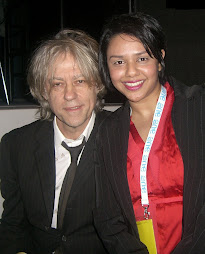
At the COP15, youth delegates had the chance to ask the Chairman of the Intergovernmental Panel on Climate Change (IPCC), Dr. Rajendra Pachauri, who has a key position in the overall climate change negotiations at the conference. Dr. Pachauri informed that he should have been in Norway at President Obama's Nobel Prize ceremony, however decided to stay in Denmark to speak at events like this to encourage youth leadership for climate change, stating that "youth can bring change."

[Top: Talyn Rahman with Dr. Raj Pachauri]

Dr.Pachauri defended the work of the IPCC, in light of private emails - "Climate Gate" - being leaked into the press which could have potentially overshadowed the negotiations. All publishable statements are reviewed by experts line for line, including comments on websites and official reports such as the IPCC 4th Assessment addressing the scientific background on climate change. He highlighted concerns that the negotiations are losing focus on scientific evidence of climate change, as nations are close to sealing a 'politically binding agreement' as opposed to a 'legally binding agreement'. Nonetheless, developed countries are collectively agreeing on target emissions that are to be met by 2015.

He encouraged youth to keep on working and to be active back home, urging that politicians continue to work on climate change beyond election days whether or not the outcome of COP15 is satisfactory. Dr. Pachauri affirmed that hope is "what keeps us going. Hope is what brought you and other civil society groups here and created unprecedented awareness on climate change. We might not get a great deal, but let's not lose hope."

Chaos at the Bella Centre


Copenhagen, Monday 14 December


As we approach the final dates of the UN
COP15, demand to enter the Bella Centre where the negotiations are taken have increased by triple amounts. This morning at 8.30am, queues to get into the centre was swarmed by delegates beyond the exit points of the train station. Delegates with no badge for entrance have been denied access, however even those with badges are finding it difficult to enter. As of tomorrow, only delegates with extra security passports will be allowed through. The number restrictions on NGOs have been applied due to high attendance of official governments and Heads of States like President Barack Obama, who will be present on the final day of the negotiations.

Luckily, I have been accredited extra security pass and will be able to report from within the centre tomorrow, however this scene is unfortunate for those who have been denied access today.

I have spoken to a party delegate from Mauritius who confirmed that negotiations for a two track agreement to safeguard the Kyoto Protocol and the Bali Plan is well underway. The final days of COP15 will be crucial in agreeing at least a politically binding international treaty. Whether or not it will be legally binding is a concern to be followed, however official party delegates seem hopeful to secure something substantial.

Saturday, 12 December 2009

Voice of the Indigenous People


Copenhagen, Saturday 12 December

Being at the COP15 has given me a great chance to meet people from countries that are truly suffering from the effects of climate change. As part of networking, I approached a few interesting looking people to ask what they think of the COP15. I met Hanak Tading and Santosh Patnik, who are representing indigenous people from the state of Oaissa in India.

They explained that 26% of the population belong to indigenous communities but are no longer unable to rely on resources in local villages due to the drastic change seen by climate change over the last 20 years. With globalisation moving into India, indigenous people are now forced to migrate to the city because corporations are destroying villages to make space for their work units. 327 villages have been destroyed and with the expansion of global consumerism, the numbers are feared to grow. Hanak and Santosh said they feel positive about COP15 as there is dialogue between developed and developing nations, however they blame very stringently on developed country in causing climate change.

Hanok and Santosh inspired me to learn more about indigenous rights, which invited me to attend a side event named “Indigenous and Community engagement in REDD”. REDD stands for the United Nations Collaborative Programme on Reducing Emissions from Deforestation and Forest Degradation in Developing Countries (UN-REDD Programme) which aims to protect natural forests, restore degraded natural forests and support the rights and livelihood of indigenous people and their communities.

Chief Almir Surui from the Brazilian forest said that having watched the forest disappearing the last 40 years, they have taken matters into their own hands. The forest provides them with all resources to survive but its destruction is killing their “destiny”. In Bolivia, there are 34 different indigenous communities who have their own language and culture. 10 years, the Chief Surui had brought out dialogue to retain their rights but before engaging in dialogue with the outside world, they had to obtain scientific knowledge of their way of living. The partnership with science had shown his people ‘climate change’ and the effect it was having on them.

Using REDD, the chief was able to form partnerships with developed nations as part of a carbon project. Over 980,000 inhabitants are part of the international context on Bolivian indigenous rights protected under the UN Declaration on the Rights of Indigenous People (UN-DRIP). Successful implementation of REDD shall strengthen local capabilities on integral management territory, promote local management, obtain a fair and equitable mechanism, compensate funds to promote adaptation and local development, and monitor/control the situation.

Google and the Carnegie Institute of Science have joined force to developing a program that shows the process of deforestation and monitoring illegal logging on Google maps. The program highlights areas affected by deforestation via satellite imagery and visual log-books from local indigenous people. The Google program most certainly empowers indigenous communities as it allows them to share their information to the world, which may decrease illegal logging of the forest. The launch is yet to be set but people within these communities have already been trained with the program.

Carbon Storage and Nuclear Energy is NOT the answer

Copenhagen, Saturday 12 December

Having attended two events related to potential solutions to carbon emissions, I am feeling more determined that vast financial investment is being burnt ineffectively. Lund University hosted “Carbon capture and storage” looking into new research directions on the politics, promises and pitfalls of this new technology, and the Women’s International League for Peace and Freedom (WILPF) made the case of “False promises of nuclear energy”.

An important component of mitigating climate change is finding solutions to replace fossil fuels to help reduce carbon emissions. Carbon storage and capture technology (CCS) is an emerging technology to capture carbon in the air to stabilise CO2. The technology is not fully developed and has high costs not only in its initial R&D but in building and implementing the technology. CCS is put forward as a possible solution in developed countries that are locked in the fossil fuel system, however the views panellists presented had convinced me that developing this technology is eating away precious financial resources. CCS will only encourage developed countries to stay locked in a fossil fuel system and cannot benefit society until as late as 2030. Moreover, there is already public concern and scepticism to CCS and transparency of negative aspects of the technology may further drive a gap between public discourse and CCS discourse.

Panellists argued that CCS could be coupled with bio-CCS to help prevent reinforced fossil fuel lock in. In Dr. Asbjorn Torvanger’s (CICERO) point of view, carbon price is more important than the cost of CCS but phasing in CCS will take time. CCS is not a competitive mitigation policy and while the technology is not fully developed, financial resources could be steered towards renewable energy projects. Prof. Philip J. Vergragt (Tellus Institute) stated that out of 1200 scientific articles written on CCS, 40-50 articles mentioned fossil fuel dependency with no mention of renewable energy. Therefore, is there any point in developing a highly expensive technology that doesn’t capture even 90% when money could be going to projects that develop renewable technology for long-term potential?

Nuclear energy is another hot topic discussed by Heads of States as a latent source to replace fossil fuels. Panellists invited by WILPF made compelling arguments for the human aspect of nuclear energy, exploring health issues transmitted from nuclear radiation. It is a concern that the UK government is considering nuclear energy in order to move away from French energy dependency. However, the negative health implications from using nuclear energy are highly unforeseen. Panellists from Russia, US, Kazakhstan and Kurdistan shared stories of how women are giving birth to mutated children, and these genes are being passed on from generation to generation. No-one is taking responsibility for these defects and no legislations are in place to ensure safety or provide benefits beyond $2 per day to those who are already affected. It is worrying that the President Sarkozy of France is touring around the world to promote nuclear energy as a climate change solution. Civil society must take a stance to address issues felt by people and we must ensure that nuclear energy is approved in the COP15 negotiation.

Following the WILPF event, an argument broke out between women who presented these cases and a representative from the International Atomic Energy Agency (IAEA), who argued that nuclear energy is a way forward. Public opinion raised from this outbreak showed consensus against nuclear energy, however I fear that COP15 holds a high number of nuclear energy lobbyists that could potentially encourage the use of nuclear as a mitigation tool.

As a UK WILPF delegate, I was interviewed by a journalist from Belarus to give a statement on WILPF’s view on nuclear coupled with climate change, the UK stance on nuclear energy and the work I am doing in London.

Vulnerable State plea at the official UN negotiations

Copenhagen, 12 December 2009 (Carolyne Okeijin)

Today’s official negotiations at COP-15 saw an emotional and powerful submission by a minister from
Tuvalu, the world’s fourth smallest state at the front line of the devastating effects of climate change: “It has been one week since our proposal was put on the table and yet we see no progress. I woke up today, crying, and it takes a lot for a grand man to come here and tell you that.” The EU responded with an empathic recognition of the devastating reality facing Tuvalu.

The background to this unusual and emotionally moving exchange is a new target proposed by Tuvalu, and backed by AOSIS (The Alliance of Small Island States, 43 countries especially at risk from climate change), stating that a rise of more than 1.5 degrees Celsius above pre-industrial levels was not negotiable. It has been predicted that global rising sea levels at above the 2 degrees increase in global temperature, which is the current goal of the conference, would submerge and sink the island completely within the next decades. The Tuvalu target was rejected earlier in the week by the Danish President of the Conference of the Parties, Connie Hedegaard, but received objections from key players (and major polluters) China, US and India. According to UN Dispatch, this is what led to the protests by other countries that halted one track of the major negotiations until the target proposed by Tuvalu was brought back on the agenda following the backing of 100 other climate vulnerable nations.

Countries such as
Bolivia, Togo, Benin and Kenya urge that the Kyoto Protocol is not killed off in the process of these negotiations, with majority support of backing the pleas of small island states. The continued existence of entire islands, populations and cultures are at real risk of disappearing completely, within our life time. We are reminded of the human impact of climate change and the crucial deal that must be struck with priority respect and attention to those who are worst affected.

Friday, 11 December 2009

Q&A with the Board of the Adaptation Fund


Copenhagen, Friday 11 December

The science of climate change is unambiguous with increasing burdens on the poorest people in the world, who are often hardest hit by weather catastrophes, desertification, and rising sea levels. Helping the most vulnerable countries and elements of societies, the
Adaptation Fund (AF) was created to drive funds to help nations struggling with the consequences of climate change.
Chair of the AF board, Jan Cedergren and the Vice-Chair Farrukh Iqbal Khan presented the work of the AF followed by an intense round of questions and answers.

The Adaptation Fund Handbook focuses on transparency and capacity-building issues in financing developing countries to meet the cost of adaptation. To gain access to funds, vulnerable developing countries can nominate domestic institutions for accreditation through the National Implementing Entities (NIEs) that is responsible for endorsing projects and programs of the recipient. Countries also have the option of going through Multilateral Implementing Entities (MIEs), which is a new approach to international cooperation, providing the opportunity of direct access to resources. However the board members had admitted that limited funds that are available to the AF mean that projects have to be prioritised to urgent cases. While the process in obtaining funds can be bureaucratic, the board assured that all projects are reviewed thoroughly according to AF guidelines. Allocation of funds are reviewed every 5 years, however the board is currently establishing an evaluation system to manage results that are agreed upon.

There were some concerns on how vulnerable communities can access funds, following rumours that allocated money go straight to corporations that operate within communities. The board stated that detailed reports are fed back to the AF, but I felt the answer given was vague. The World Bank is often mistrusted with the lack of transparency with the way finances are spent, yet the World Bank is responsible in handling the AF trust fund and system which then reports back to the AF board.


Transparency is always a concern with directing funds to right places, however the board declared the use of funds is becoming more of a bottom-up, country-led approach, therefore making it easier for community leaders to use the money where they believe is best spent. The board said,
“We do give emphasis mainly on our cooperation with the national strategies. Our strategic priorities are the basis on how to confront the situation in those countries and ameliorate the adaptation levels. But what we mostly take into account is the enhancement of capacity-building, transparency and financial assistance.”

UK Know-How leading the Low Carbon Transition


Copenhagen, Friday 11
December

As a British citizen living in London, I thought it smart to start my COP15 tour by attending an event related to my own country. Hosted by UK Trade & Investment, a panel of experts explored how the UK’s unique political, structural and economic conditions are perfect for fostering a low carbon future in business and industry. Leading a low carbon transition means business opportunities across all sectors as introduced by panelists who represented a cross section of business industries.

Michael Ward (UK Trade Investment) stated that businesses are at the heart of delivering solutions for climate change as there are facilities and resources to collaborate on an international level. However there was clear consensus amongst the panelist that London is one of the best places to start a low carbon – climate friendly business. From his own experience, James Cameron (Vice Chairman of Climate Change Capital) was able to set up his climate change business less than ten years ago as there was continuous flow of capital in London. The UK is a hub of low carbon innovation. Catherine Bremmer (Head of International Development at the Carbon Trust) highlighted key factors of the UK economy that allow companies to be “born global”. London has a developed financial district which has links to major global cities. Low carbon industries are supported by broad government agenda, building synergies cross-sector. The UK has a stable political system that has consensus in climate investment projects as supported by the Boris Johnson’s Mayor of London Green Development Plan. Furthermore the UK has natural resources such as offshore wind potential to make low carbon society which the private sector is leveraging to its advantage. Successful business opportunity includes strong research and development capability, partnership with business and academia and creativity which exists within the UK.

Paul Dickinson (CEO at the Carbon Disclosure Project), “When I look at climate change, all I see are investment opportunities” leading him to discuss the telepresence project supported by his business. Telepresence, like modern day Skype, is replacing face-to-face global meetings to video conferences thus cutting carbon emitted by air travel. This is not a new idea however businesses are taking advantage of old ideas and using these as alternate low carbon methods of modern communication. Peter Head OBE (Director and Chairman of Global Planning for Arup) stated that integrated approaches are important in creating successful low carbon ventures. Research should be used “intelligently” by combining new and existing information and fed to world communities.

Martin Powell (Director of Projects at the London Development Agency) discussed the London 2012 Olympic project and how they are re-developing London into a low carbon society. While I did not agree with some of his statements (as I live in the area where the Olympic stadium is being built) it was interesting to see his vision of ‘green’ London in the near future. With the current developments in progress, Martin believes that London should reach a 60% reduction in carbon emissions by 2026. He also said that the way we spend our money is the most important democracy in the world, and this, as many activists may agree, could be the solution in reducing consumer carbon in the West.